


- An emerging narrative is that elephant poaching has declined, yet evidence shows that the illegal trade in ivory persists, and that the involvement of organized crime in it keeps growing.
- Despite big and news-making seizures of illegal ivory recently, criminal networks continue operating, and southern Africa appears to be back at the illegal global trade’s center.
- “The current narrative that the situation is under control should not be accepted without question,” a new op-ed for World Elephant Day 2026 argues.
- This article is a commentary. The views expressed are those of the author, not necessarily of Mongabay.
In early March 2026, acting on intelligence shared by my organization, the Environmental Investigation Agency UK, Zambian authorities seized a consignment of more than 500 kg (over 1,100 pounds) of ivory and arrested a suspect with long-standing links to regional ivory trafficking operations. One of the suspects involved in the case was convicted in 2019 for possession of more than 200 kg (almost 441 lbs) of ivory and was sentenced to five years in prison in 2020. He was released after a matter of months and has continued trading ivory ever since.
So, Zambia, which has been exploited by criminal networks operating with relative impunity since at least 2002, is under the spotlight once again. Of particular concern is the involvement of Congolese criminal groups, which continue to operate across Zambia and the wider region, sourcing and moving wildlife products including elephant ivory, rhino horn, pangolin scales and big cats along complex transnational routes toward Asia, with Vietnam often serving as a key transit hub to other destinations.
Exploiting the lack of political will, weak enforcement, corrupt officials and marginalized communities to facilitate their trade, these networks have been orchestrating poaching expeditions into neighboring countries, using Zambian intermediaries to supply their illicit trade chains. This recent interception in Zambia — alongside two other large-scale seizures made in Tanzania and Botswana in April and May respectively — brings the minimum total of ivory seized globally since 2023 to approximately 29 tons, nearly 64,000 pounds. That’s the equivalent of at least 4,000 dead elephants.
Of this, about 60% was intercepted in consignments exceeding 500 kg, or about 1,100 pounds, — the threshold used by the UN Convention on International Trade in Endangered Species (CITES) and enforcement agencies to define large-scale trafficking incidents, which indicate organized criminal activity.
Taken together, these cases show that ivory trafficking remains a systemic and organized crime problem, rather than a series of isolated incidents, and it continues to impact multiple countries and jurisdictions.
Southern Africa back at the center
From approximately 2015, the regions of West and Central Africa — and particularly Nigeria — emerged as a major hub for illegal wildlife products. Multiple large shipments of ivory, often mixed with pangolin scales, were intercepted as they moved through export points such as Apapa Port. Between 2015-2022, the West and Central African regions had been implicated in at least 31 large-scale ivory seizures, totaling approximately 72 tons, nearly 160,000 pounds.
But since 2023, the picture has shifted. Countries in the Southern African Development Community (SADC) now account for more than 80% of the total volume recorded in large-scale ivory seizures. Angola, Botswana, the Democratic Republic of the Congo (DRC), Mozambique, Tanzania, Namibia and Zambia are among those linked to these consignments.
This renewed concentration of trafficking activity in southern Africa is particularly concerning given continual political advocacy from some SADC states for a resumption of the legal commercial ivory trade. Namibia’s proposal at CITES CoP20 in November 2025 — ultimately rejected by a majority of Parties — illustrates this tension between emerging enforcement realities and ongoing policy ambitions.

Why seizures alone are insufficient
Seizures are frequently presented as enforcement successes, but taken alone they do not disrupt, deter or prevent poachers and traffickers from striking again. Instead, they reflect detection capacity and offer insight into trafficking volumes, but reveal little about whether criminal networks are actually being dismantled.
Real disruption comes from targeted, intelligence-led investigations, which expose the wider structures behind illegal trade. These investigations enable prosecutions and convictions, which provide a far more reliable measure of deterrence and enforcement impact.
Crucially, follow-up investigations are essential for mapping trafficking networks, identifying key facilitators and exposing the financial crimes that sustain the trade. They also provide the basis for determining the origin of seized ivory — information that’s critical for understanding supply dynamics and informing conservation responses.
Recent CITES data indicating a decline in poaching has, however, raised questions about the source of ivory in recent seizures. If poaching is indeed decreasing, then alternative supply sources must be considered.
One such source may be leakage from government-held stockpiles. The 2024 UNODC World Wildlife Crime Report highlights concerns that stockpiles are being diverted into illegal markets, suggesting that illicit supply may not depend solely on ‘fresh’ poaching. This is not a new phenomenon, with multiple documented cases of stockpile leakage over the years. According to CITES data, as of 2025, more than 797 tons (almost 1.8 million lbs) of ivory were held in stockpiles globally, and at least 820 tons (more than 1.8 million lbs) in Africa. Given inconsistent reporting on stockpiles, the true volume is likely to be significantly higher.
Forensic analysis is widely recognized as essential for tracing elephant specimens in trade and, in turn, for improving understanding of the actors and modus operandi behind the ivory trade. CITES provisions explicitly urge countries to collect samples from large-scale ivory seizures (defined as 500 kg or more), ideally within 90 days or as soon as judicial processes allow, and to submit them to forensic and research institutions capable of determining the origin, species and age of the ivory in support of investigations and prosecutions.
Despite this, DNA testing of recent large-scale seizures remains limited or under-reported. In the case of the 2025 Zambia seizure, there is no publicly available evidence that forensic analysis has been conducted.

The politics of enforcement collaboration
In the face of ongoing challenges, an increasing number of partnerships have been forged between governments and civil society organizations (CSOs) with a view to facilitating opportunities for intelligence exchange and strategic targeting to tackle illegal wildlife trade.
These collaborations take many shapes, including formal agreements such as memorandums of understanding and the provision of significant financial and technical support to law enforcement agencies. Evidence suggests such partnerships are now operationally central to counter wildlife trafficking efforts.
However, these relationships are not always straightforward. They can be costly and often difficult to navigate in terms of power dynamics. There is also pressure for their successes to be lauded in the public domain in order to secure further financial support.
In some cases, such partnerships have been undermined or compromised by political factors, particularly when the release of information does not align with the prevailing government narrative, leading to under-reporting. This is especially evident in contexts where state complicity or corruption is involved.
For this reason, some organizations do not have in-country offices in their project countries. This approach allows for the exposure of trafficking dynamics without being constrained by political sensitivities, which can delay, dilute or obscure pressing problems. In short, it enables the organizations to speak truth to power without fear or favor.
While the recent seizure in Zambia demonstrates what can be achieved through intelligence-led investigations and effective cooperation between CSOs and government agencies, momentum must be sustained to ensure accountability, particularly for known repeat offenders.
These developments also serve as a stark reminder that ivory trafficking remains a highly organized and adaptable threat. Sustained, intelligence-driven enforcement across the supply chain is therefore essential to protect elephants and disrupt criminal networks.
The current narrative that the situation is under control should not be accepted without question.
Mary Rice is executive director of the Environmental Investigation Agency.
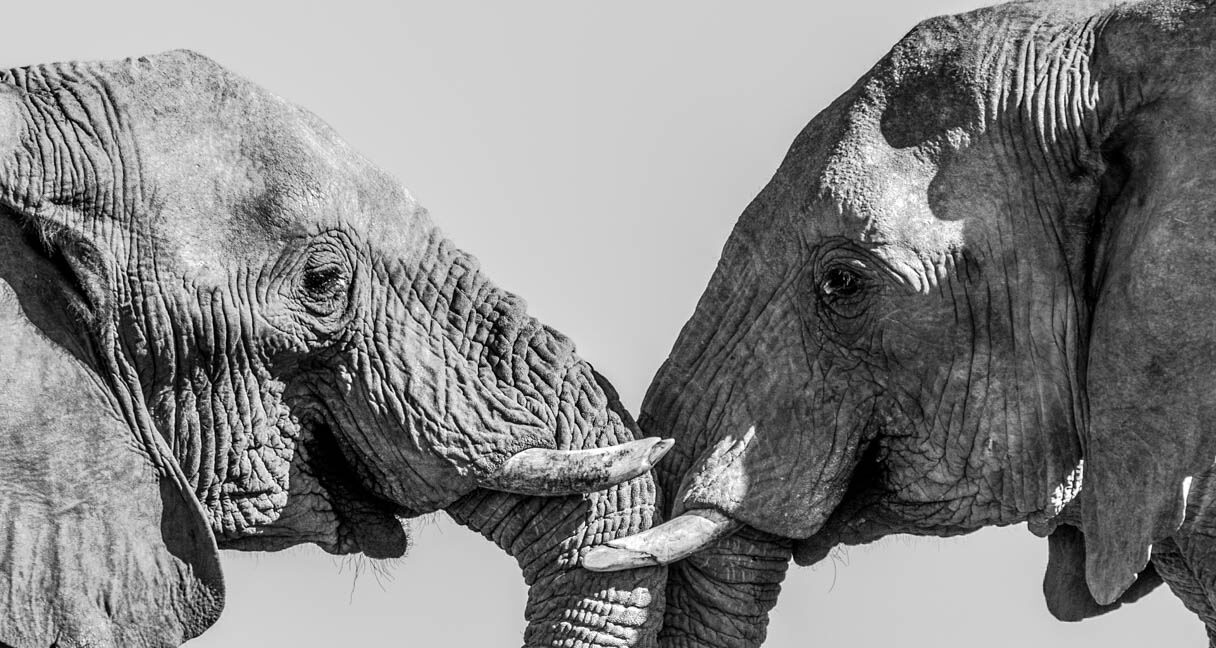
Banner image: African savanna elephants, the biggest land animals on the planet, are socially advanced and highly intelligent mammals. Image by O’Connell’s & Rodwell.
See related coverage:
Zambia seizes half-ton of ivory in major illegal wildlife crime operation
Huge ivory bust raises questions about follow-up investigations in Tanzania
Environmental crimes are often hidden by ‘flying money’ laundering schemes (commentary)
Cite this article
Mary Rice (2026). On ivory, follow the trafficking networks and not the headlines (commentary). Mongabay Conservation news. DOI: https://doi.org/10.66709/news-325640

