


In times of war, the hard and vital work of supplying food, water and medicine has been protected by international agreements for almost 80 years. Yet those protections have been systematically and repeatedly ignored in the two most bloody wars of recent years: Ukraine and Gaza.
Russia has attacked healthcare targets in Ukraine more than 3,200 times since the full-scale invasion in February 2022, according to the World Health Organization: about twice a day on average. That includes many “double-tap” attacks on the same target in quick succession, which are especially lethal for first responders.
In April, the UN security council heard that in the past three years, at least 1,010 humanitarian workers had died in 21 countries. More than half of those were in Gaza and the West Bank. That is three times more than the 377 killed in the previous three years.
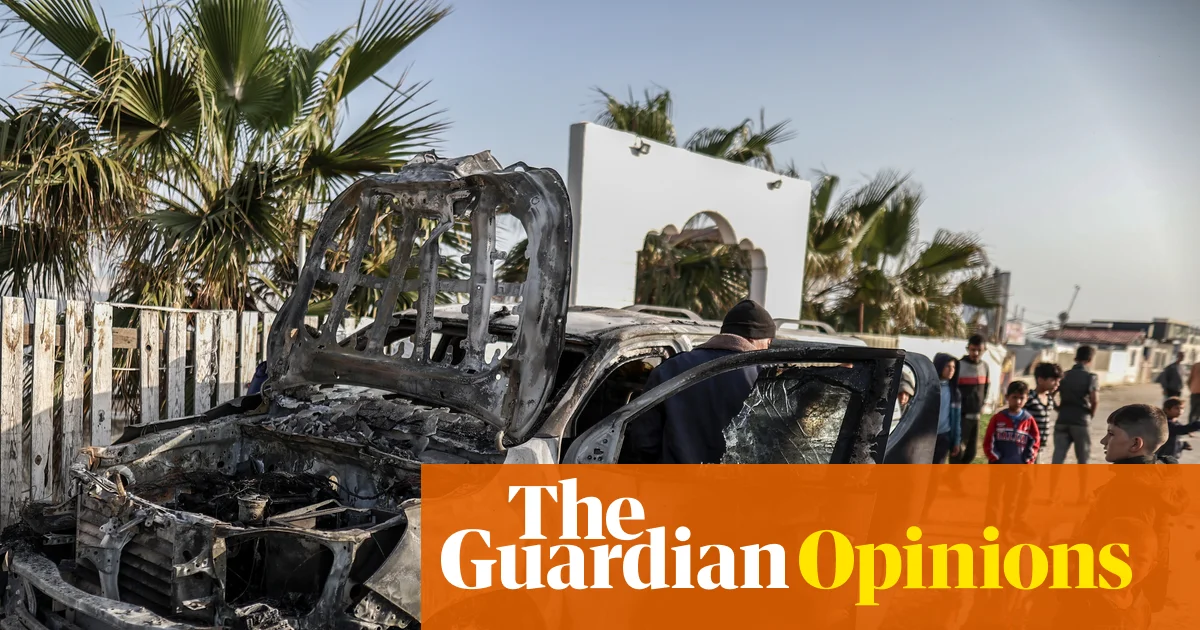
“This is not an accidental escalation,” said Tom Fletcher, the UN’s undersecretary-general for humanitarian affairs. “It is the collapse of protection.” This collapse of protection has led directly to the airstrikes on aid workers in Gaza, including seven of my own World Central Kitchen (WCK) team, who were killed by the IDF in April 2024 despite full cooperation and coordination with the military.
At the time, the IDF concluded that the attacks had been “a grave mistake” and a breach of its own standard operating procedures. It stated: “We consider the vital humanitarian activity of international aid organizations to be of utmost importance, and we will continue to work to coordinate and assist their activities, while ensuring their safety and safeguarding their lives.” The reserve colonel who ordered the strikes, Nochi Mendel, was dismissed for his actions.
However, these fine words were undercut by the IDF itself, when its military prosecutor decided last month not to open a criminal investigation into the airstrikes on our convoy. Now we understand, because of a Guardian investigation, that the targeting of the WCK convoy was the result of a military tactic of guilt by association. It means that lethal force can be triggered by suspicions, shadows, or simply prejudice. This undefined, unjustified and unlawful tactic is a mortal threat to all humanitarians. What are the protections under these conditions?
It is worth remembering why the fourth Geneva convention was created in 1949 and embraced by the world, with the express intention of protecting civilians in war and meeting basic humanitarian needs. In the immediate aftermath of the second world war, the scale of civilian suffering shocked the world’s conscience. Indeed, one of the key architects of the convention was Georges Cahen-Salvador, a French Jewish civil servant, whose family was imprisoned at the Drancy internment camp. They were being deported to Auschwitz in 1943 when they managed to escape to Switzerland. He was one of several survivors who drafted the fourth convention.
The convention’s assertions of shared values in war are not lost today, but they are struggling to survive.
David Ben-Gurion, Israel’s founding father, famously said: “The fate of Israel depends on two things: its strength and its righteousness.” It’s something that Israel’s military leaders like to quote, but their record falls far short. Humanitarian values are the foundation of righteousness; they are what separate responsible nation states from terrorist groups or rogue states who don’t care about civilian suffering. The protection of aid workers allows the world to ensure that civilians are cared for.
after newsletter promotion
We might be numb to the sight of Russia disregarding our values. But we surely cannot tolerate the only democracy in the Middle East behaving the same way.
-
José Andrés is the founder of the food aid charity World Central Kitchen, and a Michelin-starred chef
-
Do you have an opinion on the issues raised in this article? If you would like to submit a response of up to 300 words by email to be considered for publication in our letters section, please click here.
