


Welcome back to World Brief, where we’re looking at the fallout of Brazil’s presidential election, a devastating train crash in Spain, and Russian efforts to court Africa.
Welcome to Miami
In 2022, then-Brazilian President Jair Bolsonaro fled to the U.S. state of Florida after losing the presidential election to Luiz Inácio Lula da Silva. Four years later, Sen. Flávio Bolsonaro has followed in his father’s footsteps.
On Monday, Brazilian Supreme Federal Court Justice Alexandre de Moraes ordered Flávio to surrender his regular and diplomatic passports, just hours after the far-right senator lost the presidential election to Lula. Local authorities also reportedly alerted immigration officials to bar Flávio from leaving the country.
Flávio stands accused of corruption, tax evasion, and laundering more than $1 billion through an online gambling scheme. He is also separately under investigation for acquiring millions of dollars from Daniel Vorcaro, a disgraced banker at the heart of one of Brazil’s biggest financial scandals, to fund a biopic about his father, who was convicted of plotting an insurrection after his own 2022 presidential loss.
Flávio initially insisted that he planned to cooperate with Brazilian authorities. “I have never thought about leaving the country,” Flávio said on Monday. “I will hand over my passports and defend myself against this travesty, which is a clear attempt to intimidate me.”
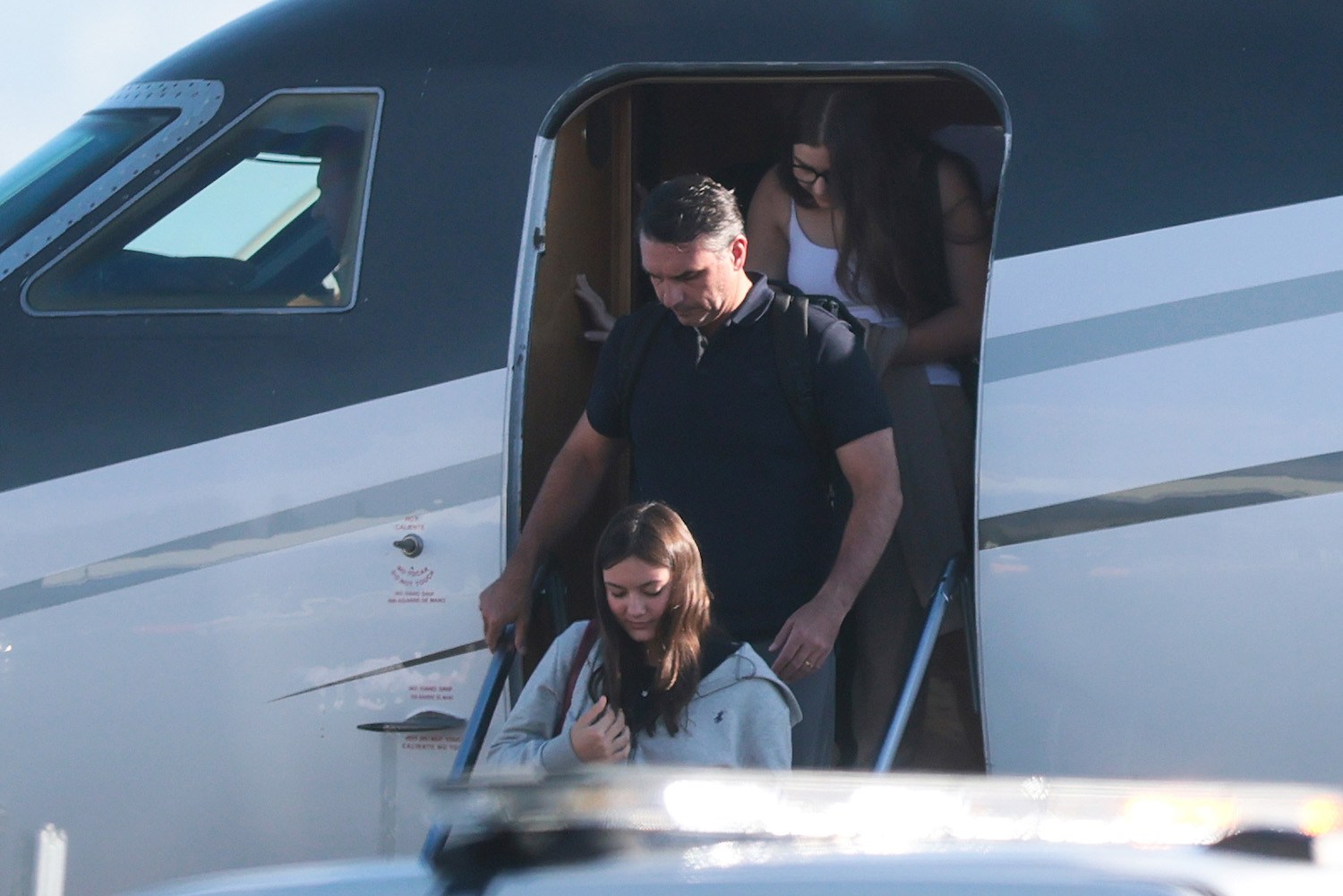
Yet according to Argentina’s National Directorate of Migration, the senator fled Brazil late Tuesday, using an Italian passport to enter Argentina by land before boarding a private flight to Ecuador and then another plane to the United States. He arrived in Miami early on Wednesday with his wife and two daughters after the Trump administration reportedly granted his family U.S. visas.
“I want to make it clear: I didn’t flee Brazil, I left for Brazil,” Flávio wrote in a statement on Tuesday, which he published on X, referring to himself as the “true elected president of Brazil.” He later deleted the statement and published a similar document calling himself “the leader of Brazil.” He thanked Argentine President Javier Milei and U.S. President Donald Trump for helping him escape, and he vowed to address the Brazilian people in the coming days to present a plan to oppose Lula.
Despite dozens of foreign leaders and the Organization of American States having recognized Lula’s surprise victory, Trump has questioned the results in a move largely seen as supporting Flávio’s electoral ambitions. “It looked like another rigged election, frankly,” Trump told reporters on Monday, without offering evidence.
Trump has a close relationship with the Bolsonaros, seeing them as far-right allies in the region. He has repeatedly clashed with Lula over trade policy, and he has parroted the Bolsonaro family’s allegations that Jair’s criminal conviction was a “witch hunt.” Leading up to last weekend’s election, Trump even held a photo op with Flávio, though the U.S. president stopped short of a formal endorsement.
The friendship has certainly been reciprocal. Flávio had promised to bolster ties with the United States if he won the presidency, vowing to join the Shield of the Americas anti-gang military program, establish a free trade agreement with Washington, and ally with the White House on critical mineral policy.
Those ties make Flávio’s decision to flee to Florida (Trump’s unofficial second base of operations) unsurprising. But what it means for the future of his political fortunes and those of the right-wing opposition that he leads is far less clear. “This feels like the ship has been left without a captain,” a Bolsonaro ally told CNN Brazil.
Today’s Most Read
What We’re Following
Deadly train crash. Spain suffered another train-related trauma on Wednesday, after the collision of two high-speed trains near the city of Toledo killed at least 68 people and injured around 100 others. Search-and-rescue operations are still underway.
The accident occurred early on Wednesday after an information technology failure involving railroad switching equipment stopped all trains on the heavily trafficked Madrid-Sevilla rail line. A train from Iryo, a competitor to the Spanish national rail line, stopped on the southbound tracks shortly after 8:30 a.m. local time. A few minutes later, the central control of Spanish rail gave the go-ahead for another southbound train from the state carrier RENFE to continue its journey through a roughly 15-mile stretch on the outskirts of Toledo, according to Spanish Transport Minister Óscar Puente.
The train is believed to have reached a speed of around 120 miles per hour when it slammed into the stalled Iryo train on the same track. “It was an accident that was truly inconceivable,” Puente said in a press conference.
The accident comes at a sensitive time for the Socialist government of Prime Minister Pedro Sánchez, who is facing a reelection fight in November. In January, a high-speed train derailment on the same line killed 46 people. And earlier this month, another high-speed train between Madrid and Barcelona caught fire, raising questions about the Spanish government’s oversight and maintenance of one of the world’s largest high-speed rail networks.—Keith Johnson
Putin courts Africa. This year’s two-day Russia-Africa summit kicked off in Moscow on Wednesday with a focus on bolstering the Kremlin’s reach on the continent. “The era when the destinies of entire continents were determined by a narrow bloc of states is coming to an irreversible end,” Russian President Vladimir Putin said, alluding to Moscow’s efforts to outbid China, Europe, and the United States for regional influence.
Putin emphasized Russia’s grain and fertilizer deliveries to more than 40 African countries; called for expanding Africa’s decision-making role in the U.S.-dominated World Bank and International Monetary Fund; and doubled down on Moscow’s security presence in the region, specifically with its paramilitary Wagner Group. Expanding ties with Africa could also help the Kremlin circumvent the impact of European sanctions.
Yet African nations may not be as enthused to strengthen ties with Moscow. Only around 22 African leaders attended this week’s summit, a significant drop from past years’ attendance. Some experts suspect that this is due to anger over Russia’s use of African soldiers in its war with Ukraine. “Security means little when young Nigerians are lured abroad and end up on a frontline they never chose,” Nigerian newspaper Vanguard wrote in an op-ed on Tuesday.
Britain’s budget proposal. British Finance Minister John Healey unveiled a highly anticipated 2027 budget plan on Wednesday that aims to help households weather surging energy bills and high fuel prices. The proposal is the first by Prime Minister Andy Burnham’s government, which has made economic reform and fiscal discipline among the top items on its agenda.
According to Healey, the plan envisions giving around 20 million lower-valued homes a roughly $133 payment to help offset rising costs, extending a freeze on fuel duty rates until at least July, and abolishing standing gas bill charges for 23 million households. These energy-focused savings measures are in line with Burnham’s other efforts to provide Britons with price stability amid supply chain crises fueled by the wars in Iran and Ukraine.
Among the budget’s other proposals, Healey vowed to reduce government borrowing from 4.2 percent of GDP this year to 3.4 percent of GDP next year, remove import duties on more than 100 products, increase the national minimum wage, and raise taxes on gambling and banks. This is a “budget for the worker, the sole trader, the parent at the school gate,” Healey said, adding that his proposal hopes to eliminate the current deficit and “get Britain’s finances into the black” within three years.
Critics, however, remain unimpressed with Healey’s promises, arguing that the timeline for relief could be slow and that energy shocks will likely still be felt by many Britons. The proposal also delayed addressing several major concerns, such as how exactly Healey will increase defense spending and continued public anger toward high taxes, until next year.
Odds and Ends
A Belgian chocolate competition is giving Willy Wonka a run for his money. Confectionary artisans from around the world gathered in Antwerp, Belgium, this week for a two-day chocolate sculpture contest. Participants of the World Chocolate Masters showcased several intricate creations, from a bird vase to an elf to an original video game character. But the winner of the event went to Italian chocolatier Tommaso Grollero, whose octopus sculpture earned him the highest overall score.
