


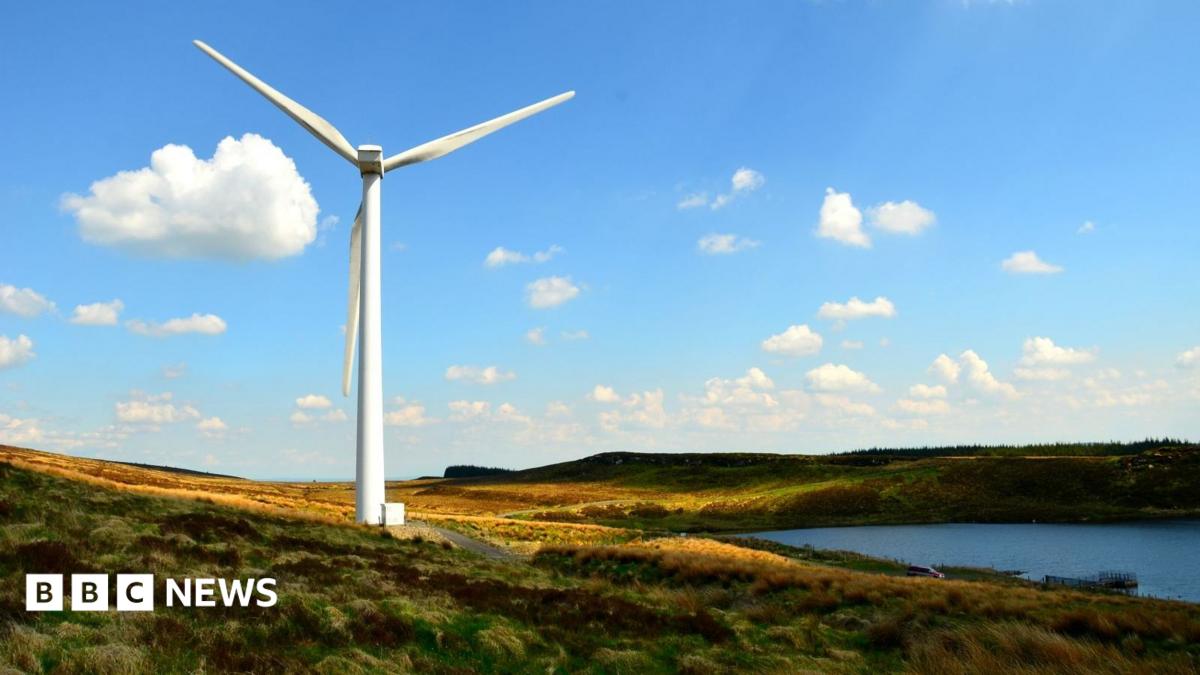
More than half (53%) of Northern Ireland’s electricity came from renewable sources in the year to June – beating the 51% level previously set in 2022.
And for the first time renewable generation has consistently exceeded non-renewable generation since January.
Even when imported electricity was taken into account, the amount of renewables equalled the previous record of 50%, set in 2022/23.
The Economy Minister Caoimhe Archibald said the increasing level of renewable energy would help Northern Ireland “move away from price volatility and towards more stable and fairer prices” .
Almost three-quarters (74%) of renewable electricity came from wind. Bioenergy – anaerobic digestion, incineration and fermentation – provided just under one-fifth (18%).
Solar energy provided 6%, landfill gas provided 1%, and hydro/tidal generation provided 1%.
Northern Ireland has a target of generating 80% of electricity from renewable sources by 2030.
The increase to 53% to June 2026 follows several years of reduced renewable generation.
Lower levels can be due to weather conditions.
There is also a high rate of dispatch down in Northern Ireland – when turbines are switched off because there is not enough demand for the power being generated.
That is to protect the grid which has a limit on the amount of renewable energy it can carry due to fluctuations.
But moving to more renewable energy is a critical part of the journey to net zero and the transition from fossil fuels.
The minister said the rising cost of fossil fuels globally was “impacting negatively” on both businesses and households, particularly those with lower incomes.
She added that increased levels of renewable electricity “move us away from price volatility and towards more stable and fairer prices for the electricity we use”.
