


HOMESTEAD, Fla.—It was too hot to sleep.
When the lights turned off and the air conditioning unit went quiet that night in July, it didn’t come as a surprise for Mirella Estrada, 51. She and her husband, both farmworkers, had long been struggling to pay off their climbing electricity bill debt. Earlier that week, a letter warned their power could be shut off.
A hotel would be cheaper than keeping the lights on—at least for one night, she figured—but when Estrada looked, all the affordable rooms were taken. Around 1 a.m., she and her two daughters couldn’t stay inside any longer. Along with their Pomeranian dog, the family headed to the car to sleep instead. (Her husband was away, working a field in North Carolina.)
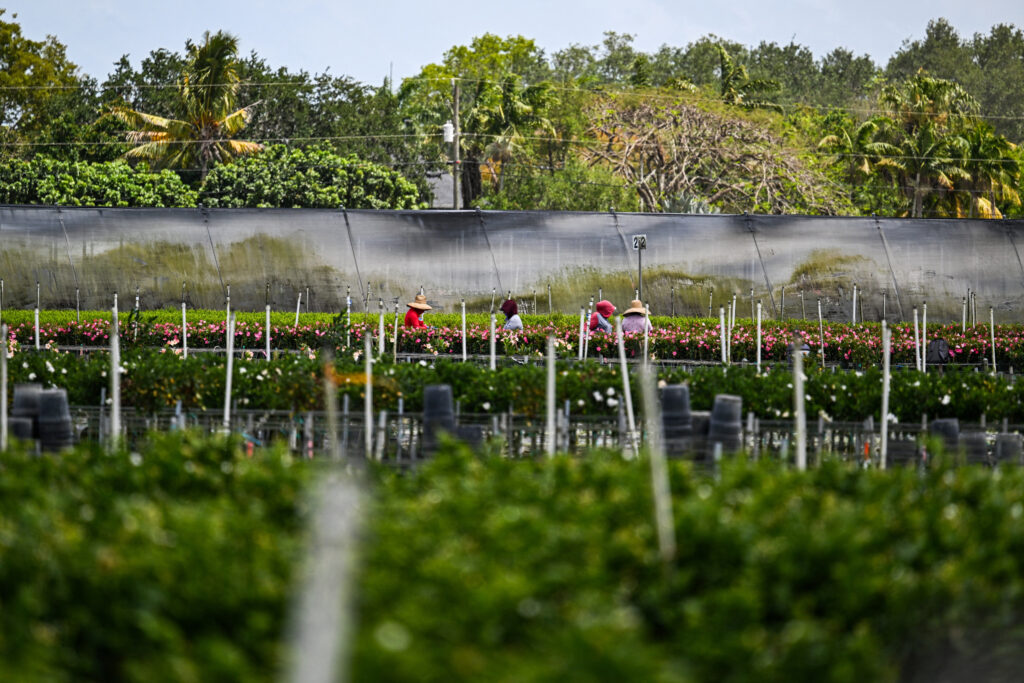
In the South Florida farmworker neighborhoods of Homestead, hundreds of families like Estrada’s have lost power this summer amid record-breaking hot days. The shutoffs in the working-class and majority-Latino community come as part of a new city policy that attempts to aggressively collect on past-due balances, following several years of a sort of soft moratorium on disconnections.
In 2025, Homestead only recorded 68 “shut-offs,” which typically means the address was disconnected due to nonpayment. (City data was obtained through a public records request.)
This year, in March through mid-August, more than 1,300 customers in Homestead have been disconnected for nonpayment or returned payment, according to data provided by Crystal Ollivierre, the assistant city manager who oversees Homestead Public Services. The data includes addresses that have been disconnected more than once.
The city’s crackdown comes during a particularly hot time for South Florida: Thirty-seven heat advisories have been issued for Miami-Dade County this summer. The National Weather Service also issued one extreme heat warning, the most severe alert for dangerous heat conditions, on Aug. 19, which was prompted by a forecasted heat index of 112 degrees. That day went down as the hottest August day on record in Homestead. Last summer, 12 heat advisories were issued.
Twenty-five states have some sort of protection against shutoffs during extreme heat, according to an Indiana University analysis, but Florida is not one of them. (While Florida Power and Light and Duke Energy, the two largest utilities in Florida, have individually agreed with state regulators to refrain from disconnections when it’s hotter than 95 degrees, other Florida utility companies are under no such obligation.)
David Konisky, an Indiana University researcher and co-director of the Energy Justice Lab, said disconnections are common in the summer “when it’s the hottest.”
“Utilities are shutting people off at the very worst times,” said Konisky, who has collected and analyzed utility data for an online dashboard tracking electricity disconnections. Homestead and its surrounding areas are among the most heat-vulnerable communities in South Florida, according to a Miami-Dade County analysis of heat exposure, hospitalizations and emergency department visits.
Many municipal utilities like Homestead’s have refrained from shutting off electricity for nonpayment since the COVID-19 pandemic, experts told Inside Climate News, even after state-imposed moratoriums expired. But during those subsequent years, electricity prices increased, outpacing inflation. Household electricity debt ballooned.
“We’re seeing this humongous scale of energy insecurity persist after the pandemic, and even become more adverse now that these protections have been going away,” said Maria Castillo, a manager at the clean energy think tank RMI who researches energy poverty.
A city analysis from 2025 found that Homestead Public Services was owed more than $8 million in outstanding bills from accounts for which the city was still providing service. There were more than 9,000 delinquent residential accounts, according to a recording of a January city council working session on the topic obtained through a public records request.
“We realized there was a very high level of delinquencies throughout the city,” said Ollivierre, the assistant city manager, in an interview. “We had to kind of get a hold of that.”
As of April, the average delinquent energy bill in Homestead was $617. The highest past-due bill was $9,981.
In the spring, with the city council’s blessing, the utility department started to more aggressively attempt to collect the money, a program that included resuming its disconnection policy.
Ollivierre said the department notified customers about the change in March, urging them to settle up before a disconnection. For those who did not pay, she said, the city began issuing shutoff notices, starting with the highest balances and working its way down.
City officials in Homestead have said disconnections are necessary to spur residents into action, and that the city cannot afford to indefinitely allow past-due balances to pile up because it will affect their ability to maintain and improve energy infrastructure.
“For quite a while, the city has not been in a collections or shutoff process,” Ollivierre said. “Unfortunately, without the disconnection, customers didn’t necessarily partake in the [payment assistance] options that were provided.”
Ollivierre said the city is not currently discussing protections against disconnections during extreme heat but that “doesn’t mean it’s not an option for the future.”
On average, municipal utilities tend to disconnect residents at higher rates than investor-owned utilities and electric cooperatives. In 2024, the only year for which comprehensive federal data is available, municipal utilities disconnected 12 out of every 100 customers, whereas investor-owned utilities disconnected six out of every 100 customers, one analysis of the data found.
Castillo and other experts said the discrepancy has not been well studied. In part, it could be because state regulators have more power over investor-owned utilities to impose consumer protections, such as barring disconnections for very low outstanding balances or requiring the company to send multiple notices before disconnecting. Municipal utilities may also be limited by city budget constraints in a way that investor-owned utilities are not, Castillo said.
The crackdown on electricity debt in Homestead comes at a particularly bad time for its undocumented immigrant residents. U.S. Immigration and Customs Enforcement appears to have ramped up its enforcement activities in the largely immigrant community in the last two months, local advocates said. About 40 percent of Homestead’s population is foreign born, and thousands of residents in the community work in the South Florida agricultural fields.

Maria García, a local coordinator for the Farmworker Association of Florida, said some undocumented workers are avoiding going outside and choosing to skip work for fear of detention. “It seems there have been more families divided in the last two months,” García said in Spanish.
In addition to the emotional distress of separation, it also creates financial stress on families, García said. A household may lose half or more of its income without that person working. As a result, she said, many families she knows are trying to cut their electricity bills by only using air conditioning units for very short periods of time or only in one room.
Nationally, the average amount spent on electricity this summer is expected to reach $778, according to the National Energy Assistance Directors Association. In Homestead, residents told Inside Climate News that their bills are, in some cases, hundreds of dollars more this summer than in past years.
Climbing oil and gas prices, utility rate increases and grid infrastructure investments have made electricity more expensive across the nation. And with climate change, summers are hotter than they once were, meaning families must use more electricity to cool their homes.
The total household utility debt in the U.S. is approximately $25 billion, with about one in six households behind on their electricity bills, according to the National Energy Assistance Directors Association.
This story is funded by readers like you.
Our nonprofit newsroom provides award-winning climate coverage free of charge and advertising. We rely on donations from readers like you to keep going. Please donate now to support our work.
When disconnections resumed in Homestead, the city also revamped its payment options and financial assistance programs, which now include a one-time forgiveness of up to $500 for those who qualify. (The application requires notarized documentation of a crisis affecting your ability to pay, such as a job loss or medical emergency, and a photo ID that matches your address. Castillo of RMI said such rules can make it harder for those in need to receive relief.)
According to Ollivierre, the initiative has resulted in more than 500 customers bringing their accounts current and about 350 customers joining a payment plan.
For Estrada’s family, however, the payment plan is still causing significant financial strain as they attempt to avoid a shutoff. For years, Estrada said, they have made large payments whenever they could, but farmwork is irregular. When they first got the notice this summer warning of an electricity disconnection, they owed more than $2,000.
After being disconnected that night in July, Estrada’s family went on the payment plan. Doing so required a 25 percent down payment, which for them amounted to about $500. Estrada said she’s frustrated by the payment plan because in addition to the monthly debt payment, they still have to pay the current month’s bill, which adds hundreds more dollars, especially in the summer.
“So that means it’s a very large amount that we have to turn in every month,” Estrada said, speaking in Spanish.
This summer, she said, her husband has only been working about three days a week due to an issue with the crop in the fields where he works. She also works as an office manager for the Farmworker Association of Florida, but worries that with his reduced income, they won’t be able to make the next electricity payment.
“It seems sort of unfair to me because they can see that he has been paying them—and in a large amount—whenever we can,” Estrada said. “We are in Florida. It’s very hot. We cannot be without electricity.”
Erin Douglas is a climate and environment journalist based in Washington, D.C.
About This Story
Perhaps you noticed: This story, like all the news we publish, is free to read. That’s because Inside Climate News is a 501c3 nonprofit organization. We do not charge a subscription fee, lock our news behind a paywall, or clutter our website with ads. We make our news on climate and the environment freely available to you and anyone who wants it.
That’s not all. We also share our news for free with scores of other media organizations around the country. Many of them can’t afford to do environmental journalism of their own. We’ve built bureaus from coast to coast to report local stories, collaborate with local newsrooms and co-publish articles so that this vital work is shared as widely as possible.
Two of us launched ICN in 2007. Six years later we earned a Pulitzer Prize for National Reporting, and now we run the oldest and largest dedicated climate newsroom in the nation. We tell the story in all its complexity. We hold polluters accountable. We expose environmental injustice. We debunk misinformation. We scrutinize solutions and inspire action.
Donations from readers like you fund every aspect of what we do. If you don’t already, will you support our ongoing work, our reporting on the biggest crisis facing our planet, and help us reach even more readers in more places?
Please take a moment to make a tax-deductible donation. Every one of them makes a difference.
Thank you,
