



- On June 30, 266 clan leaders across 41 villages in Papua New Guinea’s Torricelli Mountains signed a legally binding “conservation deed” that protects rainforest and its inhabitants and is the result of decades of work by the Tenkile Conservation Alliance.
- The deed shields the range’s exceptional biodiversity, including the critically endangered tenkile and weimang tree kangaroos, after a long-stalled effort to secure formal government protected-area status has left communities exposed to logging pressure.
- Conservation deeds have held up in court, with a 2025 National Court ruling citing one to restrict logging on clan lands in East New Britain.
- Built over two years through a free, prior and informed consent process, the Torricelli deed bans commercial logging and mining, as well as the hunting of threatened species, renews every five years and gives the alliance a model it now plans to extend to nearby areas under similar threat.
It happened with a few strokes of a pen on a hilltop in northwestern Papua New Guinea on June 30: The leaders of the Tenkile Conservation Alliance (TCA) finalized an agreement to protect the densely canopied forests of the Torricelli Mountains that ripple outward in every direction.
Their signatures were the last of hundreds collected from clan leaders across the range in June. With this conservation deed, TCA and the people of the Torricellis have achieved a key milestone after decades of work to stave off logging, help wildlife rebound and improve the lives of community members.
After the signing, those gathered erupted in celebration, dance and song at TCA’s base in the village of Lumi. In all, 266 clan leaders signed the document.
Caleb Bulu, a project manager with TCA, called it an “exciting time.”
“We have been waiting for so long,” said Bulu, who has fought to keep loggers off his own land in the region.
The people of the Torricelli Mountains were ecstatic, he said in a call via WhatsApp a few days after the signing. “They were very happy, all across the 41 villages [and] were celebrating at that time.”
The Torricellis are home to a staggering array of species — perhaps 4% of the world’s biodiversity in a relatively tiny speck of mostly intact montane forest — including two species of critically endangered tree kangaroo. In the 1990s, mammologist Tim Flannery and his colleagues in PNG first described the tenkile (Dendrolagus scottae) and the weimang (D. pulcherrimus) for Western science. But Flannery worried that their numbers were so low they might end up as mere footnotes, brief glimpses of the spectacular explosion of species distinctly drawn by the unique geography of New Guinea before their existence was snuffed out forever.
The two species exist — then and now — alongside a third, the grizzled tree kangaroo (D. inustus), in the region’s mountain rainforests. In part, it was the animals’ dwindling presence that inspired Jim and Jean Thomas, zookeepers from Australia, to move to the Torricelli Mountains in 2003 and begin volunteering for TCA.
Once there, they started working with communities to end the hunting of tree kangaroos — to great effect. Tenkile numbers have surged at least threefold this century, along with the documented expansion of both the tenkile and weimang into parts of the Torricellis where they hadn’t been seen in decades.
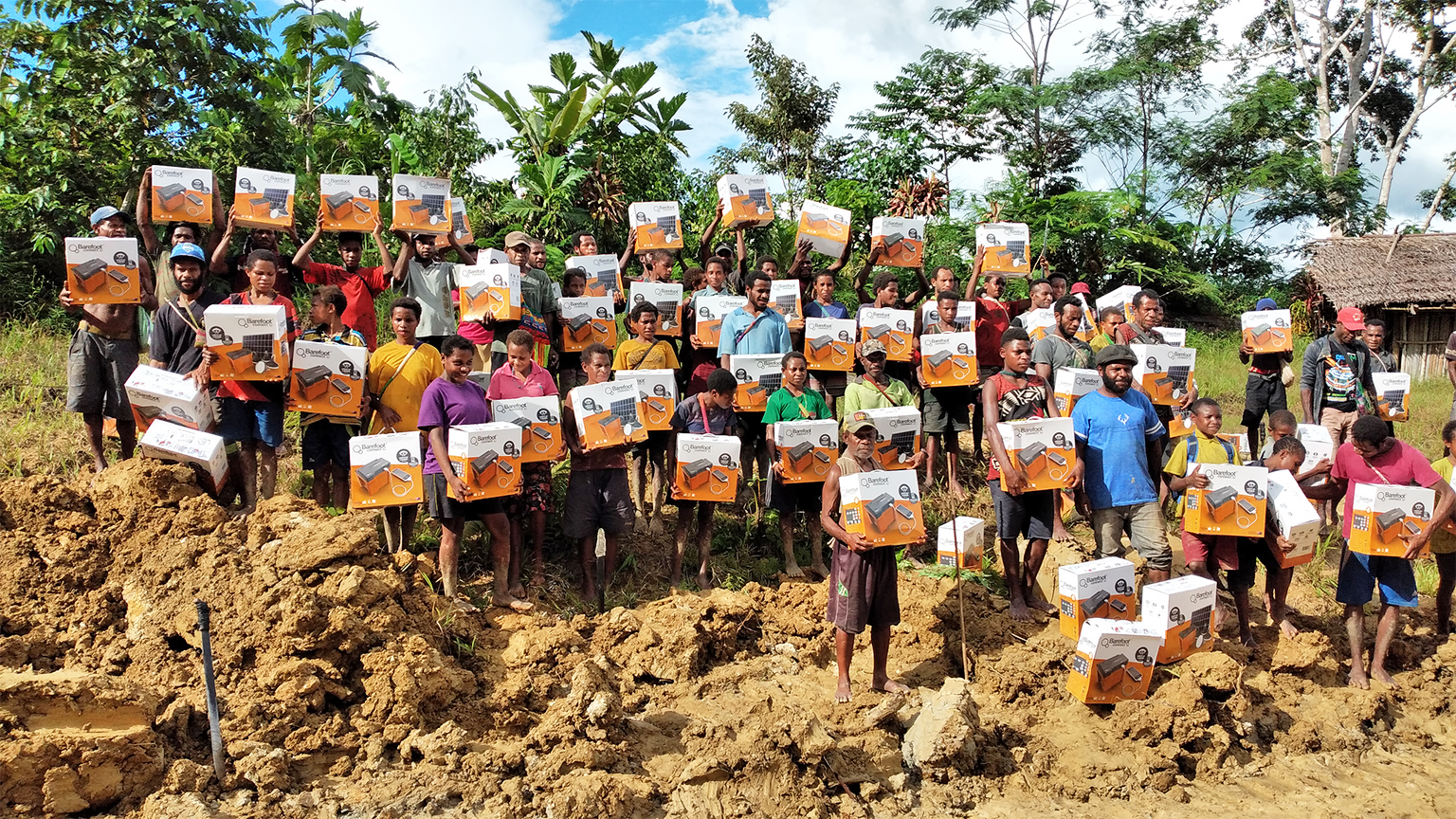
Communities saw benefits too. TCA developed ranger programs for men and women and continues to invest in bringing water tanks, metal roofs and solar-powered street and household lighting to even remote villages.
In 2005, TCA and dozens of partner communities set out to protect their homelands. The effort, involving years of mapping, reporting and consultations with government officials, often seemed tantalizingly close to achieving an officially designated Torricelli Mountain Range Conservation Area. But routinely, the process would stall out as government support flagged.
In that time, the pressures from loggers and the pursuit of high-value timber species persisted, degrading clan-held lands, bringing the threat of violence and sparking internal conflict among the people who call the Torricellis home.
With little assurance that their efforts would result in a traditional protected area to — on paper at least — provide some defense against the onslaught, TCA’s leaders decided to pursue a relatively little-known tool called a conservation deed, said Jim Thomas, who is now TCA’s CEO. (Jean is now the organization’s chief operating officer.)
“We’ve looked at the history, and we’ve decided, OK, well, we’ll do that as an alternative — something else to do — to protect the land,” though TCA still plans to pursue a government-recognized protected area, Jim Thomas said in a video call.
The deed is a legally binding agreement covering more than 125,000 hectares (about 309,000 acres) of the Torricelli Mountain range. The 41 villages whose leaders signed have agreed to uphold a set of rules, allowances and prohibitions that they themselves helped to create through two years of consultations facilitated by TCA.

“It’s important to have the people take ownership of what is in the deed,” says Evelyn Wohuinangu, a TCA board member and a lawyer with the PNG-based Centre for Environmental Law and Community Rights (CELCOR) who helped craft the deed.
Designating a national protected area is a top-down process, Wohuinangu explains. By contrast, conservation deeds rely on contractual arrangements. “If there are instances [of] logging, encroachment or even mining or exploration, people have been empowered,” she said in a WhatsApp call. “They know the different pathways to follow in terms of trying to seek assistance if we go down that path with logging and other extractive industries.”
Indeed, other communities in PNG have signed their own conservation deeds, typically in response to similar threats of extraction on their lands. In 2000, the NGO Bismarck Ramu Group, founded by an activist and former judge in PNG named Brian Brunton, orchestrated the country’s first conservation deed. Ten clans signed on to stop logging that had begun to encroach on their lands — and the protections remained, keeping timber companies at bay.
The framework of PNG’s conservation deeds, which protect areas large and small, rests on the country’s unique land ownership structure: Around 97% of PNG’s land is customarily held, according to the United Nations and researchers. Clan control of the land, which is recognized in PNG’s constitution, allows conservation deeds to use “underlying contract law in PNG,” Peter Dam, technical advisor with the PNG-based NGO FORCERT, told Mongabay in a call.
And their effectiveness is now backed by case law. In 2022, the Tavolo Community Conservation Association of East New Britain province, which works with FORCERT, tested the deed it had signed. In a case brought before PNG’s National Court, association members claimed loggers were harvesting timber from their forests without their consent. Three years later, a judge cited that conservation deed in a decision restricting logging on clan-held lands covered by the deed and even extending protections to a 500-meter (1,640-feet) buffer zone beyond the deed boundaries.
Now, TCA and the communities of the Torricellis hope their efforts will afford their forests the same protections.
“The TCA is arguably Melanesia’s flagship community conservation initiative,” Flannery told Mongabay in an email. He called the deed’s signing “a huge step forward for the people of the Torricellis.”
“Hopefully it will put an end to logging and other encroachment into the conservation area, and give more control to the local community about land management,” Flannery added.

Contractual conservation
The challenges of getting a government-designated conservation area in the Torricellis aren’t specific to this part of the country, according to experts. Jim Thomas said in a 2022 Mongabay podcast that he believes the difficulty is often down to the political influence that logging interests hold in PNG, though such connections are hard to prove definitively.
“It goes through the political networks, and then the people on the ground are [the] last to find out,” Thomas told Mongabay recently.
And Dam notes that getting the Conservation and Environment Protection Authority (CEPA) to process protected area proposals “has been very difficult.”
CEPA is a government agency created by an act of parliament in 2014 as the government’s environmental enforcement arm. But it’s often criticized for lacking capacity, appropriate staffing levels and funding — strains of which have shown up in the agency’s own self-assessment.
The office of CEPA’s managing director did not respond to Mongabay’s requests for comment.
Still, Thomas says the Tavolo community’s successful legal defense of their conservation area was confirmation that TCA was doing the right thing, given that Torricelli landowners are no strangers to logging without their permission.


‘Free, prior and informed consent’
The issue of consent is central to hammering out conservation deeds, says Grace Dom, a lawyer and legal and policy advisor with WCS Papua New Guinea.
Building consensus and developing plans does take time, Dom adds, but the level of engagement is also a strength of the deed. “It stands and falls on community leadership and community ownership.”
She says WCS teams spent about three years working with communities on Manus Island, where communities have also faced encroachment on their lands.
“It’s an intense process. It’s intense and intensive,” Dom says.
The discussions that shaped their deed agreements — around threats and priorities for protection, land mapping and current conservation practices — adhered to the principle of free, prior and informed consent (FPIC), she says.
FORCERT also helps facilitate such processes as a conservation partner to Tavolo and other communities in PNG, revealing ways people have stewarded the land for generations, Dam says.
“There’s often a lot of traditional laws already either in place or people still know them,” he says. “They may not be followed anymore, but they’re sort of revived through this process.”


The Torricelli deed lays out stipulations like the governing structure for the deeded area, with each village having a conservation area management committee that includes at least 30% women. It bans any commercial logging, mining or large-scale agriculture outright. And hunting of threatened species, including any of the three species of tree kangaroo, isn’t allowed.
Conservation deeds in PNG are renewable — in the case of the Torricellis, on a five-year cycle. In some instances, Dam says, that renewal process can be a periodic formality.
But it’s also a chance for Torricelli communities to refine how the deed is structured, says Bulu with TCA.
“They will put it into trial and see if it works,” he says. “We will be coming back after five years to evaluate what we are doing.”
Thomas and his teammates have plans to approach around two dozen villages in the Bewani Mountains. The Bewanis have “a lot of untouched primary forests, which is getting hammered by the loggers at the moment,” Jim Thomas says.
Dom of WCS notes that PNG as a whole has also had to learn where a conservation deed fits in a broader conservation strategy; for example, that deeded areas can also be part of protected areas established by the government, she says.

Wohuinangu says a conservation area designation would bring more recognition to the Torricellis, both in PNG and internationally.
When that day comes, Bulu adds that the communities in the Torricellis will be ready.
“Everything will be the same — the same process that we are using [for the conservation deed] — for the gazettal of the Torricelli Mountains. The maps and everything,” he says. “There’s no difference.”
“We’d still like to obtain both,” Thomas says.
Banner image: A weimang tree kangaroo (Dendrolagus pulcherrimus) at the Tenkile Conservation Alliance base in Lumi. Image by John Cannon/Mongabay.
John Cannon is a staff features writer with Mongabay. Find him on Bluesky and LinkedIn.
PNG’s Torricelli Mountains teem with life — and the risk of extinction
Logging threats loom over tree kangaroo refuge in Papua New Guinea
Citations:
Flannery, T. F., and Seri, L. (1990). Dendrolagus scottae n.sp. (Marsupialia: Macropodidae): a New Tree-kangaroo from Papua New Guinea. Records of the Australian Museum, 42, 237-245. doi:10.3853/j.0067-1975.42.1990.117
Flannery, T. F. (1993). Taxonomy of Dendrolagus goodfellowi (Macropodidae: Marsupialia) with Description of a New Subspecies. Records of the Australian Museum, 45, 33-33. doi:10.3853/j.0067-1975.45.1993.128
Armitage, L. (2001). Customary land tenure in Papua New Guinea: Status and prospects. Brisbane: Queensland University of Technology. http://dlc.dlib.indiana. edu/archive/00001043/00/armitage.pdf (accessed 30 July 2026).
FEEDBACK: Use this form to send a message to the author of this post. If you want to post a public comment, you can do that at the bottom of the page.
Cite this article
John Cannon (2026). New ‘conservation deed’ aims to protect tree kangaroos, forests, people in Papua New Guinea. Mongabay Conservation news. DOI: https://doi.org/10.66709/news-325195

