

Close Menu
NCIJ Network NCIJ Network
    What's Hot

    US Treasury borrowing rises $68B as reserves fall

    August 4, 2026

    Strange quantum experiment shows “negative time” is more than an illusion

    August 4, 2026

    Madison clears encampment at police shooting site, arrests 7

    August 4, 2026
    Facebook X (Twitter) Instagram
    Trending
    • US Treasury borrowing rises $68B as reserves fall
    • Strange quantum experiment shows “negative time” is more than an illusion
    • Madison clears encampment at police shooting site, arrests 7
    • Qatar Confirms Progress in Indirect U.S.-Iran Peace Talks
    • How Togo has become a new entry point for weapons sent by Russia to Mali
    • The Farage and Lowe drama that’s consuming the British right – POLITICO
    • Government to operate as normal while Burnham on holiday, No 10 says
    • US cannot ‘stay isolated’ from Chinese EV competition, warns Lucid CEO
    • About
      • Our Team
      • Editorial Policy
      • Editorial Independence
      • International Support
    • Trust & Standards
      • AI Usage Policy
      • Conflict of Interest Policy
      • Corrections Policy
      • Ethics Policy
      • Fact-Checking Policy
      • Source Protection
    • Get Involved
      • Guide for Sources
      • Support Independent Journalism
    • Legal
      • Cookie Policy
      • Privacy Policy
      • Terms of Use
    Facebook X (Twitter) Instagram
    NCIJ Network NCIJ Network
    Tuesday, August 4
    • Home
    • World
    • Ai
    • Business
    • Politics
    • Health
    • Crypto
    • Science
    • Technology
    • Cybersecurity
    • Defense & Security
    • Economy
    • Energy
    • Europe
    • More
      • Fact Check
      • Investigations
      • Opinion & Analysis
      • Environment
    NCIJ Network NCIJ Network
    Home»Science

    These underwater bones could solve a mystery about extinct giants

    NCIJ NETWNCIJ NETWORKBy NCIJ NETWNCIJ NETWORKAugust 4, 2026 Science No Comments3 Mins Read
    Share
    Facebook Twitter LinkedIn Pinterest Email

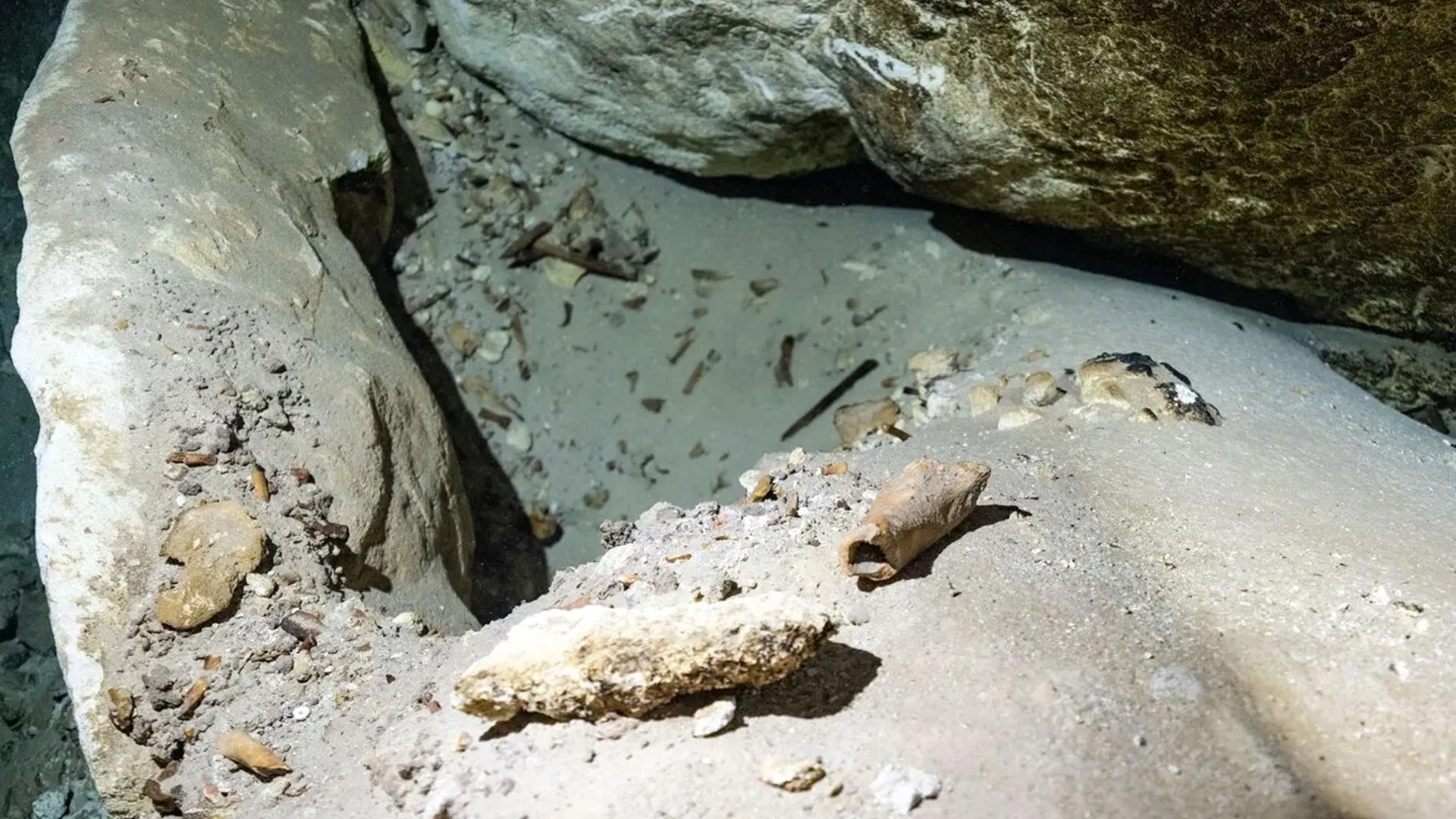
    Bones recovered from underwater caves can provide an extraordinary record of the distant past. Until now, however, scientists have lacked a reliable way to determine how the remains of extinct megafauna and other animals accumulated, survived, and changed inside these submerged graveyards.

    A new study led by Griffith University provides researchers with a framework for reading the evidence preserved on these bones.

    Reading the Fingerprints Left on Cave Bones

    “By analyzing animal bones from two underwater cave systems in South Australia, we have revealed how different cave environments leave distinct preservation ‘fingerprints’ on skeletal remains,” said Meg Walker, a PhD Candidate supervised by Australian Research Centre for Human Evolution Director Professor Julien Louys.

    “Backed by radiocarbon-dated bones, we tracked how skeletons accumulated and were modified over decades and centuries in underwater caves, then compared them to those buried in dry caves.

    “Using a range of methods, from the macro to the micro, we looked at features associated with wet and dry caves.

    “Things like spatial distributions of the bones and their surfaces, down to elemental compositions and proteins trapped in ancient cells.”

    The analysis showed that underwater caves can preserve skeletal remains exceptionally well. In many cases, the bones retained their original structure and finely detailed surfaces.

    At the same time, submerged cave environments created distinctive chemical and biological marks. The type of evidence found on each bone depended partly on the amount of light in the surrounding water and the organisms living there.

    Light, Algae, and Total Darkness

    Near brightly lit cave entrances, several kinds of algae and plants grew in the water. These organisms sometimes colonized the surfaces of bones, leaving recognizable signatures behind.

    Conditions were very different in the midnight regions of the caves. Because sunlight never reaches these areas, plants cannot grow there, and the bones often remained pristine.

    Bones preserved in dry caves displayed a different set of changes. They lacked the aquatic signatures found on submerged remains. Instead, land-based bacteria consumed parts of the bones, while plant roots carved long grooves across their surfaces.

    Animal Remains From South Australian Caves

    Walker and her colleagues collected historical animal bones from Green Waterhole and Gouldens Sinkhole, two underwater cave systems near Mount Gambier, South Australia. The research team included specialist cave divers from the Cave Divers Association of Australia.

    The remains came from both native and introduced animals, including cows, kangaroos, emus, sheep, pigs, dingoes, rabbits, possums, quolls and swamp rats. Some of the specimens may date back to the arrival of the first Europeans and the establishment of the city during the 1840s.

    By examining how these more recent bones were deposited and altered, the researchers aimed to understand how fossils belonging to extinct megafauna may also have entered underwater caves. The evidence could also reveal the environmental conditions that surrounded those ancient remains.

    A New Tool for Megafauna Research

    “This study has delivered the first framework for interpreting how megafauna fossils formed, survived, and changed in underwater caves,” Miss Walker said.

    “It will provide archaeologists and paleontologists worldwide with a powerful new tool for reconstructing past environments and histories in these challenging conditions.”

    The study “Neotaphonomic characteristics of vertebrate site formation in underwater caves” has been published in PLOS One.

    bones extinct giants mystery solve underwater
    NCIJ NETWNCIJ NETWORK
    • Website

    Keep Reading

    Strange quantum experiment shows “negative time” is more than an illusion

    This hydrogen turbine turns controlled explosions into electricity

    Emperor penguin chicks like these starved. An iceberg may be the cause

    Ames Science Stars of the Month – August 2026

    518-million-year-old creature reveals the origins of spider fangs

    Smoke Streams Across Eastern Washington

    Add A Comment
    Leave A Reply Cancel Reply

    Editors Picks

    US Treasury borrowing rises $68B as reserves fall

    August 4, 2026

    Strange quantum experiment shows “negative time” is more than an illusion

    August 4, 2026

    Madison clears encampment at police shooting site, arrests 7

    August 4, 2026

    Qatar Confirms Progress in Indirect U.S.-Iran Peace Talks

    August 4, 2026
    Latest Posts

    Oil prices hit $100 for the first time since May

    July 23, 2026

    Pew Survey: China May Be Liked More, but It Is Celebrating a Race It Never Ran

    July 23, 2026

    Yinson Production and PTSC’s FSO heads off to Southeast Asian oil project

    July 23, 2026

    Subscribe to News

    Get the latest sports news from NewsSite about world, sports and politics.

    NCIJ Network is an independent digital news platform delivering trusted investigative journalism, European and global news, in-depth analysis, and fact-based reporting with accuracy, transparency, and integrity.

    Facebook X (Twitter) Instagram Pinterest YouTube

    US Treasury borrowing rises $68B as reserves fall

    August 4, 2026

    Strange quantum experiment shows “negative time” is more than an illusion

    August 4, 2026

    Madison clears encampment at police shooting site, arrests 7

    August 4, 2026

    Subscribe to Updates

    Get the latest creative news from FooBar about art, design and business.

    Type above and press Enter to search. Press Esc to cancel.