


- Madhu Rao, chair of the IUCN World Commission on Protected Areas (WCPA) told Mongabay governments must confront the conflict between industrial development and biodiversity protection and that expanding protected areas alone will not be enough.
- Rao said that countries must invest in effective management, protect critical ecosystems, support rangers and ensure Indigenous peoples and local communities have a meaningful role in conservation.
- As governments prepare to review progress toward protecting 30% of the world’s land and waters by 2030, Rao identifies a serious gap between international commitments and what happens on the ground.
- Yet she remains cautiously optimistic, arguing that stronger national institutions, better funding and clearer restrictions on damaging industrial activities could still make a difference.
A park ranger in the Democratic Republic of Congo survived an ambush that killed colleagues. In Cambodia, mines and dams are pressing against land set aside for wildlife. In the Amazon, illegal miners are changing tactics as authorities try to remove them from Indigenous territories. These are different places, with different problems documented by Mongabay, but they point to a question now confronting governments: How much protection does a protected area actually provide?
That question will follow delegates to Yerevan, Armenia, for the U.N. Biodiversity Conference, COP17, from Oct. 19-30. In 2022, countries agreed to conserve at least 30% of land and inland waters and 30% of coastal and marine areas by 2030. The commitment, known as Target 3 or “30 by 30,” is not simply about drawing new boundaries on maps. It also requires conservation to work, ecosystems to remain connected and the rights of Indigenous peoples and local communities to be respected. COP17 will conduct the first collective review of progress under the agreement.
Also read: As global 30×30 goal lags, Colombia shows how progress can be made
The evidence arriving ahead of the meeting is sobering. A new study by Earth Insight, the IUCN World Commission on Protected Areas and other partners found that nearly 62 million hectares (153 million acres) of terrestrial protected and conserved areas in the tropical countries it assessed overlap with oil and gas blocks, while another 43 million hectares (106 million acres) overlap with mining concessions. Such overlaps do not establish that drilling or mining is taking place everywhere within those boundaries, but they expose conflicts between conservation commitments and extractive development. The report also found that 29% of identified terrestrial Key Biodiversity Areas in the Congo Basin are still outside protected areas.
Then there is the wildlife itself. WWF’s Living Planet Report 2026, released days before the conference, found a 73% average decline in the size of monitored vertebrate wildlife populations between 1970 and 2022. That figure does not mean the world has lost 73% of all its wild animals. Indeed, roughly half of the populations monitored were stable or increasing. But the overall trend remains sobering, even as recoveries among some species show that conservation can work.
Also read: India’s tiger numbers are rising. Protecting their pathways is next
Madhu Rao, chair of the IUCN World Commission on Protected Areas, says the gap between promises and outcomes is one of the central challenges of conservation. Governments face real choices about development, she told Mongabay, but some places need to be kept beyond the reach of damaging industrial activity. In a wide-ranging interview, she discussed the limits of international targets, the dangers and poor working conditions faced by rangers, the responsibilities of governments, and why communities must have a genuine say in what gets protected. Rao, who is a senior advisor with the non-profit, Wildlife Conservation Society (WCS), is critical of how slowly commitments reach the ground, but she is not ready to write off the 2030 effort.
The interview has been edited for length and clarity.

Mongabay: A new Earth Insight report finds that nearly 62 million hectares of protected and conserved areas overlap with oil and gas blocks, and 43 million hectares with mining concessions. Are governments strengthening protected areas, or are we expanding them on paper while allowing industrial activity to threaten their integrity?
Madhu Rao: Target 3 is very ambitious. All the countries that are parties to the Convention on Biological Diversity adopted it in 2022. But it is not just the 30% that matters. There are other elements: Ecosystem representation and integrity, effective management, equitable governance and connectivity. Those qualitative aspects are the more challenging parts of the target.
We have to accept that countries face a fundamental challenge between development and conservation. They need to develop their economies, and they have also made global biodiversity commitments. So, the question is where trade-offs are acceptable, and where they are not. Some countries have taken a stand and said that areas of high biodiversity importance should be no-go areas for extractive industries. That is a big step. Given what we know about biodiversity decline and its consequences for human well-being, we need to take the bigger view. Some places are so critical that they have to be secured against extractive industries.
Mongabay: When you became WCPA chair in 2021, you emphasized conservation outcomes rather than declarations. Five years later, what concrete progress can the commission point to?
Madhu Rao: I keep reinforcing the importance of outcomes. We need to look at outcomes for species, for ecosystems and for genetic diversity, rather than just at what processes have been completed.
One of the first things I did was create a task force on effectiveness and outcomes. It brought together practitioners and academics from around the world to look at how we can measure whether conservation is actually working. We have just released an issues paper on this.
We have also supported the SMART-EarthRanger Conservation Alliance (SERCA), a group working to strengthen the monitoring of biodiversity outcomes. We want countries to have the capacity to measure results, rather than just talk about them. That emphasis runs through the commission’s technical work.

Mongabay: In the Congo Basin, the report says 29% of identified terrestrial Key Biodiversity Areas remain unprotected. Between now and 2030, what evidence should we be looking for to know whether countries are creating functioning protected areas rather than simply adding hectares?
Madhu Rao: First, you need national policies that recognize areas of high biodiversity value and give them some form of protection. That could be a protected area, another effective area-based conservation measure or an Indigenous territory. There has to be a national law or regulation.
Second, those places need resources and strong management. They need rangers, vehicles and the infrastructure to keep an area safe. Governance matters just as much. Communities have to be engaged, and Indigenous peoples must be recognized as capable of governing their own territories.
Finally, I would look for monitored outcomes. What is happening to the species? What is happening to the ecosystems? Are threats being reduced? If deforestation was the threat, we should be able to see whether the protected area has actually reduced it. That is the evidence that protection is working.
Mongabay: Mongabay recently spoke to a former ranger in Virunga National Park in the DRC who survived a deadly ambush. He described low pay, trauma and political pressure. What does his experience tell us about who is paying the price for global conservation goals?
Madhu Rao: Oh gosh, yes. It is an ongoing concern. These are the people on the front line. They really put their lives out there to protect biodiversity. That is why financial resources for Target 3 need to reach the ground: Rangers, protected area management and biodiversity monitoring. It is not yet clear how much of the funding is going toward these critically important needs.
Mongabay: What should every ranger be entitled to, and who should pay for the protection and working conditions they need?
Madhu Rao: Rangers are a major focus of WCPA’s work. We have to remember that rangers belong to protected area agencies, local communities and Indigenous groups. Often, they are recruited and managed by the agencies. So, we have to strengthen those institutions. Resources need to go toward ranger salaries, equipment, welfare, mental health and well-being and health insurance. There is a whole range of costs. Protected area agencies have to be able to support and empower their teams, and the organizations helping them should direct resources toward those needs.
Mongabay: Should there be minimum employment protections for rangers, regardless of where they work?
Madhu Rao: Yes, absolutely. There is work under way on minimum employment protections and, more broadly, on the professionalization of the ranger workforce. Peru and Colombia are examples I can point you to. Colombia recently introduced a regulation on the recognition and professionalization of rangers. We need to see more of that.

Mongabay: As governments meet at COP17 in Yerevan, how will you push for assessments that measure effectiveness rather than simply the hectares that have been designated?
Madhu Rao: From a science and technical perspective, we already have a large body of guidance on measuring effectiveness and progress. The gap is accessibility. How do practitioners on the ground get access to the knowledge, tools and skills that are out there? That is where the commission wants to focus. Many countries say lack of capacity is a barrier. I want to understand what they mean by that. Is it finance? Technical capacity? Human resources? I would like to seek answers to those questions in Yerevan.
Mongabay: What do we still need to achieve 30 by 30, and what do governments already know but have been slow to act on?
Madhu Rao: First, there are critically threatened ecosystems that need protection: Peatlands, grasslands, seagrass meadows, freshwater systems and marine areas. There is still an opportunity to protect the most important ecosystems and Key Biodiversity Areas. In many countries, that has not happened. Second, we need national policies with ambition at the scale of Target 3. There has to be coherence between policies. A protected area cannot be secure if another part of government is opening it up to extraction or agricultural development. In many countries, environment ministries do not have the same influence as ministries linked to development.
Spatial planning is also critical. If it is done inclusively and takes biodiversity seriously, it helps governments decide where extraction may be acceptable and where areas must be protected. Finally, we need greater national budget allocations for protected area systems. There are different international financing mechanisms, but national budgets have to increase too.
Mongabay: Are there cases where the science has been ignored because of economic interests? And has WCPA publicly challenged those decisions?
Madhu Rao: We see concerning evidence from many countries of protected area systems being challenged by development. In Nepal, there were concerns about opening protected areas to tourism development. We have heard similar concerns in places such as Romania and Mongolia, including threats from infrastructure. In Peru, too, there are concerns about changes to rules related to mining. We hear about these issues all the time. But WCPA is primarily a technical body. We do advocate, but on a technical basis. We tend to work bilaterally with countries, pointing out what we do not recommend and asking how we can help address the problem. One of my biggest concerns is that protected area systems around the world are not secure from development pressures.
Mongabay: Can the commission do more than provide technical recommendations when these threats are so serious?
Madhu Rao: We can offer bilateral technical advice, and that is important. We do not have a mandate to go beyond technical advice and advocacy. But we have a global membership, and governments need to trust us as advisers. That gives us a way to continue supporting them.

Mongabay: IUCN has said extractive industries are incompatible with World Heritage sites. What is its position on mining, oil and gas in other protected areas? Where is the red line?
Madhu Rao: There is an IUCN recommendation on industrial activities in protected areas. The principle is clear: Industrial activity should not take place in protected areas. The IUCN has six management categories. Some allow sustainable resource use, but sustainable use is not the same as industrial extraction. That is an important distinction.
Mongabay: How do you test whether conservation enforcement falls more heavily on poorer people gathering charcoal or bushmeat than on wealthy, politically-connected businesses involved in mining and other industries?
Madhu Rao: I see your point. The focus can seem to be on local communities and the smaller-scale threats, rather than on large industrial ones. But the solutions are different, and it should not be an either-or situation. We have to recognize the needs of communities — the need for charcoal, for example — and find ways to address those needs. Industrial extraction involves much higher-level policy decisions and cooperation across government sectors. That cooperation is missing in many places.
Mongabay: How should enforcement distinguish subsistence use, commercial trafficking and people acting under coercion?
Madhu Rao: Subsistence use has to be treated differently. This comes back to the professionalization of rangers and the need to build trust between rangers and communities. People need to know what is legal and what is not, and agencies need to manage enforcement appropriately. When enforcement is directed at smaller-scale activities while larger threats remain, that is something we have to pay attention to.
Mongabay: IUCN works with governments as well as NGOs and Indigenous organizations. How can it retain the independence to challenge powerful members when necessary?
Madhu Rao: I would first challenge the premise a little. IUCN is a union of state and non-state actors. There are government agencies, NGOs and Indigenous organizations. These different constituencies come together to adopt resolutions. That means challenging a particular decision is not always straightforward. We have to work from the resolutions adopted by the union, and often work bilaterally. But the strength of IUCN is that all those different actors have agreed on certain principles. We can then use those principles to examine cases where they are not being followed.

Mongabay: Does that structure make IUCN effective, or would you prefer it to be able to put more pressure on governments?
Madhu Rao: I think there is huge potential to be effective, and we can do more. In Nepal, for example, different parts of the union — members and commission experts — came together and contributed to a change. We have trust and technical authority. I would not necessarily change the structure. I would like us to use what we already have more effectively.
Mongabay: If protected-area coverage expands to 30% by 2030, but biodiversity continues to decline and communities’ rights remain unprotected, would you call 30 by 30 a failure?
Madhu Rao: I would not call it a failure, because we would still have made progress. Protected areas are being created, and effectiveness is improving in some places. There is also a reporting problem. The way countries recognize and report protected and conserved areas is not perfect. Unless that improves considerably, some areas will not be counted properly. And many of the qualitative elements of Target 3 do not yet have indicators. So even measuring whether the target has been achieved will be difficult. That does not mean those qualitative elements are not important.
Mongabay: We agree that more funding is needed. But funding for what, for whom, and through which institutions so it reaches the people and places doing the work?
Madhu Rao: There is a movement to get financing into the hands of the right people — Indigenous peoples and local communities, for one, and protected area agencies. But it is not just about transferring funds. We need strong institutions and institutional arrangements so the money is allocated to the right things. Strong institutions are well governed. That takes work. National commitments and policies are very important in making it happen.
Mongabay: Congo Basin countries have ratified international agreements and, in many cases, adopted substantial environmental laws. Yet biodiversity continues to decline. What explains that gap?
Madhu Rao: I think it is a lack of implementation. In some places the policies are there, and in others they are not. But what we are seeing with Target 3 is a serious implementation gap. Funding, attention and resources are not reaching the ground — the agencies and people who are actually doing the work.

Mongabay: Who gets to decide what is protected? When Indigenous peoples or local communities disagree with a conservation decision, are they genuinely part of the process?
Madhu Rao: One area where I have seen some progress is free, prior and informed consent (FPIC) and grievance mechanisms. Those were badly neglected before. There were rights violations, inadequate consent processes and very few ways for people to raise grievances. There has been some progress in the past four years, but it is not where it needs to be. Every protected area agency needs a strong grievance mechanism. FPIC has to be implemented, not just mentioned. Staff also need the resources and skills to use these processes properly.
Mongabay: I recently spoke with Juan Carlos Jintiach of the Global Alliance of Territorial Communities. He argues that the current conservation system does not give Indigenous peoples the influence they should have. How do you respond?
Madhu Rao: The system he is talking about has many layers. Change is needed in the global architecture, but I think the biggest change has to happen nationally. For Indigenous peoples and local communities to decide what gets protected, there needs to be national policy and political will. Colombia offers examples of Indigenous territories being recognized, resources being directed to them and territorial custodians receiving formal recognition. These things are happening, but much too slowly. We need to expand those good practices.
Mongabay: Looking toward 2030, what would be your priorities if you could concentrate your efforts on just a few things?
Madhu Rao: The first would be to draw attention to protecting the ecosystems and species that matter most. These may be the last opportunities we have to secure some of the most critical places. I would do everything I could to bring attention to them. The second would be to explore how artificial intelligence and other advanced technologies can make monitoring outcomes more accessible — to democratize the ability to measure what is happening.
Mongabay: Politics is shifting in many countries, often accompanied by greater pressure for development or natural resource extraction. Is the biodiversity agenda becoming disconnected from those political realities?
Madhu Rao: Yes, there is a bit of a disconnect, and what is happening can be alarming. But I also see hope. I have seen protected area agencies remain strong through political changes. That is what we need to work toward: Systems that can protect nature in important places even as governments change. It sounds idealistic, but I think it is possible.
There is also the issue of security and conflict. I think nature protection can be part of a foundation for peace and security, especially in areas that cross borders. We should be looking at those opportunities as well.
Mongabay: Do you still believe the world can meet its biodiversity goals by 2030?
Madhu Rao: I cannot speak for all the Sustainable Development Goals; I do not track them. But I think we will make significant progress toward the biodiversity targets by 2030. I think we will be in a much better place than we were in 2022.
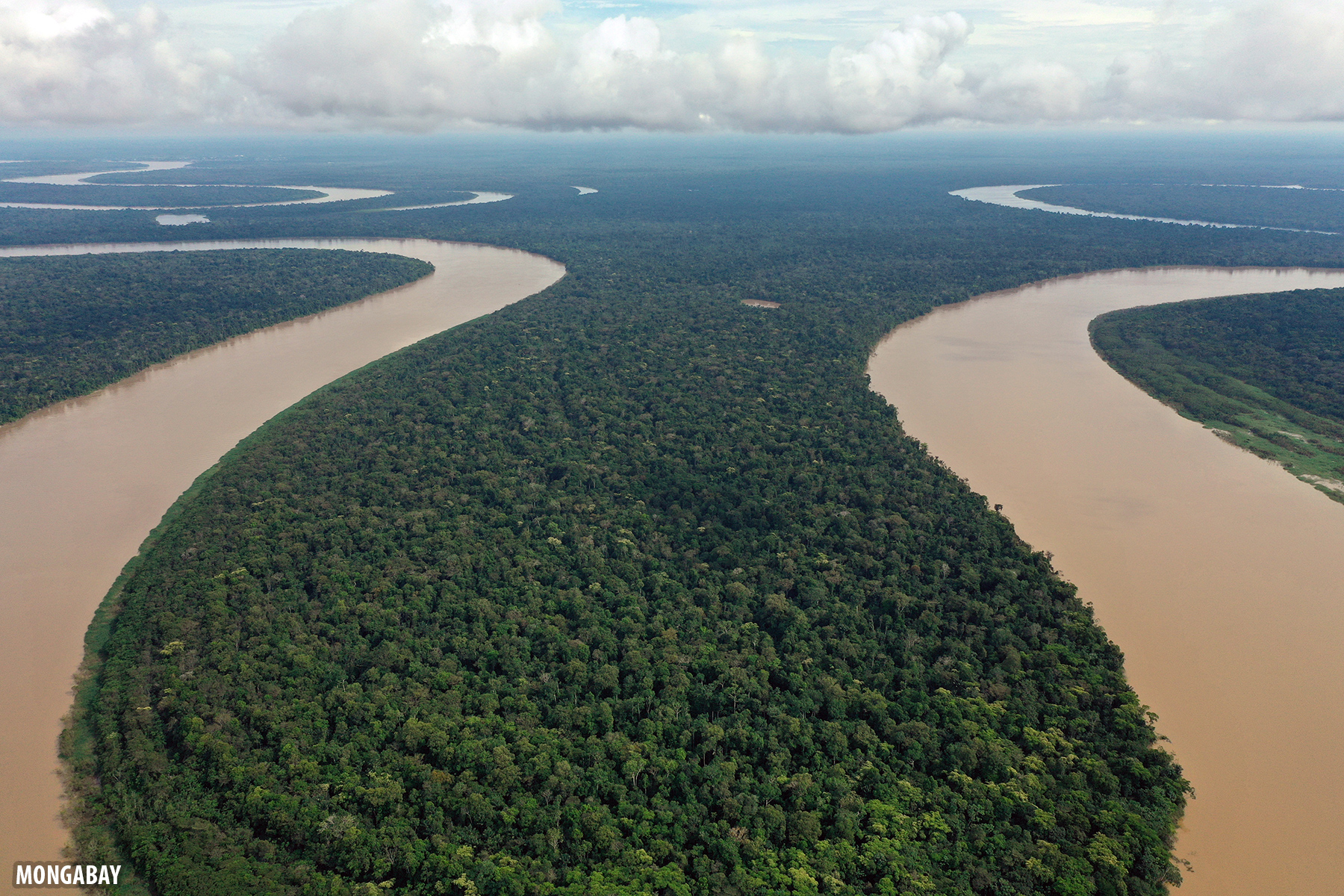
Banner image: The Javari River where it forms the border between Peru and Brazil. Photo by Rhett A. Butler for Mongabay.
Feedback: Use this form to send a message to the author of this post. If you want to post a public comment, you can do that at the bottom of the page.
Cite this article
David Akana (2026). IUCN’s Madhu Rao on the world’s protected areas: Progress, pressures and the race to 2030. Mongabay Conservation news. DOI: https://doi.org/10.66709/news-333419

