


- Mongabay spoke with Indigenous people and members of local communities living near four national parks in the Congo Basin, in the Democratic Republic of the Congo, to gather their testimonies and learn about the solutions they envision for reconciling forest conservation with the rights of nearby communities.
- Many Indigenous peoples wish to return to their ancestral lands from which they were displaced when the national parks were established; though some still prefer that authorities continue to lead conservation efforts.
- Others, however, believe they should remain outside the parks, while calling for better living conditions and greater access to resources and economic opportunities to prevent environmental destruction.
- Initiatives such as community forest concessions, local employment and ecotourism programs seek to reconcile conservation, land rights and the needs of communities, but their implementation continues to face tensions and significant challenges.
GOMA, Democratic Republic of Congo — High above the lush forests of protected areas in the Congo Basin in eastern Congo, the calls of endemic birds and monkeys echo through the trees. Beneath the canopy, the Maiko, Salonga, Kahuzi-Biega, and Virunga National Parks sprawl across millions of hectares. For millennia, long before these protected areas were established, Indigenous peoples lived in, roamed and shaped these lands, only to be expelled during the 20th century.
“We lived in harmony with the forest,” says Julien Basimika, a young Mutwa man, one of the Indigenous Twa people in Congo. “We protected everything that needed protecting, because our lives depended on it. If we had started destroying the forest, we would have suffered the consequences.”
Today, many descendants of those who were displaced live in extreme poverty owing to lack of land, armed conflicts and discrimination.
Discussions on how to better involve these communities in conservation fuel passionate debates among protected area managers, environmentalists, lawyers and human rights advocates: Should they return to their ancestral lands or not? Should they be part of environmental projects? If so, which ones? How can we mitigate armed conflicts and the involvement of Indigenous peoples in illegal logging, which complicate the situation?
Among the communities living near these four national parks, views vary on how to address these issues.
Meanwhile, policymakers are discussing how best to involve communities in the Belém Call to Action, announced in November 2025, which aims to halt and reverse deforestation and forest degradation by 2030.
Mongabay spoke with the people directly affected by these issues in the forests and villages surrounding these four national parks. We collected testimonies from 14 Indigenous people and seven members of local communities. We wanted to share their solutions and proposed approaches for reconciling the preservation of these forests and their biodiversity with the rights, needs, and aspirations of Indigenous peoples.
Here are their perspectives.
A return to ancestral lands
In the tradition of several Twa and Tembo communities, also known as Batwa and Batembo, ancestral land is sacred and forms a central part of their collective identity. Access to a territory is linked to notions of dignity and respect and the forests within the national parks were their primary source of livelihood.
Conversely, loss of land — which many of their ancestors faced when the parks were created — is perceived as a sign of vulnerability and a loss of rights.
“We are forced to live among people who do not accept us properly,” Basimika says in a video released by the organization Initiative for Equality in 2022.
These grievances fuel demands by some to return to their ancestral lands within the boundaries of national parks. Among the Indigenous people interviewed by Mongabay, the majority expressed a desire to return.
“If we happen to return to the park, we will do so, because that is where our land and all our resources are,” a young Twa man from Kalehe, a territory on the edge of Lake Kivu, who wished to remain anonymous, tells Mongabay.
These demands are not isolated. After acknowledging the human rights violations, the Congolese government received recommendations in 2022 from the African Commission on Human and Peoples’ Rights (ACHPR). To address these abuses, the Commission issued 19 recommendations, including the return of Indigenous peoples to the Kahuzi-Biega Park area with recognition of their land rights. Several Indigenous organizations, civil society actors and human rights defenders support this demand.
However, returning to the park does not necessarily mean the communities wish to take sole responsibility for conservation efforts.
Even if they wish to return, some residents living near Maiko, Virunga, and Kahuzi-Biega National Parks prefer that the authorities continue to lead conservation efforts. They say they lack the necessary knowledge to do modern conservation and point out that armed conflicts and insecurity persist in the region, making the situation particularly complex.
“Let the Congolese Institute for Nature Conservation [the government authority responsible for managing national parks, or the ICCN] continue to handle conservation, because it has weapons to drive out the rebels,” the young man from Kalehe adds.
By contrast, other interviewees claim they can effectively contribute to protecting the forest, believing they have mastered conservation practices passed down by their ancestors for generations.
The motivations for returning to the park forests vary, but poverty often emerges as a determining factor.
Bitini Ndyanabo, head of the Mudja community located near Virunga National Park, explains to Mongabay over the phone that food insecurity is persistent.
“After the [Nyiragongo] volcano erupted in 2021, we felt compelled to return to the park because we were starving; the eruption had just scorched our fields,” says a resident of the village of Mutaho, in the Kibati area on the outskirts of Virunga National Park, speaking on condition of anonymity. “We had started farming in the park, but in 2025 we were expelled again.”

Kakule Mukuranda Janvier, a resident of the village of Nyakakoma, located near the same protected area, explains to Mongabay during a phone interview that some humanitarian organizations and the ICCN help by providing school supplies, soap, flour and other items, “but not all of us benefit from this.”
He says this situation is driving some residents living near the protected areas to consider returning to the forest or, at the very least, to forage for food within the park to meet their dietary needs.
Staying out of the park and economic support
Beyond the desire expressed by many people to return inside the parks, others are gradually adapting to life outside these protected areas and their ancestral forests.
They do, however, mention the difficulties they face, particularly persistent poverty and a lack of access to the forest resources necessary for their food and traditional practices, such as medicinal plants.
“I think the fact that we’re outside the park is beneficial for conservation,” says Paul Bandenge, a young Twa from the Kalehe territory and a recipient of a scholarship from Kahuzi-Biega National Park.
“Currently, many Batwa don’t share the same philosophy regarding the protection of the park. Politicians came, took advantage of our vulnerability and poverty, and showed us the [financial] value of redwood and other forest resources.”

Bandenge explains that it is difficult for him to find a job, despite having earned his degree. Many students finish their studies with no career prospects, which may lead them to consider returning to the park.
As seen in some cases around Kahuzi-Biega National Park, some turn to unsustainable livelihoods such as illegal logging to earn the cash they now depend on outside the forest.
“Although our relations with the park rangers have been improving lately, aside from the mining quarries, we have no other resources to send our children to school,” says Maiko, a resident of Mangurujipa, a town in the northern sector of the park, speaking anonymously during a call with Mongabay. “We find ourselves trapped and with no alternative but to accept these offers.”
These illegal activities are sometimes used by certain authorities as reasons to further restrict local communities’ access to the parks. This can lead to significant tensions between park officials and neighboring communities.
“There’s no question of us going back, but we’re still asking for our living conditions to be improved,” says Limongo Ewange Albert, coordinator of the NGO Union of Indigenous Peoples of Monkoto, territorial president, and advocate for the rights of Indigenous peoples in Tshuapa Province, near Salonga National Park.
Ewange Albert adds that Indigenous peoples remain underrepresented in various positions within the park. Those who work there do not hold decision-making roles and do not benefit from either ad hoc service contracts or service contracts within the park’s management unit, he says.
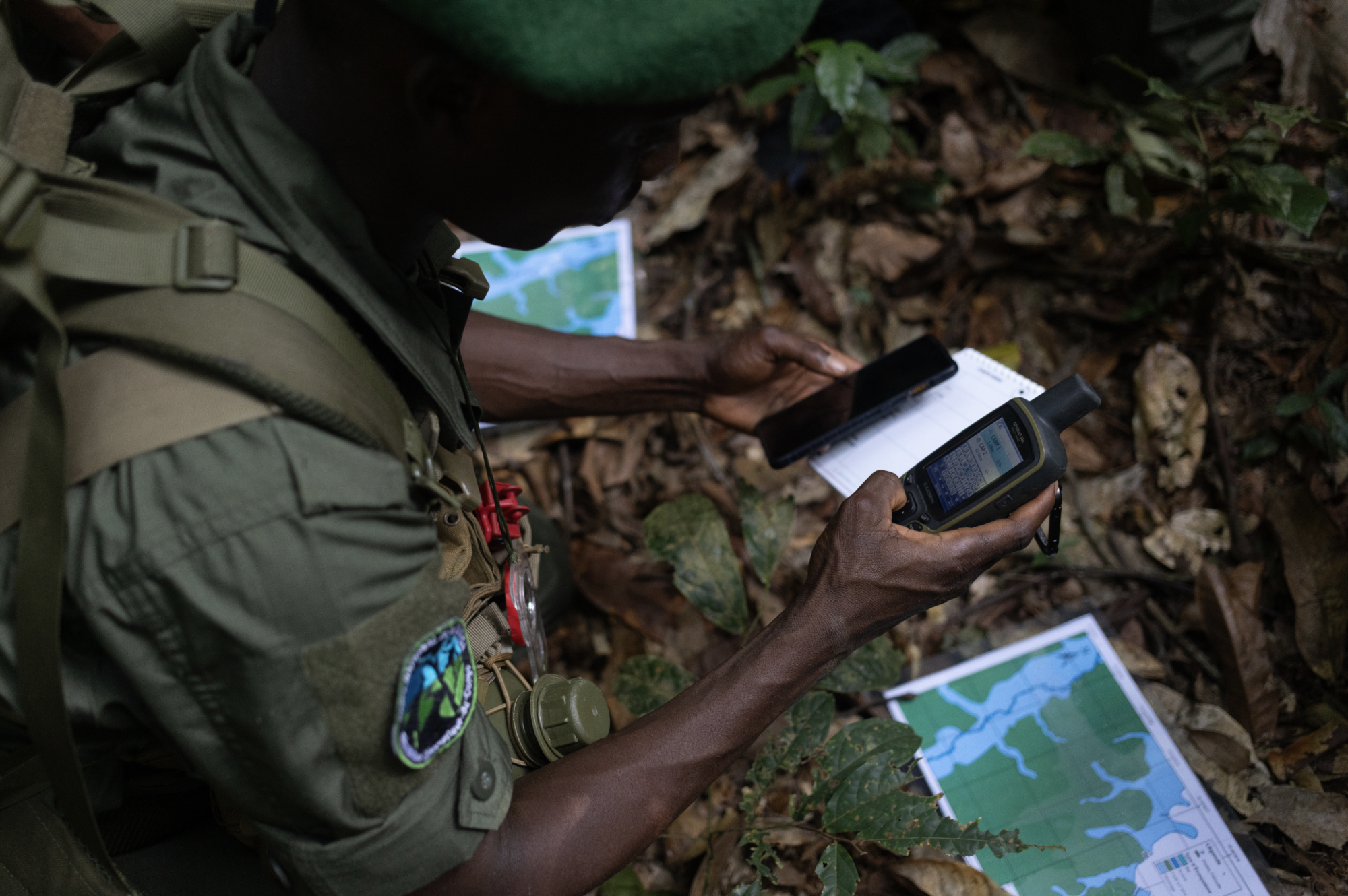
For their part, the Salonga Park authorities state that Indigenous peoples and local communities participate in all stages of management — including the development of the management plan and related strategies — to ensure their perspectives and interests are taken into account.
“Of the more than 300 staff members currently working at Salonga, over 80% are from areas located within 20 kilometers [12 miles] of the park,” says Terence Fuh, co-director of Salonga National Park.
“We’re trying to involve Indigenous and local communities in the management of Salonga National Park, but the problem is that they number an estimated 800,000 people,” says Luis Arranz, manager and co-director of Salonga National Park, in a WhatsApp voice message to Mongabay. “We’ve set up committees; we’re trying to talk with them and get their perspectives, but it’s not easy.”
According to Gentil Akilimali, a resident of Bukavu, a lawyer by profession, and executive secretary of the Center of Hope for Human Rights (CEDH), hiring park rangers from local communities can sometimes limit access to the park for other members of those communities, which could fuel internal tensions.
During a phone call with Mongabay, he says that “the fact that the park divides Indigenous peoples by recruiting certain individuals to serve as rangers causes [internal] tensions. These tensions hinder community development and the conservation of Kahuzi-Biega National Park.”
Some of those interviewed are pinning their hopes on existing human rights mechanisms to address the challenges faced by the Twa, particularly through an agreement reached in 2019 between the ICCN, regional authorities and representatives of Indigenous peoples.
“Since we no longer have any land, if the recommendations — such as that the ICCN must find alternative land for [Indigenous] peoples and help improve the living conditions of communities living near Kahuzi-Biega National Park, as outlined in this roadmap — were followed, pressure from the local community might ease,” says Bandenge, the scholarship recipient from Kalehe.
Although he says he believes it would be better for conservation if the communities did not return to the park, he stresses that other measures, those aimed at supporting those deprived of access to these forests, then become even more essential.
Efforts underway
Certain organizations, community initiatives and parks are implementing projects aimed at restoring and strengthening peaceful coexistence between Indigenous and local communities and park managers.
Among these initiatives are local community forest concessions (CFCLs), through which communities can obtain legal recognition of their land rights while participating in forest conservation.
Initiatives to use CFCLs as conservation tools are expanding in eastern DRC. Advocates hope these can be a mechanism to secure land rights, self-determination and environmental outcomes at the same time. Between Kahuzi-Biega National Park and the Itombwe Nature Reserve, the NGO Strong Roots Congo is developing a one-million-hectare biodiversity corridor consisting of several CFCLs. For several years, the NGO Wildlife Conservation Society (WCS) has supported the creation of CFCLs across the country. Recently, in Tshopo Province, 31 new CFCLs were allocated to farmers.
Within the parks themselves, managers are implementing various conservation projects involving Indigenous and local communities.
Meetings are being organized for Maiko National Park, particularly in Butembo and Beni, to better guide and involve local communities in conservation efforts, explains Trésor Malonga, another resident of Mangurujipa in the park’s northern sector.

In Salonga National Park, a bonobo habituation program is underway to promote ecotourism and scientific research, says Félix Isefali Bofeko, a research assistant at the World Wildlife Fund (WWF). “All staff members — at least 100% — come from local communities,” he says.
After three years of negotiations, the Kahuzi-Biega National Park’s governance board now includes one seat reserved for Indigenous peoples and another for local communities. According to WCS, the representatives from these communities are actively involved in discussions and input. Among the members are Donatien Munyali Kachibaasa, who represents Indigenous peoples, and Mwami Alexandre Kabare Rugemaninzi III N’nabushi XXX, an influential leader in the Kabare territory, says Sushil Raj, executive director of rights and communities at WCS.
At the Virunga National Park, director Emmanuel de Merode tells Mongabay that environmental protection, when not accompanied by efforts to address poverty and meet people’s basic needs, often generates opposition and tensions. The park developed the Virunga Alliance with public authorities, civil society and the private sector, to pursue sustainable development objectives that benefit communities through tourism, clean energy and sustainable agriculture.
These advances, however, face some resistance. For some Indigenous and local peoples, nothing less than support for the communities returning to the park is sufficient. Others believe that authorities must work more closely with communities outside the parks to strengthen conservation efforts and support poverty reduction.
Mongabay attempted to contact the ICCN and the managers of Kahuzi-Biega, Salonga and Maiko National Parks for this article, but received no response.
This article was first published in French by Mongabay Afrique on August 20, 2026.
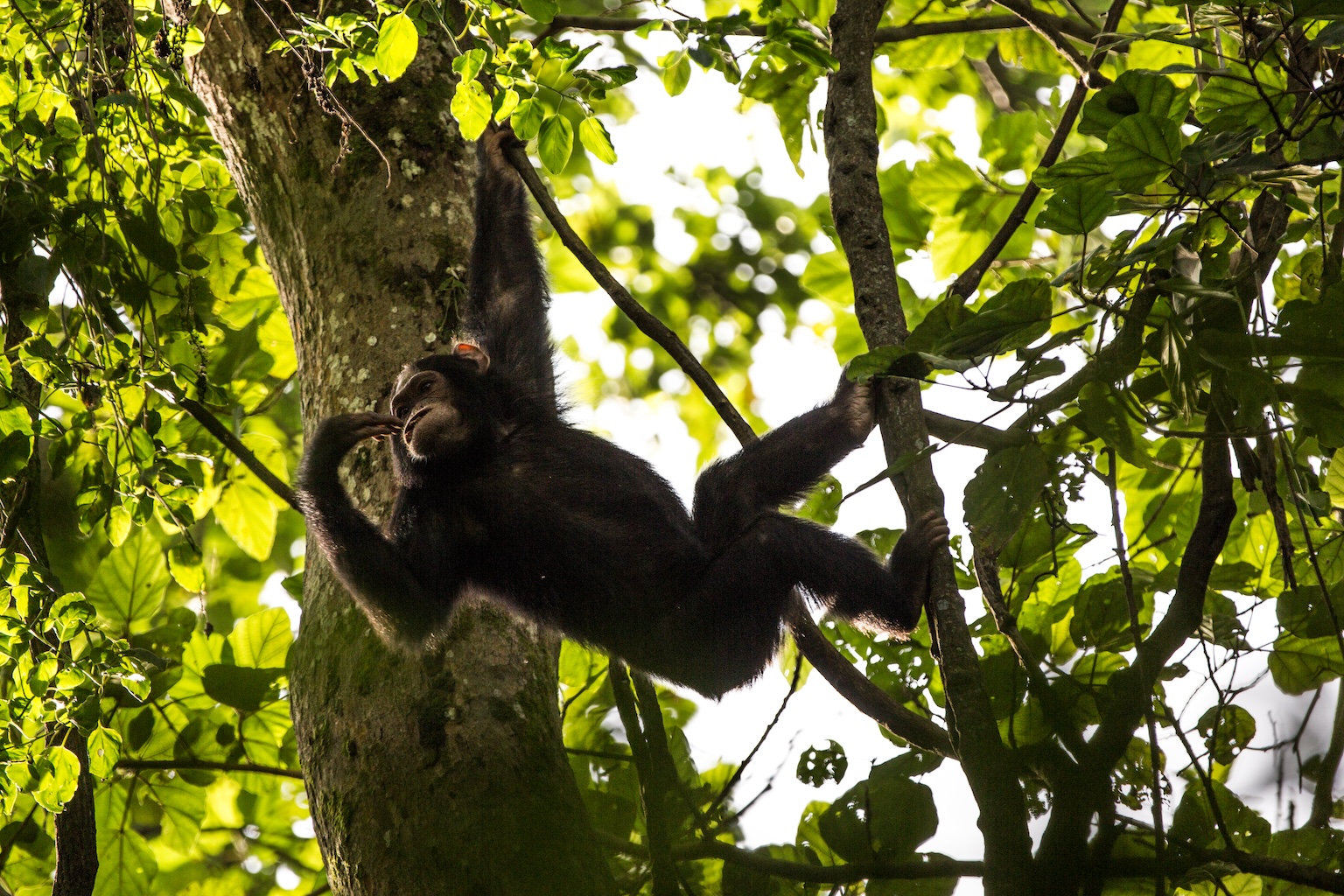
Banner image: Chimpanzees at Mikeno Lodge in Virunga National Park, DRC. Image by Joseph King via Flickr (CC BY-NC-ND 2.0).
Congo’s communities are creating a 1-million-hectare biodiversity corridor
Latest Mongabay podcast episode: A health crisis for Peru’s recently contacted people brings planetary health to the fore. Listen here:
FEEDBACK: Use this form to send a message to the author of this post. If you want to post a public comment, you can do that at the bottom of the page.
Cite this article
Blaise Kasereka Makuta, Latoya Abulu (2026). Indigenous peoples near Congo parks propose diverse solutions for the future of conservation. Mongabay Conservation news. DOI: https://doi.org/10.66709/news-329161


