

Close Menu
NCIJ Network NCIJ Network
    What's Hot

    XRP AI adoption: What 4.5 million payments really show

    September 8, 2026

    NASA’s Hubble, Webb Find Far-out Solar System Objects ‘Remember’ Past

    September 8, 2026

    Indigenous territories maintain Amazon forest just as well as protected areas, study finds

    September 8, 2026
    Facebook X (Twitter) Instagram
    Trending
    • XRP AI adoption: What 4.5 million payments really show
    • NASA’s Hubble, Webb Find Far-out Solar System Objects ‘Remember’ Past
    • Indigenous territories maintain Amazon forest just as well as protected areas, study finds
    • Europe’s Security Depends on a Clear Electrification Target by Neil Makaroff & Marin Gillot
    • How much does the UK spend promoting family planning and condoms in Pakistan? – Full Fact
    • Yemen’s war is back: A new battle for Sanaa and the Red Sea | Houthis News
    • Iceland summons US ambassador over Trump’s stars and stripes map
    • UK announces sanctions on West Bank settlements prompting furious Israeli response
    • About
      • Our Team
      • Editorial Policy
      • Editorial Independence
      • International Support
    • Trust & Standards
      • AI Usage Policy
      • Conflict of Interest Policy
      • Corrections Policy
      • Ethics Policy
      • Fact-Checking Policy
      • Source Protection
    • Get Involved
      • Guide for Sources
      • Support Independent Journalism
    • Legal
      • Cookie Policy
      • Privacy Policy
      • Terms of Use
    Facebook X (Twitter) Instagram
    NCIJ Network NCIJ Network
    Tuesday, September 8
    • Home
    • World
    • Ai
    • Business
    • Politics
    • Health
    • Crypto
    • Science
    • Technology
    • Cybersecurity
    • Defense & Security
    • Economy
    • Energy
    • Europe
    • More
      • Fact Check
      • Investigations
      • Opinion & Analysis
      • Environment
    NCIJ Network NCIJ Network
    Home»Environment

    Indigenous territories maintain Amazon forest just as well as protected areas, study finds

    NCIJ NETWNCIJ NETWORKBy NCIJ NETWNCIJ NETWORKSeptember 8, 2026 Environment No Comments3 Mins Read
    Share
    Facebook Twitter LinkedIn Pinterest Email

    A new study has found that in Ecuador’s Amazon, Indigenous territories without formal conservation contracts maintained forest conditions just as well as formal protected areas.

    Ecuador has three different approaches to forest governance: Forests protected by government institutions, forests managed by local communities under formal conservation agreements and Indigenous territories without formal conservation agreements.

    To find out the state of forests under these different policies, researchers used satellite data to examine three metrics: Long-term changes in vegetation greenness as an indication of degradation or improvement in forest cover; abrupt changes in forest condition due to more acute disturbances like human settlements, roads and agricultural fields; and how forest productivity responded to the 2015-2016 El Niño drought — a climate phenomenon that causes extreme changes in rainfall and temperature patterns.

    They found that community-protected forests performed best overall in some measures, particularly resilience after drought. However, Indigenous territories without similar formal conservation agreements and who can use natural resources for subsistence and cultural preservation also had forest condition patterns comparable to the other governance regimes. In fact, they had the greatest proportion of areas showing positive long-term trends in vegetation greenness.

    “From a practical perspective, our results suggest that conservation is not only about drawing lines on a map,” lead author Fernando Troya, currently based in Ecuador, who conducted this study as part of his doctoral studies at the KU Leuven University in Belgium, told Mongabay in an email. “It is also about governance, local participation, and creating systems that help people manage forests sustainably over the long term.”

    The researchers found the largest proportion of negative long-term vegetation trends, suggesting long-term degradation, within forests protected by government institutions, where extractive activities are prohibited, but communities living in the area are allowed to use the land sustainably. Such government-protected forests in northern Ecuador showed substantially more degradation than in the south, with 78.6% of analyzed pixels showing declining greenness compared with 57.1% in the south.

    The researchers say this could partly be because much of the forest of this category lies in the northern Ecuadorian Amazon, where roads, population pressure and oil development are greater than in the rest of the country.

    “These activities have been shaping the landscape for decades and create continuous pressure on forests, even when those forests remain standing,” Troya explained. “For people outside science, the message is simple: if we want forests to continue providing clean water, climate regulation, biodiversity, and economic opportunities for future generations, we need to understand which management approaches are actually working on the ground.”

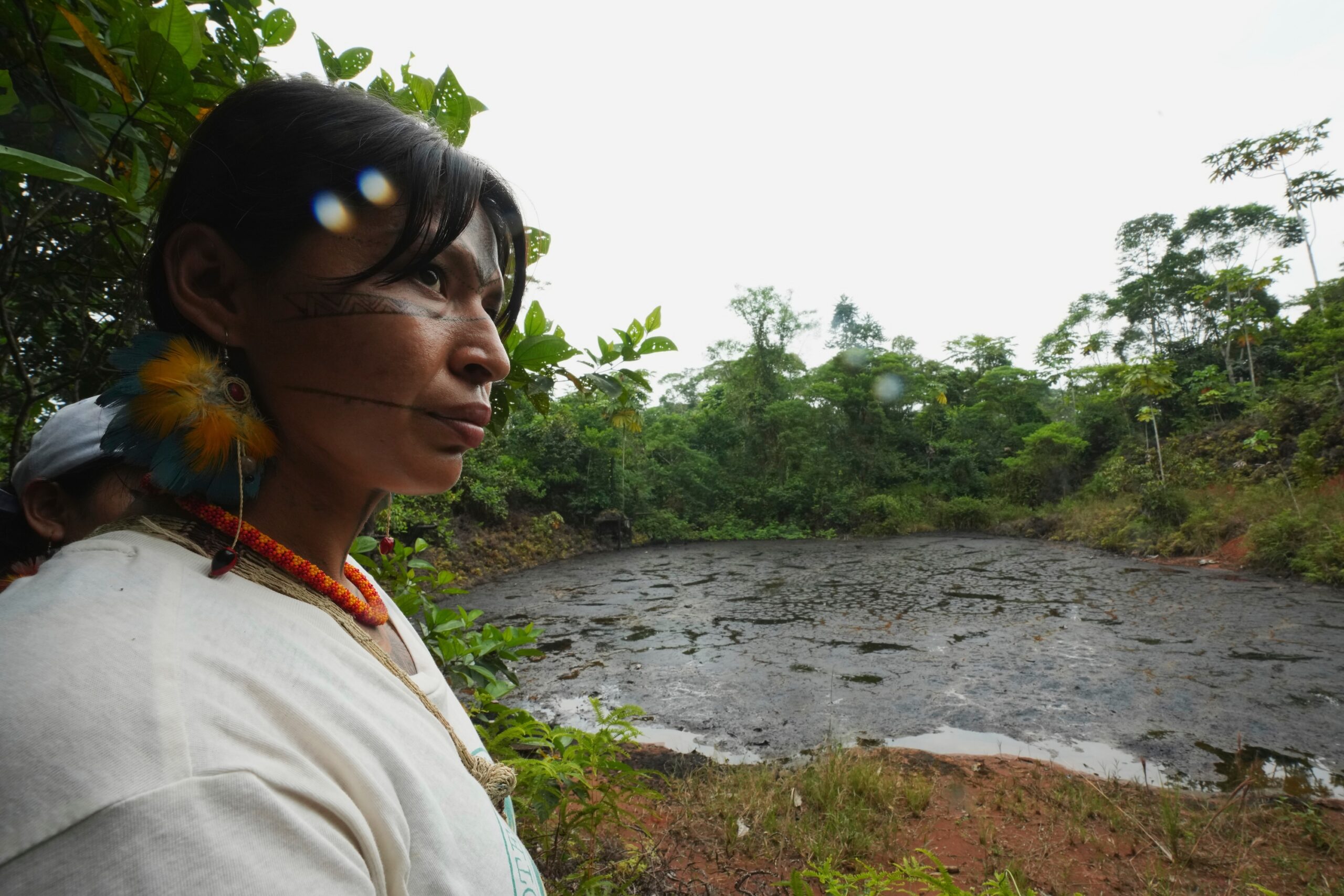
    Banner image: Toa Alvarado, a Kichwa leader, listens as activists explain the environmental damage caused by oil extraction while visiting the contaminated areas in Sucumbíos, Ecuador. Image by Dolores Ochoa, Associated Press


    Amazon areas finds Forest Indigenous Maintain Protected study territories
    NCIJ NETWNCIJ NETWORK
    • Website

    Keep Reading

    New-to-science Amazon frog stands out for its slow ‘lazy’ song

    Why is Amazonian wildlife turning up at a Bangkok market?

    Reform UK would ban full-face coverings in public areas

    ‘Plastic pollution hotspots’ spawn a public health crisis across Latin America

    ‘Birds know no borders’: Interview with BirdLife Africa’s Alex Ngari

    Majority of Tory and Reform voters do not back cuts to disability benefits, survey finds | Disability

    Add A Comment
    Leave A Reply Cancel Reply

    Editors Picks

    XRP AI adoption: What 4.5 million payments really show

    September 8, 2026

    NASA’s Hubble, Webb Find Far-out Solar System Objects ‘Remember’ Past

    September 8, 2026

    Indigenous territories maintain Amazon forest just as well as protected areas, study finds

    September 8, 2026

    Europe’s Security Depends on a Clear Electrification Target by Neil Makaroff & Marin Gillot

    September 8, 2026
    Latest Posts

    Researchers Report 84 Flaws in 4G and 5G Cores, Including a Session Hijacking Flaw

    August 1, 2026

    AI in Formula One: Competitive advantage is all about the human in the loop

    August 1, 2026

    Pedro Sánchez hits out at EU leaders over criticism of Spain’s migrant crisis

    August 1, 2026

    Subscribe to News

    Get the latest sports news from NewsSite about world, sports and politics.

    NCIJ Network is an independent digital news platform delivering trusted investigative journalism, European and global news, in-depth analysis, and fact-based reporting with accuracy, transparency, and integrity.

    Facebook X (Twitter) Instagram Pinterest YouTube

    XRP AI adoption: What 4.5 million payments really show

    September 8, 2026

    NASA’s Hubble, Webb Find Far-out Solar System Objects ‘Remember’ Past

    September 8, 2026

    Indigenous territories maintain Amazon forest just as well as protected areas, study finds

    September 8, 2026

    Subscribe to Updates

    Get the latest creative news from FooBar about art, design and business.

    Type above and press Enter to search. Press Esc to cancel.