


Moritz Oppelt, the CDU justice minister of Germany’s southwestern state of Baden-Württemberg echoed the sentiment, arguing the law should serve only its original intent of protecting local politicians, who are often subject to particular vitriol.
“Top politicians can and must be able to withstand tough criticism,” he said. “It is fundamental to our democracy, and part of our understanding of democracy in Germany, that people are free to discuss political decisions at the federal and state levels and criticize them very harshly. That does not mean that insults in the political sphere should become normalized. There are, of course, limits.”
Variations of this view find consensus across Germany’s fractured political spectrum. The far-left Left Party and far-right Alternative for Germany (AfD) party want the law abolished outright, while the CDU, Greens and center-left Social Democratic Party (SPD) all support revising it.
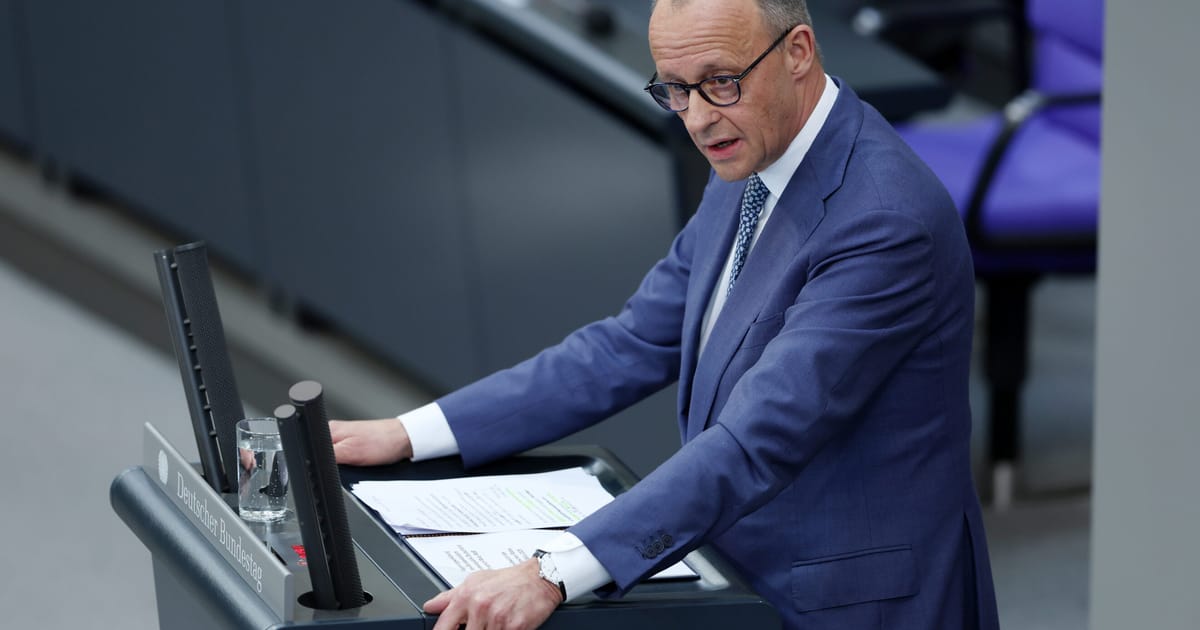
“Politicians like Friedrich Merz insult ordinary people in this country every day by calling them lazy or malingerers,” said Luke Hoss, a Left lawmaker, referring to the chancellor’s remarks that Germans should work more to boost economic growth. “The provision creates a special criminal offense that applies only to politicians and should be abolished.”
Tobias Peterka, an AfD lawmaker, said tough criticism comes with the job. “Anyone who voluntarily enters politics and exercises public authority must — as Germany’s Federal Constitutional Court has repeatedly emphasized — tolerate harsher criticism than private citizens, not less,” he argued.
While a version of the law giving special protection to politicians, Section 188 of the criminal code, has existed since 1951, former Chancellor Angela Merkel’s government in 2021 strengthened the legislation as part of broader efforts to combat right-wing extremism and hate speech.
