


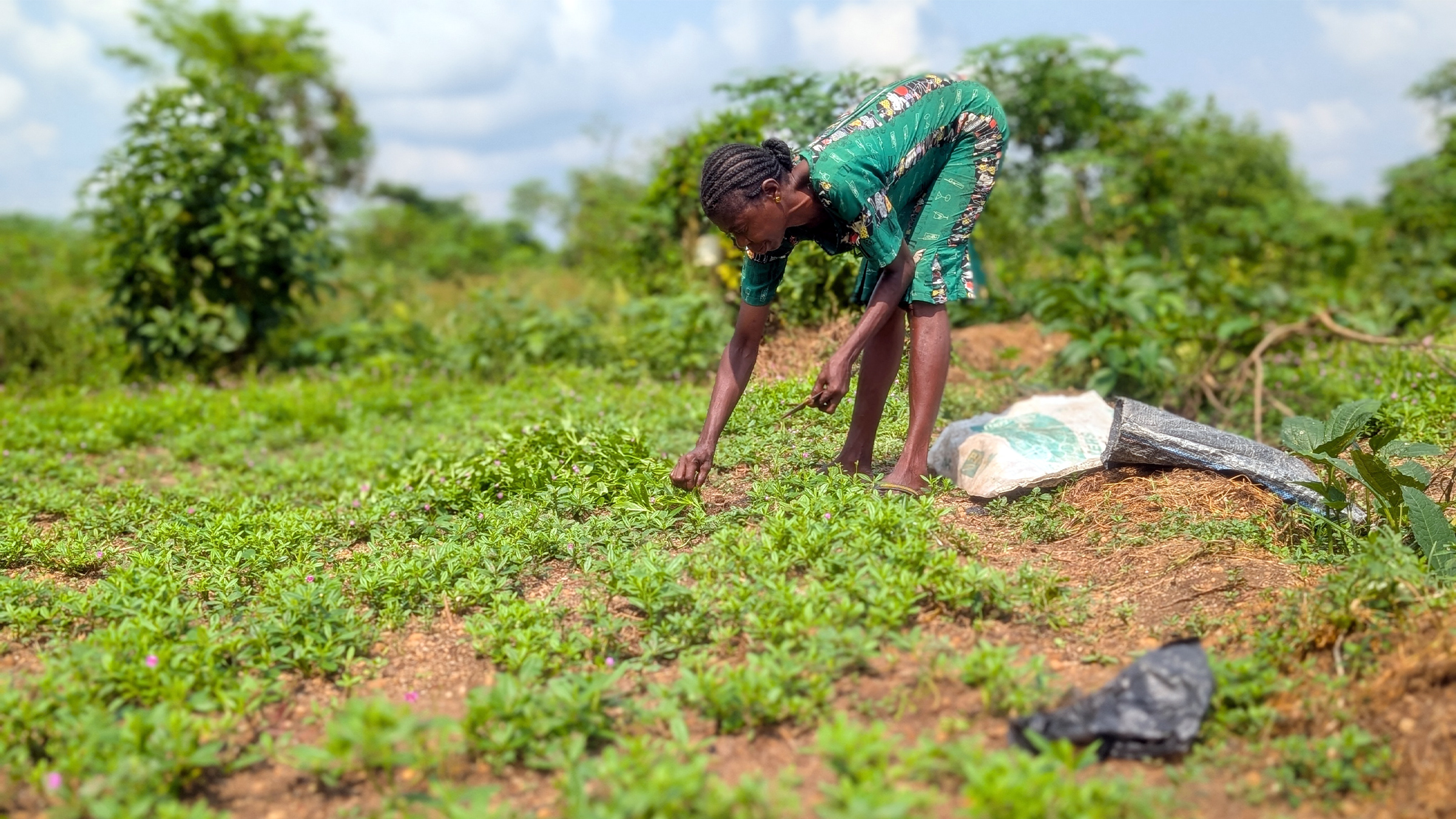
- The waterleaf plant (Talinum fruticosum) forms a critical part of the Nigerian diet, regularly eaten in dishes such as afang and edikang ikong soups, but many plants have died in recent months of heavy rainfall.
- The following photographs illustrate the waterleaf plant and some of the women farmers attempting to replant, with hopes of a successful crop.
- Part 1 in this article series explains further about the changing rainfall patterns that are affecting waterleaf production.
This is Part 2 in a two-part series on Nigerian waterleaf. Read Part 1 here.
Except for the occasional roar of an airplane landing on the runway, it’s all quiet and lonely in the plantations surrounding the local airport in Calabar, southeastern Nigeria. Across the vast fields are strips of farmland studded with waterleaf crops grown by women farmers who depend on these crops for their livelihoods. Once harvested, these waterleaf plants are stuffed into large bags and ferried to local markets.
But few of these crops have survived the relentless bursts of rain across Nigeria since June. As the rain continues for days on end, many stems become brittle and die shortly afterward. Others become shriveled, with wilting, yellowed leaves thirsting for sunlight.
Among Nigeria’s most-consumed vegetables, waterleaf (Talinum fruticosum) is cherished for its culinary and therapeutic benefits. In southeastern Nigeria, it forms a key ingredient in staple sauces like afang and edikang ikong.

In September, Mongabay fellow and Nigerian journalist Kingsley Charles began covering the slump. He visited waterleaf farms and local markets across Calabar, where he spoke to dozens of farmers as well as consumers and vendors.

While some growers have abandoned their farm plots to wait out the rainy season, others like Joy Okon, an elderly woman with gimlet eyes, continue to replant. Weeks prior, she’d planted roughly eight bags of stem cuttings without any success. Yet on a muggy morning in November, Okon was back on her farm, churning the crusty soil with the end of a long rusted knife, sticking the stems into the soil and sprinkling handfuls of manure over the mound afterward.
These photographs illustrate a food crisis confronting Nigeria’s southern coastline.

Banner image: Joy Cecilia plants waterleaf stems on her farm in Calabar. Image by Kingsley Charles.
Cite this article
Kingsley Charles (2026). Despite heavy rains, farmers hope for a viable waterleaf harvest in Nigeria. Mongabay Conservation news. DOI: https://doi.org/10.66709/news-337046

