


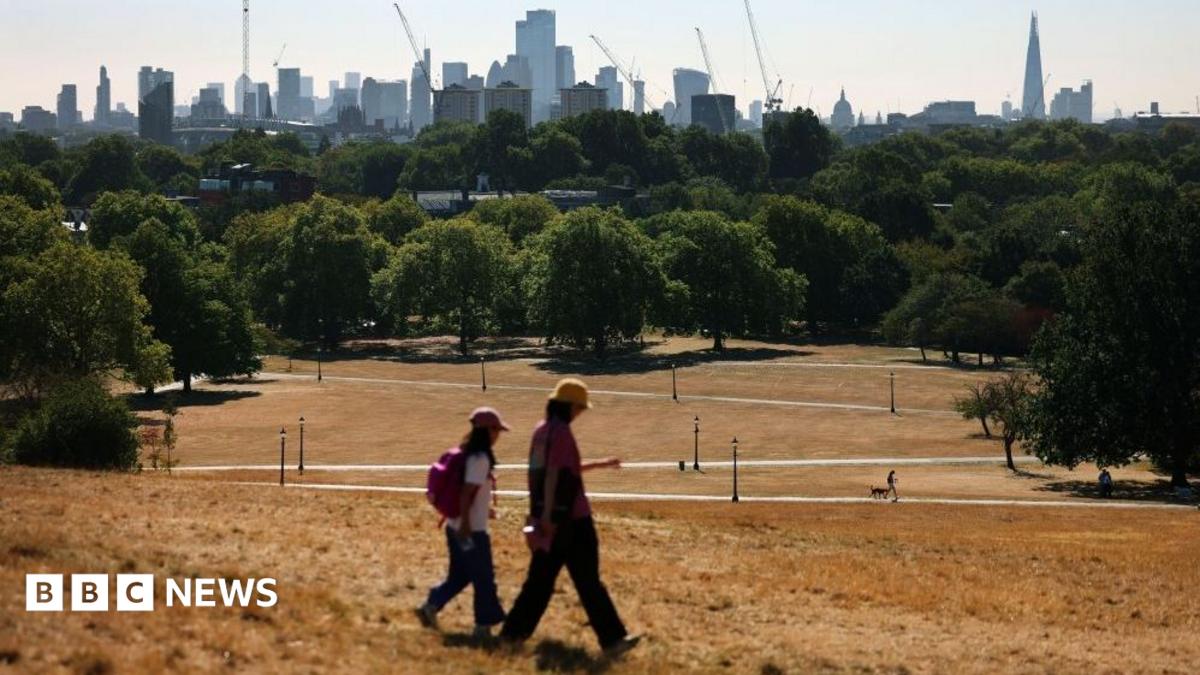
A lack of rainfall this year also saw droughts declared in all of Wales and more than two-thirds of England, while wildfires caused devastation in some parts of the country.
UKHSA said the findings “underline the need for longer-term adaptation” to a warming climate, and that adapting homes, neighbourhoods and health and care settings would be “increasingly important”.
Dr Ross Thompson, principal environmental health scientist at UKHSA, said this summer’s hot weather had a substantial impact on public health, “particularly during the early heat episodes in May and June”.
He added that periods of extreme heat are expected to become “longer, more frequent and more intense” as the climate continues to warm.
Speaking in the Commons, Health Secretary Yvette Cooper said she wanted “to offer the deepest condolences to all those who lost a loved one this summer”.
“The numbers are a stark reminder of the human impact of climate change, and that is why I have asked the NHS to now prepare for summer as seriously as we do for winter,” she said.
During a speech at the COP31 summit earlier this month, Prime Minister Andy Burnham spoke about the extreme weather experienced in the UK this summer, describing it as “not normal”.
Correction 25 November: This article originally described the estimated 2026 death toll as “twice the previous high” of 2022. This is not accurate and has been amended to instead refer to a significant rise.
