


Unlock the Editor’s Digest for free
Roula Khalaf, Editor of the FT, selects her favourite stories in this weekly newsletter.
Nepal is “intensifying” a daunting rescue effort in a race against rising water levels as the death toll from a catastrophic landslide last week along the border with China passed 700, with more than 3,000 missing.
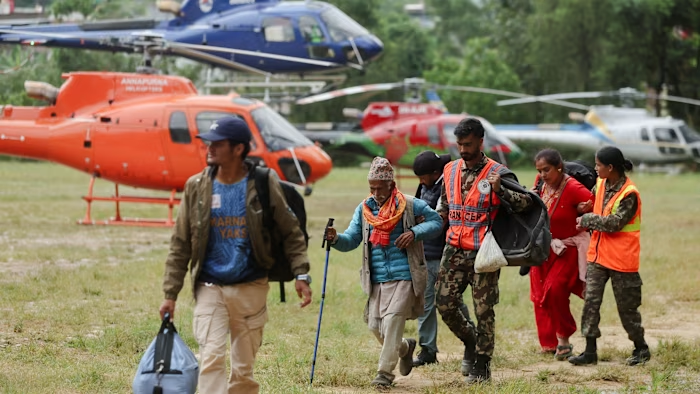
The government of Nepal’s Prime Minister Balendra Shah said on Sunday it had dispatched almost 20,000 security personnel and rescued more than 8,000 people, including 270 who were trapped in various hydropower projects, despite adverse weather conditions.
Chinese authorities said on Sunday that more than 2,000 rescue workers had been mobilised and relocated 499 people from villages at further risk.
Recovery efforts continued over the weekend following a violent flash flood on Wednesday that swept away bridges, roads and buildings, leaving 734 dead and 2,498 missing in the small Himalayan nation. China has confirmed 16 deaths and 546 missing people.
The flood, which Shah described as an “unexpected thunderbolt of a natural disaster”, occurred on the Bhote Koshi river in Nepal’s mountainous Rasuwa district bordering Tibet.
Nepal’s disaster management agency on Sunday warned that water levels in the river had “increased further” and urged security personnel to “exercise utmost caution”.
“The government is intensifying rescue, search and relief operations in the affected areas overnight, leaving no stone unturned,” Shah said in a Facebook post late on Saturday.
He added that Indian and Chinese experts were “engaged” in rescue efforts in co-ordination with the Nepali army.
Rescue teams and local officials in China’s Tibet Autonomous Region said at a press conference on Sunday that efforts had been hampered by damaged roads and communication lines, while the risk of additional flooding had caused delays.
Chinese authorities also said they believed that the landslide had been caused by an unstable glacier on the Nepal side of a river basin between the two countries. They said the glacier had come loose due to “the long-term effect of climate change”, raising a “new and distinctive feature of cryosphere disasters” in the region.
Nepal is situated on an active Himalayan fault and is home to mountains and glacial lakes, which results in its rivers frequently being flooded during heavy rains and leaves the country exposed to the risk of earthquakes, mudslides and floods.
