


- Blueberry seeds that had passed through gray wolves’ guts in northern Minnesota sprouted faster and more often than seeds from uneaten berries, according to a new study in Biology Letters.
- Overall, 96% of seeds from wolf scat germinated, compared with 69% of control seeds, though the wolf advantage shrank to 5 percentage points against the best-performing control batch.
- Because wolves travel long distances and move between berry patches, researchers say they’re likely effective long-distance dispersers of blueberry seeds and may even help start new patches.
- The findings come as wolf numbers in the study area have dropped and as the U.S. House and the Trump administration push to remove federal Endangered Species Act protections for gray wolves.
Every summer in northern Minnesota, gray wolves become fruit eaters, mostly. During peak berry season in July and August, berries make up as much as 83% of adult wolves’ weekly diets in the Greater Voyageurs Ecosystem, a southern boreal forest region that borders Canada. Now a new study shows the blueberries also get something out of the deal.
Blueberry seeds that passed through a wolf’s gut sprouted faster and more often than seeds taken straight from the fruit, researchers reported in Biology Letters. Gray wolves (Canis lupus) cover long distances quickly, so the authors write that they are likely effective long-distance dispersers of blueberry seeds.
The authors say the trip through the gut probably scuffs or chemically wears down the seed coat. The scat may work like fertilizer and protect seeds from pathogens.
“Honestly, we were surprised that gut passage through wolves increased the germination success and speed of blueberry seeds,” lead author Alex Gross told Mongabay in an email. Gross, now a master’s student at Northern Michigan University, did the research with the University of Minnesota’s Voyageurs Wolf Project.
Researchers collected fresh wolf scats in 2017 and 2018. They picked out 802 seeds and grew them in petri dishes in a growth chamber for 60 days. Alongside them, they grew 484 control seeds taken from intact wild berries that no animal had eaten.
Seeds that went through the wolf gut sprouted faster. Half the wolf seeds sprouted by day 19, but the controls took until day 26. Additionally, 96% of the wolf seeds germinated compared with 69% of the control seeds.
The researchers caution that the 69% figure combines three batches of control seeds that were stored differently. On their own, the batches ranged from 42% to 91%. But even against the best control batch, the wolf seeds came out ahead by 5 percentage points. That could add up, the authors write, because blueberry-filled wolf scats are numerous and widespread in summer.
That widespread wandering could seed new patches. “[Wolves] may initiate the growth of new berry patches in different habitats within their territories, especially if these seeds are pooped out in a habitat conducive to berry growth,” Gross said. Berries are a major food source for many forest animals.
Anna Traveset, an ecologist who studies plant-animal interactions and was not involved in the study, told Sierra Club, “These results underscore the importance of conserving all species, including large carnivores, such as wolves.”

Gray wolves were once poisoned, trapped and shot out of most of the lower 48 states, the contiguous U.S. states, and by the 1960s, Minnesota’s population may have fallen as low as 350. Voyageurs National Park in northern Minnesota is one of the only places in the lower 48 that never lost all its wolves.
Federal protection for gray wolves under the Endangered Species Act began in 1974, and since the late 1990s, Minnesota’s population has ranged from roughly 2,200 to 3,000 wolves, according to state estimates.
Today, gray wolves are listed as threatened in Minnesota and as endangered in all or parts of 44 other states. The exception is the Northern Rockies, where states already manage wolves.
However, that could soon change. In December 2025, the U.S. House of Representatives passed a bill that would remove gray wolves from the endangered species list across the lower 48 states and bar courts from reviewing the decision.
Supporters of the bill say wolves have recovered. “The science is clear: populations have recovered,” Representative Pete Stauber, a Minnesota Republican who co-sponsored the bill, said in a press release after the House vote. “Delisting will protect our farmers and their livestock, help our rural families and communities, and — importantly — return to local control of wolf management.”
Others disagree. “[T]his vote puts wolves in the crosshairs,” Addie Haughey, nonprofit Earthjustice’s legislative director for lands, wildlife and oceans, said in a statement in December 2025. As an example, she cited Wisconsin’s 2021 wolf hunt during which hunters killed more than 200 wolves in fewer than three days. Researchers estimated that the hunt, along with a rise in poaching after protections were lifted, cut the state’s wolf population by roughly a third in a single year.
In September, U.S. President Donald Trump signed an executive order titled “Supporting America’s Ranchers”. It gave the Secretary of the Interior 90 days, until early December 2026, to decide whether gray wolves and Mexican wolves (Canis lupus baileyi) have recovered enough to lose federal protections or, as the order states, “begin the process of delisting or downlisting them.”
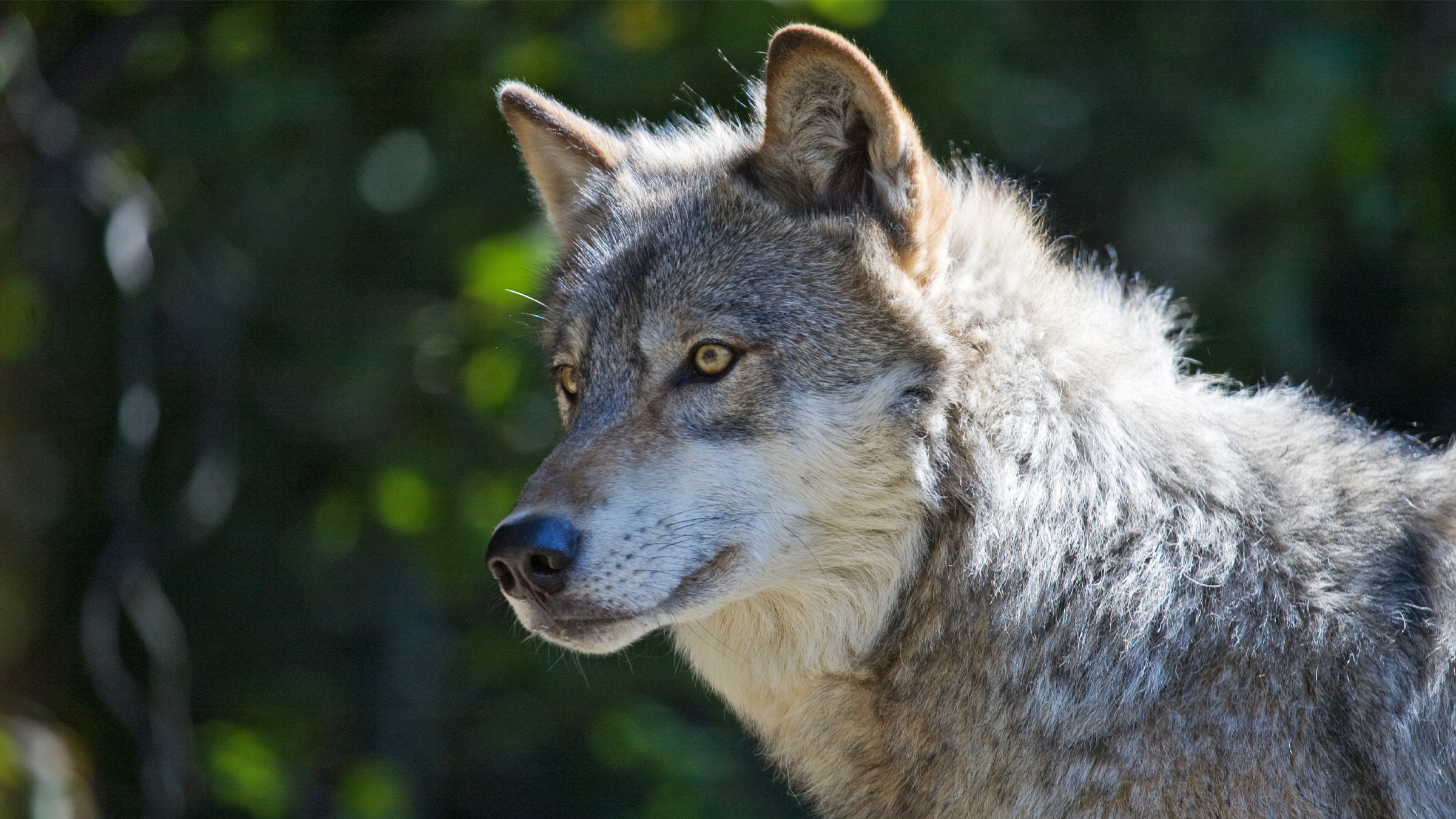
Banner image of a gray wolf in Minnesota. Image by W Eugene Slowik Jr/dalliedee via Center for Biological Diversity (CC-BY 2.0).
As US states reduce recently restored wolf populations, here’s what we risk losing (commentary)
‘Don’t shoot. Listen’: The AI-aided quest to understand Yellowstone’s wolves
Study busts big bad myth that wolves are growing fearless of humans
Citations:
Gross, A. D., Gable, T. D., Homkes, A. T., Winnett-Murray, K., Woodside, R., Bump, J. K., & Murray, K. G. (2026). Wolves increase germination speed and success of blueberries. Biology Letters, 22(8), 20260279. doi:10.1098/rsbl.2026.0279
Gable, T. D., Windels, S. K., Bruggink, J. G., & Barber-Meyer, S. M. (2018). Weekly summer diet of gray wolves (Canis lupus) in northeastern Minnesota. The American Midland Naturalist, 179(1), 15-27. doi:10.1674/0003-0031-179.1.15
Gable, T. D., Homkes, A. T., Heny, S., & Bump, J. K. (2025). 2024-2025 Greater Voyageurs Ecosystem wolf population report. University of Minnesota. https://conservancy.umn.edu/items/905374e4-79b6-4d59-8ae5-9439840c98a0
Treves, A., Santiago-Ávila, F. J., & Putrevu, K. (2021). Quantifying the effects of delisting wolves after the first state began lethal management. PeerJ, 9, e11666. doi:10.7717/peerj.11666
FEEDBACK: Use this form to send a message directly to the author of this post. If you want to post a public comment, you can do that at the bottom of the page.
