


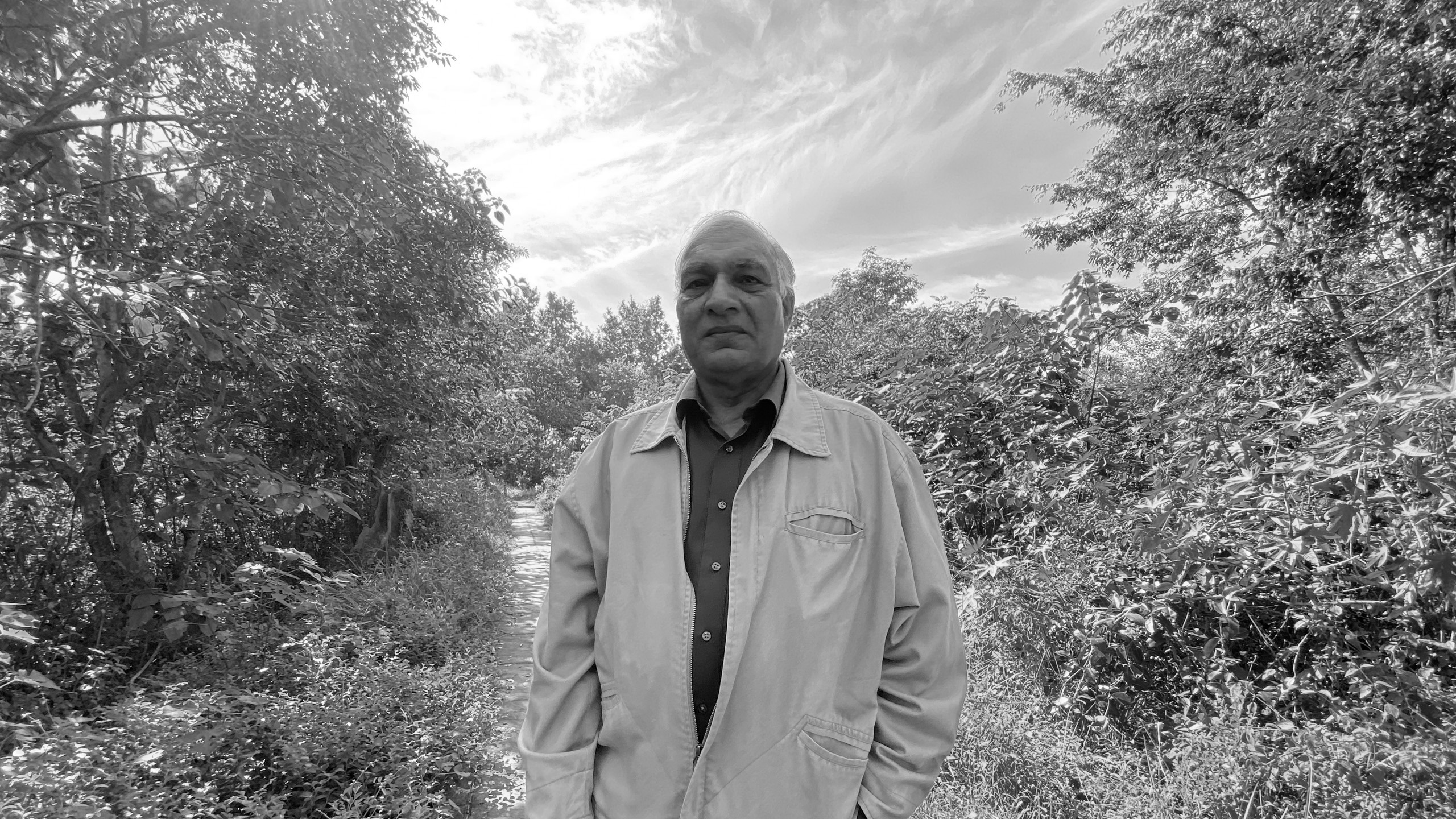
- Vinod Rishi rose from field postings in West Bengal to some of India’s most senior wildlife positions, including serving as the first director of Project Elephant.
- Trained as an engineer, he brought a practical, evidence-based approach to conservation, testing official claims and scientific methods against conditions on the ground.
- His work helped shift wildlife management beyond individual protected areas toward broader landscapes, particularly elephant habitats, migration corridors, and conflict-prone regions.
- Colleagues remembered him as humble, determined, and collaborative, while his later writing revealed a close attention to individual animals and the places they inhabited.
A tiger once put its head beside a passenger in Vinod Rishi’s jeep. Its face, he wrote years later, wore a “quizzical expression.” Then it moved away, leaving the men unharmed. Rishi called it “a King with a big heart.” Decades after the encounter, he could still recall the position of the tiger’s head and the look on its face.
Rishi, who died in Dehradun on July 29, held some of the highest positions in Indian wildlife administration. He was the first director of Project Elephant, additional director general of forests for wildlife, and director of the Indira Gandhi National Forest Academy. During 38 years in the Indian Forest Service, he worked in the Sundarbans and Buxa tiger reserves, Jaldapara Wildlife Sanctuary, and the national parks of Singalila and Neora Valley.
Born in Jalandhar, Punjab, he trained as an engineer at the Indian Institute of Technology Delhi and graduated in 1968. He joined the forest service the following year. His engineering background clearly influenced the way he approached conservation. He paid close attention to methods, evidence, and whether a plan would work in the field.
His early career in West Bengal brought him into contact with tigers, rhinos, elephants, and the administrative problems surrounding each of them. At Darjeeling Zoo, he studied animal biology at close range. The experience later contributed to work on captive breeding for snow leopards and the conservation of red pandas in Singalila. In the Sundarbans, he worked on conflict between people and tigers.
When newspapers reported that a leopard had caused panic in a village, Rishi went there himself. He found that the residents were largely untroubled by its presence. In his account, the more serious problems were fires, habitat loss, encorachment, and development. He brought the same scrutiny to debates over tiger censuses. He accepted the value of statistical methods, but argued that their results needed to be tested against field conditions.
This approach informed his work with Project Elephant. The program was launched in 1992 after scientists and government officials had made the case for a national effort comparable to Project Tiger. As its first director, Rishi helped establish its early administration. Its aims included protecting elephant populations, habitats, and migration corridors; reducing conflict with people; strengthening state forest departments; and improving the treatment of captive elephants.
Elephants could not be managed within the boundaries of individual parks. They traveled across states and through forests interrupted by farms, roads, and irrigation projects. Project Elephant therefore had to address whole landscapes and the routes connecting them.
In North Bengal, Rishi became involved in efforts to preserve an elephant corridor affected by the Teesta Barrage Project. Changes were made to the project so that the animals could continue to pass through the area. He later described the episode as his first experience of bringing development planning and wildlife conservation together.
He also worked closely with conservationists outside government. A 1996 investigation into elephant poaching and the ivory trade thanked him for setting aside the formal distance of his office and acting as an adviser and guide. The account shows a senior official willing to listen to evidence gathered by others and help them work through the government system.
His own writing returned repeatedly to particular animals and places. He wrote about a king cobra, a dangerous river crossing, tigers in the Sundarbans, and the routes elephants followed through North Bengal. The stories included fear and occasional humor, though he rarely placed himself at their center. Sanctuary Nature Foundation, which gave him a lifetime-service award in 2019, described him as humble and determined.
After retiring in 2006, Rishi continued to advise conservation organizations and speak to younger forest officers. He also began recording more of his experiences. His recent book, Whispers From the Wild, collected 17 stories from his career.
One of them concerned the Teesta corridor. The official record contained the plans, negotiations, and changes approved by the government. Rishi’s account returned to the reason for them: elephants had long passed that way. Because the plans were altered, they still could.
