


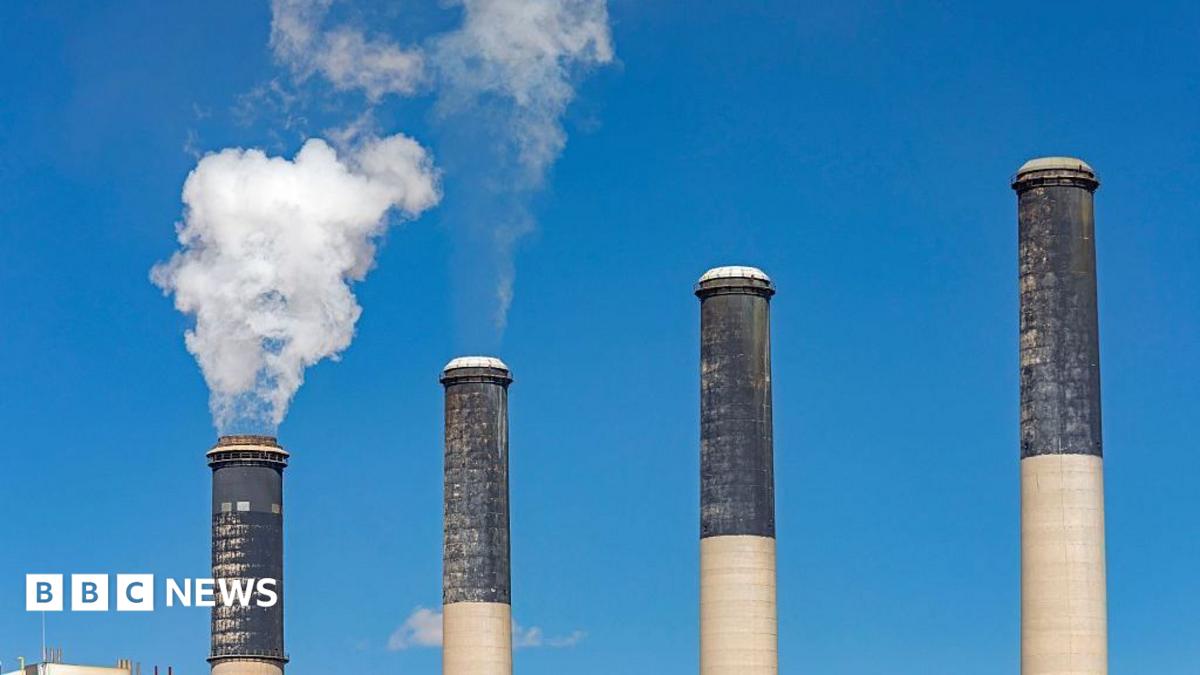
Rules aimed at limiting pollution from coal and gas power plants are being scrapped, the head of the US Environmental Protection Agency (EPA) has announced.
The agency also said it would take steps to prevent future administrations from regulating power plant emissions.
The EPA said that getting rid of the majority of the climate rules from President Joe Biden’s era would save $310bn (£223bn) and reduce energy prices.
But environmental groups warned it would come at a huge cost to Americans’ health and the planet. The EPA’s move is expected to face immediate legal challenges.
“The reality is that America produces energy better and cleaner than anywhere else in the world, and our power plants should not be unfairly targeted,” the head of the EPA, Lee Zeldin, said on Monday.
Fossil fuels, which include coal and natural gas, are by far the largest driver of global climate change, according to the United Nations.
The EPA said in a statement that it found the Biden-era rules on power plant emissions had “exceeded the agency’s authority”.
The agency said the regulations required “control technologies that are not adequately demonstrated, effectively forcing plants to retire rather than setting standards they could actually meet”.
The EPA is also seeking to get rid of all other greenhouse gas rules for the power sector.
The changes, which will undergo public scrutiny, were proposed last year by Zeldin.
He said the new rules would “ensure affordable and reliable energy supplies and drive down the costs of transportation, heating, utilities, farming, and manufacturing while boosting our national security”.
The Biden-era regulations called for a major reduction in carbon emissions from power plants, as well as vehicles and industrial facilities. It was estimated that the measures would stop 4,500 premature deaths annually.
But the EPA said on Monday: “Any potential public health harms are too uncertain, conjectural, remote, and convoluted to tie specifically to the US power sector.”
Zeldin told reporters that safeguards against “hazardous air pollutants” would remain in place “to safeguard human health”.
