


“A very good morning,” I said in Spanish, smiling at the young director of the Colombian National Land Agency as we exchanged congratulatory handshakes. It was 2024, and my U.S. Agency for International Development (USAID) team and I had just arrived to inaugurate new offices for the land agency in downtown Bogotá, where fresh staff and IT systems would help speed the laborious and typically yearslong process of turning paperwork into official land titles.
It had taken years of hard work and millions of dollars of aid to bring reform to Colombia’s dysfunctional land administration system, in which more than 40 percent of rural landowners lacked proper titles. Over several years, we had carefully researched ownership in several key counties, and now it was the land agency’s turn to convert our surveys into official titles.
Looking at the elaborate setup, I turned to my program manager and asked under my breath, “How much did we pay for this?” USAID contractors always footed the bill for such events, in my experience. “Nothing,” he replied. “This is their show.”
This memory epitomized for me both the promise and dysfunction of my 21 years at USAID. We existed to bring such transformational reform to life, within the governments of our host countries. Yet we were hampered by our own systems and practices.
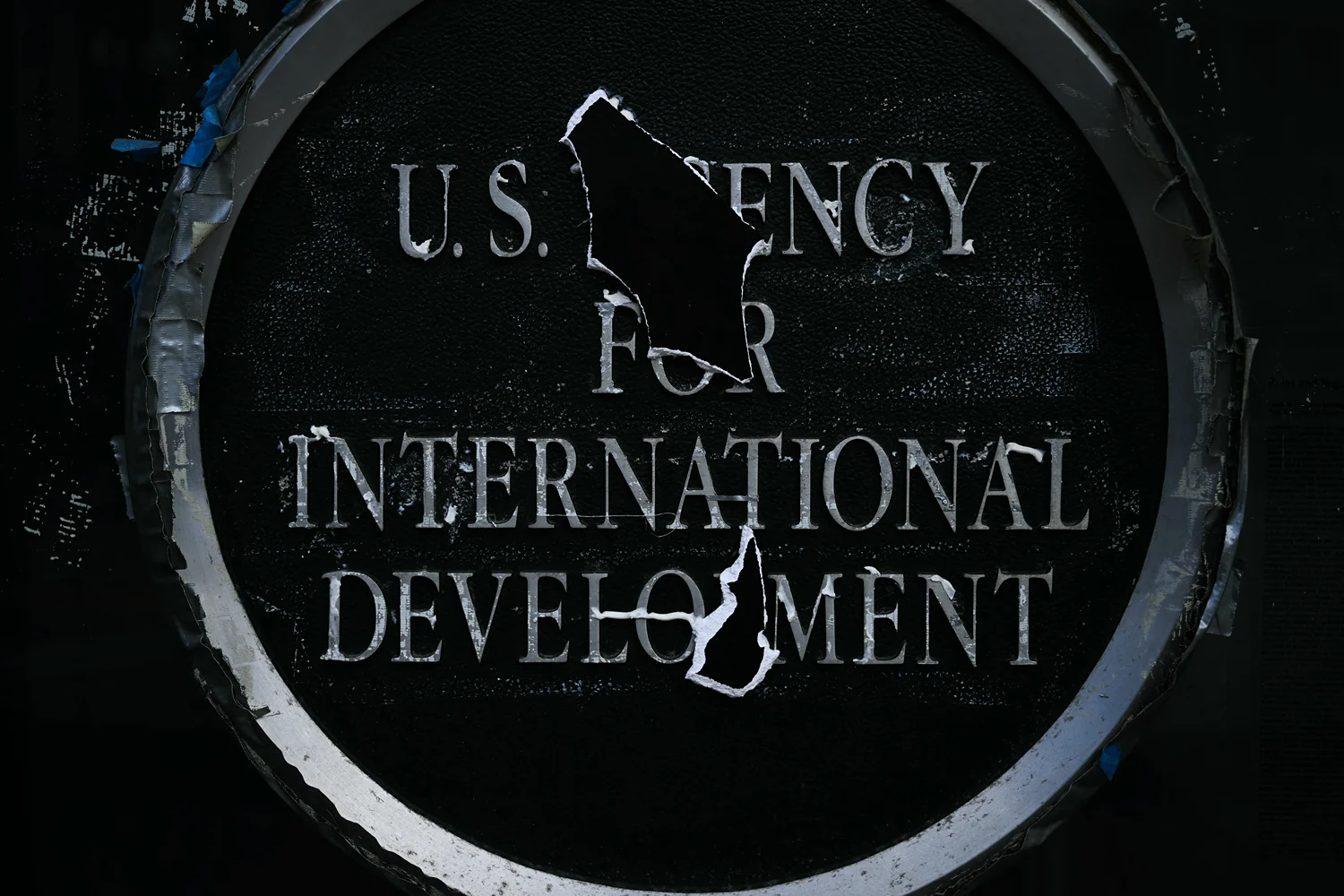
The end of USAID’s operations in September 2025 was a tragedy—for U.S. soft power and influence, for the lives in developing countries that have been lost, and for the shameful treatment of USAID’s foreign and American staff. But the agency was not perfect, and as we look toward building back something better, we need to think sharply about how to make a system more interested in transformation than paper-clip counting.
I recognized much of what frustrated me with USAID in the pages of Ezra Klein and Derek Thompson’s 2025 bestseller, Abundance—too much paperwork, pursuing low-risk and low-impact approaches when we knew better ones, and stymied by process over outcomes.
USAID generally spent its funding through competitively awarded grants and contracts to NGOs and for-profit contractors. These entities would, in turn, hire experts, rent out offices, and buy vehicles and equipment to provide expertise to the host-country organization.
In this case, our contractor was a big, for-profit U.S. firm. Staffed by very capable Colombians, it was always a struggle to get our contractors to see why the real goal was for the local government to take over. The contract required deliverables, such as 20,000 land titles issued, not the deeper reforms that the inauguration of the new offices represented.
The whole system of measurement and incentives within USAID worked against these moments. Our standard indicators counted units, such as the number of people trained, but had no way to measure transformation. The auditors were notorious for only finding fault and lack of compliance, not handing out kudos. Nothing in any of our systems awarded us for the host country, rather than ourselves, taking on responsibility for a project.
These are not entirely new questions. In former USAID Administrator Andrew Natsios’s widely read 2010 essay, “The Clash of the Counter-Bureaucracy and Development,” he detailed how USAID had become consumed by compliance and paperwork, spending “as much money on oversight and control as on implementation.” Worse, it had strayed from its mission of creating transformational partnerships with developing countries in favor of low-risk, countable outputs.
I moved to Washington in 2000 and worked as a management consultant for federal agencies until 2004, when I became a foreign service officer with USAID. The practices and acronyms Natsios described were our bread and butter—inspector general audits, performance measurement, and strategic planning. I naturally carried that skillset over when I began my USAID career. My last tour was as deputy director in Colombia, the largest USAID program in the Western Hemisphere. As I became a senior USAID officer, Natsios’s critique rang truer and truer to me.
A perennial directive during my 21 years at USAID was to push us, working in the field missions, to work more with local partners. Most recently, the goal of former Administrator Samantha Power’s localization initiative was to provide 25 percent of USAID’s total funding in direct contracts and grants to local partners. The Biden administration ended with still a long way to go to meet that goal, reaching only 12 percent of funding.
The development theory was simple; partners more involved in designing and managing programs would produce more sustainable programs that they saw as their own, not as the donor’s. To be sure, done poorly, there were plenty of potential downsides to giving direct grants to local partners, such as heightened corruption, aid dependency, and exacerbating local power dynamics as local elites would often control this funding.
But there were other potential advantages, too. Locals tend to understand how to get things done in their own country and may devise more appropriate solutions, and grants to local partners often cost less to implement.
Despite all these efforts, most of our funding went to grants to large international NGOs, the United Nations, or to big contracts with for-profit firms that had developed around implementing specialized USAID funding, known as “Beltway bandits.” Most USAID staff instinctively knew that local partners would have a better angle on problems. But we also knew that it was just too complicated and time-consuming to do it at scale.
Natsios described the situation in 2010 as one where the complexity of working with USAID, “restricted newer, smaller, and local organizations from competing for grants and contracts, because these organizations lack the business systems to follow U.S. federal law and regulation, to account properly for all funds, to disburse money quickly, and to produce measurable and auditable results.”
In 2025, 15 years after Natsios published his essay, the situation was about the same or perhaps marginally better with regard to the proportion of USAID funding globally going to local organizations, probably increasing by a couple of percentage points, from 10 to 12 percent.
In Colombia, the proportion going to local organizations was far less than the global average—only about 5 percent of our funding went to local partners. The rest went to large international NGOs, the U.N., and Beltway bandits. Speaking as someone partly responsible for this situation, this was insane.
Colombia, while having significant development challenges and needs, is considered by the Organization for Economic Cooperation and Development to be an upper-middle-income country. It has a highly developed private sector and state. The challenges noted by Natsios of “lack of business systems” were much less an issue in a place such as Colombia, yet we provided very little of our funding to local partners. Our complicated design and contracting processes were the same whether the grant was $100,000 or $10 million, disincentivizing smaller projects—while USAID’s complexity put off local partners. We had clear incentives to spend but no penalties for not working with locals. And we had the staff to manage 20 large grants but not 100 small ones.
When I ask myself how we could move from the bureaucratic, risk-averse, and process-focused USAID to a new and redesigned foreign assistance that is bold and transformative, my answers stem from my own experience—and the limited number of projects I felt were truly successful. In my 21-year career, I probably worked on or led just five or six projects I would consider to be absolutely transformative out of dozens of projects. Other work was good, but it did not have the same feeling of real change.
I felt that difference powerfully one night in Kabul in 2016. We were running a virtual online auction at the U.S. Embassy, where private sector investors from around the world would bid on a new 10-megawatt solar farm project in Kandahar. The CEO of the Afghan utility and his senior staff accompanied us in person, and we watched on a TV monitor as bids came in from companies. The numbers slowly got better and better as the night progressed. When bidding closed, the Afghan government had a deal at a world-class price from the winning company.
This moment meant that the Afghan government could negotiate with the global private sector, equal to equal, without donors as intermediaries. The teary-eyed CEO hugged me and immediately called the Afghan president to tell him the good news.
No standard indicator can capture that moment, and it was not featured as a headline in the next audit report. Yet that moment was so transformative that this approach to infrastructure was repeated to great effect by the Afghans on their own. The Afghan government used the private investor approach we piloted with them that night to triple the output of Kajaki Dam with Turkish investors over the next few years.
Models exist within USAID and federal foreign assistance to pull from. Down the hall from me in Bogotá sat the lead for USAID’s Office of Transition Initiatives (OTI) program. I was envious of the fact that she wasn’t there that often but instead out in the field working directly with communities on small infrastructure or community projects. OTI’s model was completely different than the rest of USAID. Field managers were expected to be in the field, bonding with counterparts, adjusting programs, and making things happen. Back-office contract and finance work was done in Washington. If I wanted to get a read on the political dynamics at a key counterpart agency, my first stop was to speak to the OTI rep.
The Inter-American Foundation (IAF), a much smaller U.S. federal body, also worked with those small communities and NGOs doing truly grassroots development work. In Colombia, it worked with small Indigenous-led NGOs serving their community or women’s groups helping them to start small businesses—organizations often without offices or full-time staff.
How did IAF do it? Its procedures were completely different from ours, its funding scale was generally under $100,000, and it included a key condition in making these grants. It generally requested that an NGO’s own contribution be at least as much as IAF’s, ensuring that this was the NGO’s project and the NGO owned it.
Global problems are landing on U.S. shores in unprecedented numbers. The right focuses on migration and illegal drugs, while the left sees climate change and pandemics. However you weigh each of these threats, they could all be mitigated by well-designed foreign assistance.
I know this is the case because I managed such programs in Colombia just prior to the mission’s closure. We helped Venezuelan migrants take advantage of generous policies that would allow them to stay in Colombia, rather than start their hike to the United States through the Darién Gap. Other programs incentivized coca farmers to stop growing coca and make their livelihood legally. Climate finance preserved hundreds of thousands of acres of virgin forest to slow climate change. Funding helped Colombia’s health ministry prepare for the next pandemic. Foreign assistance is not a panacea but remains an essential tool to protect the United States.
As Natsios reminds us, development is about building institutions “in poor and fragile states, with the ultimate goal of developing a capable state, market economy, and civil society.” It’s not about bean-counting. It is time to think boldly about how we could redesign foreign assistance around that objective and help solve the threats facing the United States.
