


At a time when U.S. President Donald Trump and the Republican Party are warning about the threat of “communism,” the Trump administration itself has taken over much of the means of production.
If Trump’s foray into state capitalism last year seemed alarming—and it did—it has only gotten worse.
At a time when U.S. President Donald Trump and the Republican Party are warning about the threat of “communism,” the Trump administration itself has taken over much of the means of production.
If Trump’s foray into state capitalism last year seemed alarming—and it did—it has only gotten worse.
The U.S. government now holds equity stakes in as many as 30 companies across a gamut of industries. What started with a “golden share” in U.S. Steel has morphed into a government takeover of vast swathes of the economy. Trump recently browbeat oil companies such as ExxonMobil and Chevron over their refining margins, as the Iran war’s economic toll has led to higher gasoline prices. His own pick for the Federal Reserve is floundering, even as Trump spam calls him repeatedly. All the while, Trump continues to arrogate congressional powers of taxation to raise import duties on U.S. consumers.
“There are some novel economic changes going on, and nobody is talking about it,” said Tad DeHaven, an analyst at the Cato Institute who is setting up a program to research state capitalism. “Since it is driven by one man’s personal desires, there is no plan and no strategy. It changes by the day.”
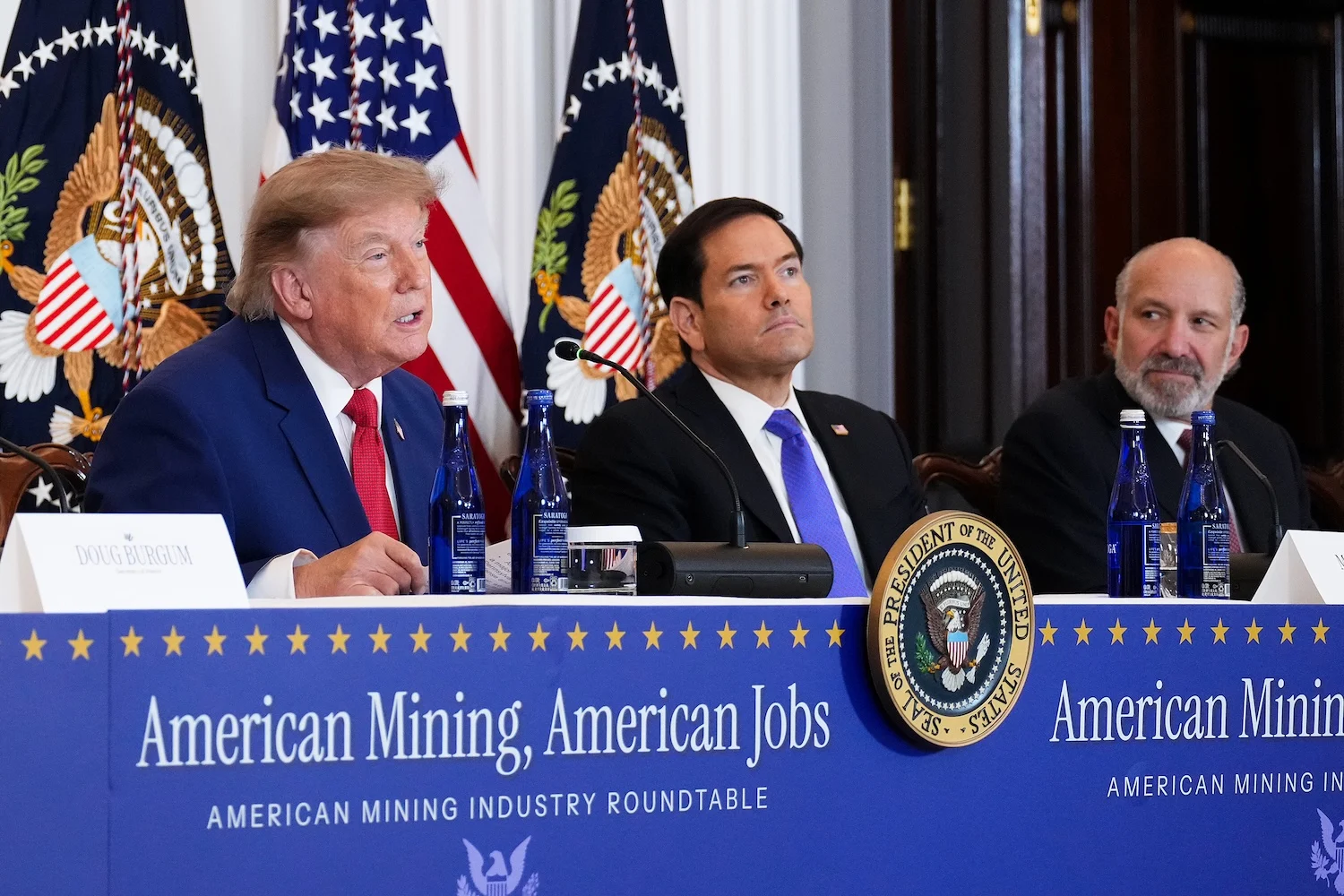
Trump’s blitzkrieg on industry has focused on rare earths, mining, metals, and semiconductors, among other sectors. It is a jarring move for a nominally Republican president, from a party that has long espoused free-market values.
There is a case to be made for state intervention in certain industries that need government injections of money, know-how, or support otherwise. Shipbuilding is a good case in point and was, at one point in Trump’s second administration, a priority—until it wasn’t. Semiconductors are another critical sector that requires government support in most cases; Taiwan’s world-beating chip industry grew off government largesse, as did, for a spell, the U.S. chip sector. There are scads of academic research about the spread of state capitalism worldwide.
The difference between what Trump is doing and what other countries are doing is significant. While other countries grapple with the sudden vulnerability of supply chains or a needy infant industry, the Trump administration has turned state capitalism into a revenue stream. The number of exemptions and exclusions for tariffs, and special treatment for certain firms, has grown.
“The spin is always, ‘It’s just the critical industries.’ There is not some sophisticated plan here. This is someone who wants to exercise control over the economy,” DeHaven said.
