


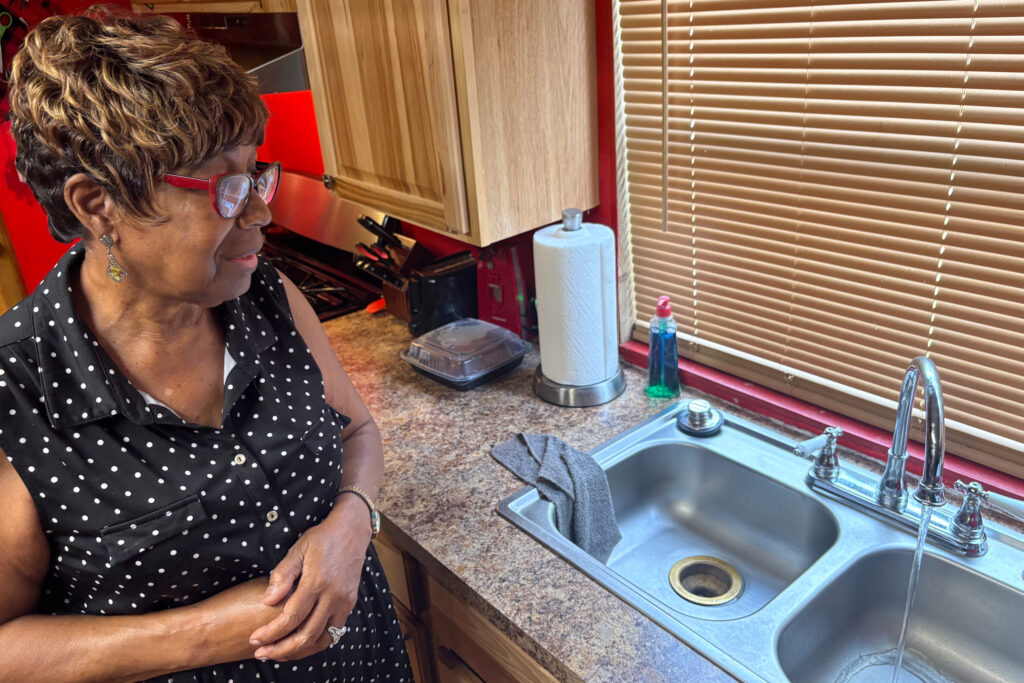
WHITTED, Fla.—When Ann Jones runs her kitchen faucet, the water flows clear only some of the time. Sometimes the water is brown. Fill a pitcher, and the water is the color of iced tea.
Jones, 81, is a gentle woman who has lived most of her life in this unincorporated historically Black community of 52 residents southeast of Orlando. She can recall, as a teen, glimpsing the Ku Klux Klan burn crosses not far from her childhood home, as her family drove past.
Through the years the community has held firmly to its heritage and the close bonds its neighbors share, even as the outer bounds of metro Orlando have crept closer. Recently several new developments have sprung up around the outskirts of the tiny neighborhood, all of them connected to the local water system and offering clean drinking water flowing from their taps.
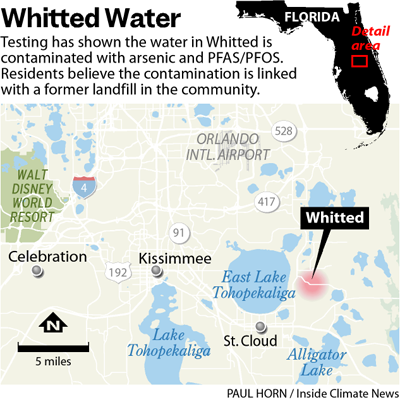
In Whitted, residents rely on well water, and testing they requested from the Florida Department of Health has confirmed at least some of the wells are contaminated with arsenic and PFAS/PFOS, so-called “forever” chemicals associated with cancer, cardiovascular disease, developmental problems in children and infants, diabetes, immune system disruption and neurological damage. A $2.3 million effort to connect the community to the local water system has moved slowly since the funding was announced in 2024, an issue Osceola County Commissioner Ricky Booth, who represents Whitted, acknowledged.
“Those new developments pay for those services to come in,” he said. “Hearing from the residents, my position has been let’s get them hooked up to city water. It seemed like the right thing to do, and that’s why we’ve been fighting so hard to get it done.”
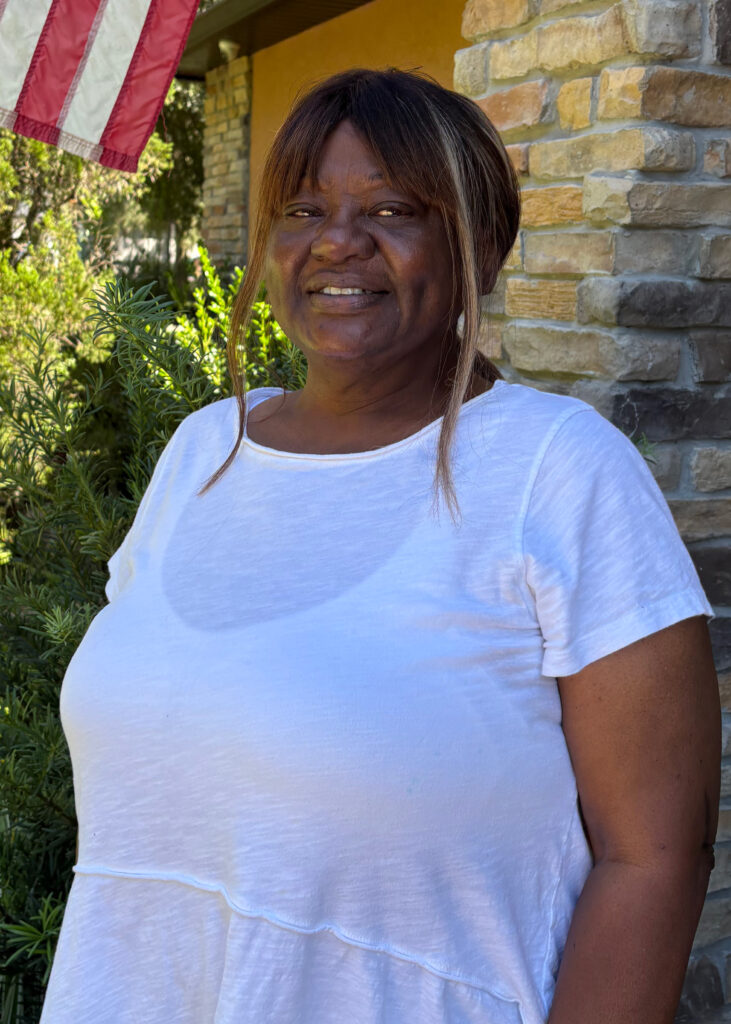
Jones, who lives with her husband in a tidy home painted bright white, does not drink the tap water. Every two weeks two five-gallon jugs of water and three 24-packs of bottled water are delivered to the house, and a neighbor helps lift and empty the jugs into several pitchers the couple uses for drinking and cooking. The couple bathes in the water, but Jones throws in some bleach with the whites to ensure the water does not stain the laundry. She estimates the couple spends about $150 a month on bottled water, a situation she considers a legacy of the segregation and racism that historically characterized this part of central Florida.
“We’re not begging or asking for something that no one else has, that is sacred to the white people,” she said. “We deserve to have clean water. It doesn’t matter what race you are. Everybody deserves clean water, to know that they are safe in drinking their water.”
A Landfill, Not a Park
In the late 1800s, a small group of Black families settled among this region’s agricultural and ranch lands and began working the citrus groves and sugarcane fields. They established the St. Luke Missionary Baptist Church, and eventually the tiny house of worship would serve as a spiritual and social center for generations of Whitted families. The Black children attended their own schools, and residents knew better than to go after dark into nearby St. Cloud, which was known as a “sundown town.”
In 1964, a resident named James Whitted, whose relatives helped establish the community and lent their name to it, agreed to lease three acres of his land to Osceola County for a dollar a year for the construction of a park and recreational space for the community’s children, according to records residents obtained recently. Whitted was elderly at the time, could not read or write and suffered from some mental health problems, said Christian Wells, professor of anthropology and director of the Center for Brownfields Research and Redevelopment at the University of South Florida. Whitted did not understand the lease he signed actually allowed for a landfill.
The park never materialized. Shortly afterward the county dug a hole on the property, and trucks began dumping trash there. The action was undocumented and unregulated, and records are scarce. But based on a lease agreement, the property is believed to have operated as a landfill from 1964 to 1975, according to a 2024 report by the Florida Department of Health.
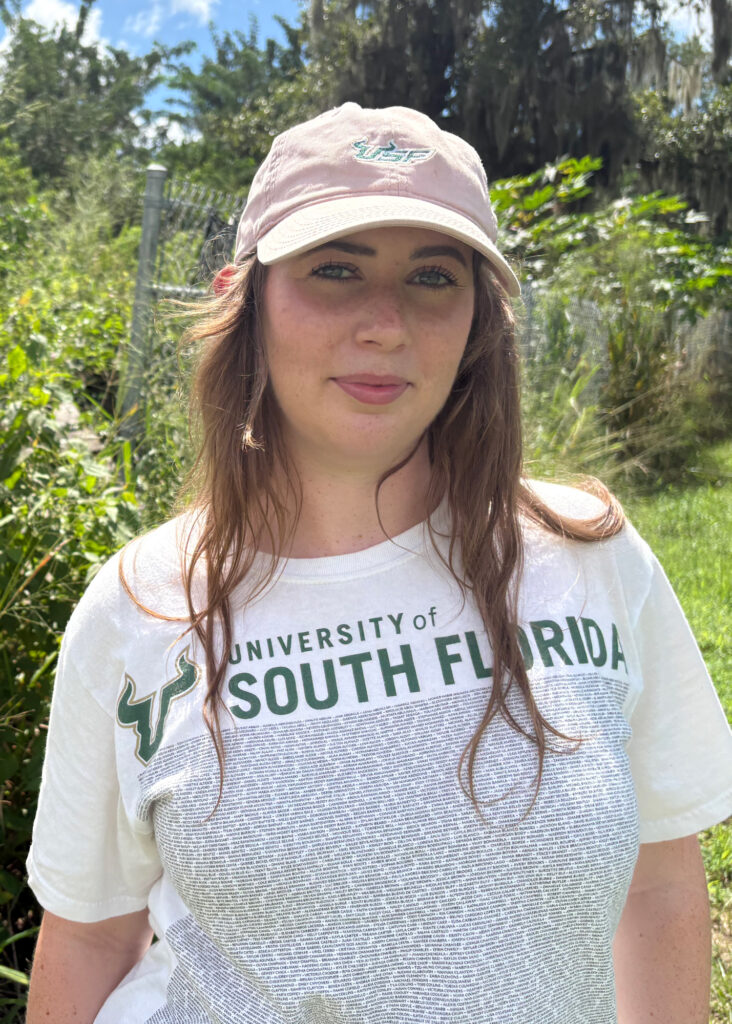
Whole cars were dumped at the site with no concern about leaching, said Emily Walsh, a master’s student in anthropology and public health at the University of South Florida whose thesis project is on Whitted. After the dumping stopped, the county covered the landfill and the site has remained undeveloped since.
In 1966 the county sanitation director expressed concern to the Board of County Commissioners that the waste at the site could pollute the groundwater, contaminating the wells of nearby residents. The sanitation director requested the county dig a ditch around the property, and the board instructed the county engineer to investigate. There is no evidence any such investigation took place, and no precautions were taken, Wells said.
Homes surrounded the landfill on three sides, some of them only a few dozen feet from the site and without even a fence separating the properties. When the county began preparing the site for the dump, clearing trees and moving dirt, the residents thought construction was getting underway on the park, Jones said. The children got excited.
“This was a way into what we thought would be a heavenly life, a fun life,” she said.
After the dumping began, all kinds of garbage was deposited at the site: clothing, food, furniture, paint, pots and pans, toys, windows. Individuals tossed trash on the property, too. The landfill smelled, and rats and raccoons became a problem for nearby residents. Still, the site became an informal recreational space for the children, who would venture onto the property and play, Jones said. But James Whitted was devastated.
“He said, ‘I didn’t designate that as a landfill. I wanted that for the kids for a park,’” Jones said.
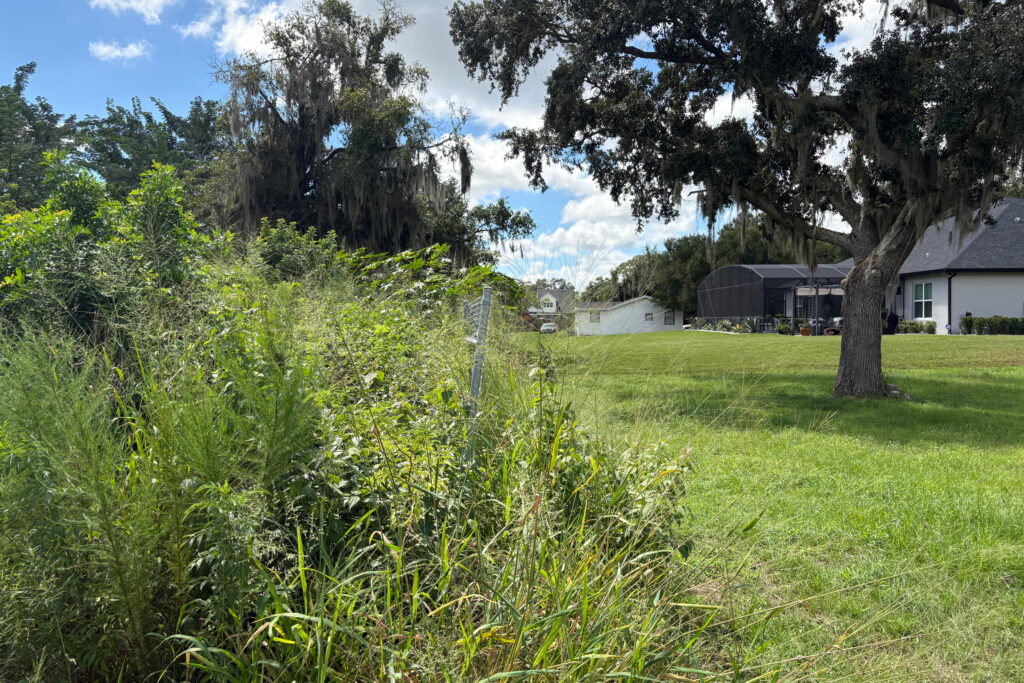
DeAnna Paul, 64, recalls playing as a child with her sister at the dump and scavenging for bikes or anything they could fix up.
“It was just right in the midst of all the houses,” she said. “I could see dump trucks, different types of large trucks coming in. … They would just off-load into this big hole, and then after so much was in there they would cover it up and make another hole.”
Water Worries
Eventually residents living near the landfill began experiencing problems with their water. Jones said the water first turned yellow, then brown and would discolor sinks and tubs. Most residents back then drank the water anyway. The site also flooded when it rained, and the foul water would flow into residents’ backyards. Some of the residents began suffering from unusual health problems such as rare cancers, Wells said.
For Jessica Paul, the water can smell of eggs and have a metallic taste. Paul, 42, lives with her mother and son in Whitted and estimates the family spends nearly $100 a month on bottled water. She characterized the water as “grimy,” with “sandy-type stuff,” and said she gets “cringe” when taking a shower in it, although she avoids washing her hair with the water because she said the water can dry out her hair and cause it to break.
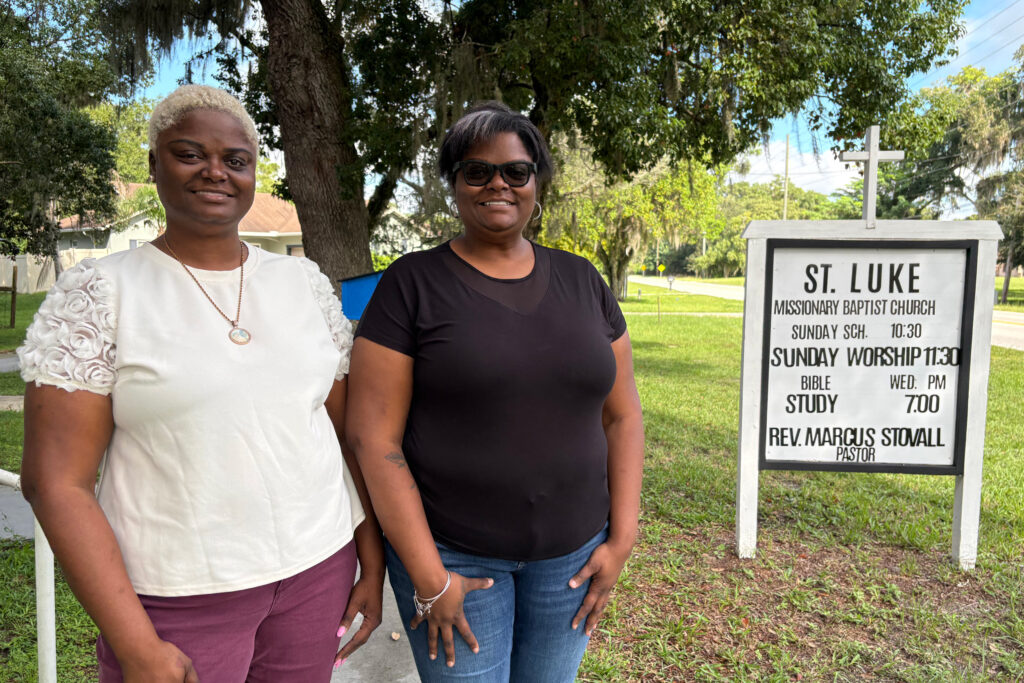
“It’s really emotional. I know that a lot of people in this area ended up getting sick with cancer and stuff like that, and to know that we’re still having to take showers in it, it’s really uneasy,” said Paul, who has lived all her life in Whitted and is DeAnna Paul’s niece. “I know my anxiety is cray because you don’t know what can happen in 10 years or 15 years or 20 years down the road, and then the fact that I have a 12-year-old son.”
DeAnna Paul said she constantly is running up to the local Sam’s Club for five-gallon jugs of water. She said she is hesitant to have family and friends over to her home.
“What danger am I putting them in if they come here and drink some of the water?” she asked.
In response to mounting community pressure, the Florida Department of Health in 2022 collected water samples from 10 of 18 wells within a quarter mile of the former landfill site. The samples were tested for arsenic, metals and trace elements, PFAS and volatile organic compounds. The department also investigated possible soil and groundwater contamination.
The department found that in some wells arsenic and PFOS concentrations “could pose a health risk to residents, if they use the wells for water for drinking and other consumption purposes including cooking and making baby formula,” according to the 2024 report. The department concluded the water, if consumed over a lifetime, could lead to a higher cancer risk and non-cancerous health effects and recommended residents install filters and avoid drinking the water. The department declined to provide a comment to Inside Climate News.
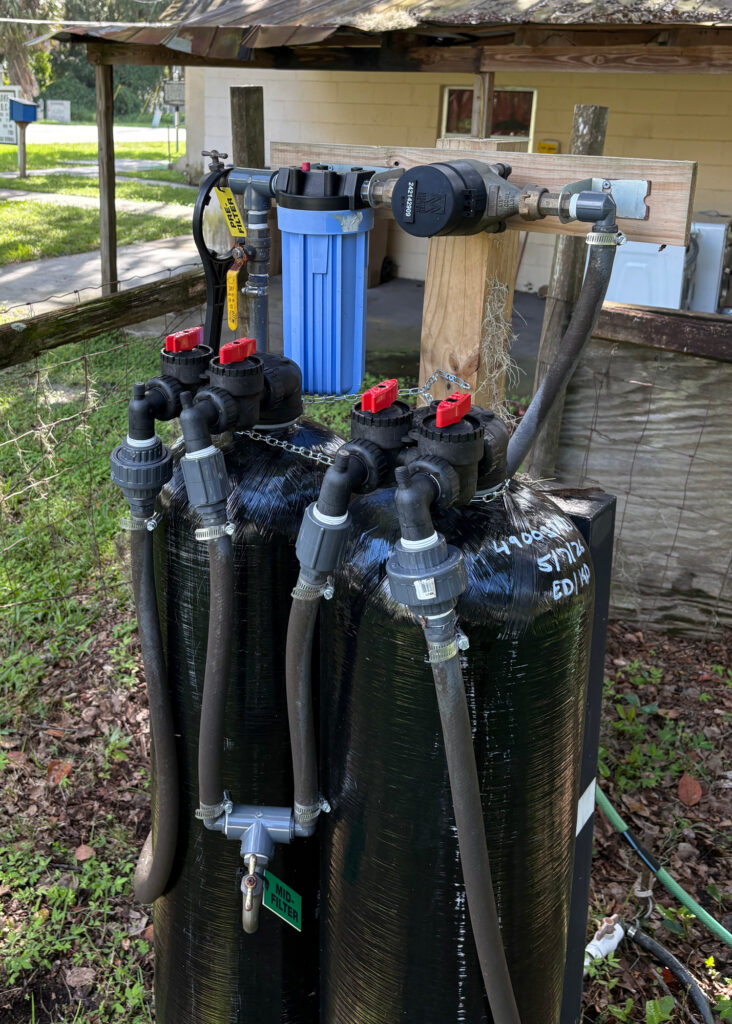
Nonetheless in a January 2026 email the Florida Department of Environmental Protection told residents the water was safe to drink, now that residents had installed filters. The department said future water monitoring was planned to further define the boundaries of the plume of groundwater pollution but that no health monitoring was recommended.
“PFAS are common, and most people have some level of PFAS in their blood,” the email stated. “PFAS blood testing is not a standard procedure offered by your doctor.”
“We’re Just a Lost Generation”
Across the country a legacy of segregation and systemic lack of investment have left communities such as Whitted more vulnerable to environmental degradation and climate impacts such as flooding, and also less equipped to deal with the problems. Multiple studies also have shown these communities tend to have less access to clean drinking water. Local investments in aging water systems are based on the tax base, and that leaves small communities with fewer resources to rely on state and federal support, according to one study.
In fast-growing Osceola County, providing clean drinking water in a community such as Whitted, where there is less economic development than in other areas of the county, is a matter of political will, Wells said.
This story is funded by readers like you.
Our nonprofit newsroom provides award-winning climate coverage free of charge and advertising. We rely on donations from readers like you to keep going. Please donate now to support our work.
“There is just this striking correlation between people who don’t have access to clean and safe water and minority status, race and ethnicity,” Wells said. “The vast majority of communities that I have encountered that have water quality problems or water access problems are Black or Hispanic. And it’s urban areas. It’s in rural areas. It’s everywhere, but there is this very striking correlation between the color of your skin and the ability to access clean and safe water.”
In 2024 Whitted received $1.45 million from the state and $850,000 from the federal government to connect residents to the local water system. At the time, Osceola County said the wells did not provide adequate water volumes for firefighting purposes, and that the project also would help reduce insurance costs by addressing the fire risk. But two years later, construction still has not yet begun. The project is scheduled to be completed in 2028.
Whitted residents also report the community has been excluded from other services and amenities such as trash pickup, road upgrades and streetlights.
“What hurts so much is that all of us in this neighborhood have been here for 60 and 70 years. They built all around us like we were nothing,” Jones said. “They built north, south, east and west and left us with nothing but dirty water and no sewage. If you go down the road you have water and sewage. You have sidewalks. You have streetlights. We have none of that. So we’re just a lost generation, I guess.”
Booth, the county commissioner, attributed the slow progress on the project to connect residents to the local water system to government bureaucracy and said it had nothing to do with Whitted’s heritage as a historically Black community.
“The county doesn’t care about what color that community is. The county cares about helping people,” he said. “I would disagree with anybody who says that anything that happened in the last 40 or 50 years has been some sort of segregation or anything like that. It’s not true.”
Residents also want the county to fulfill the dream of James Whitted and turn the former landfill site into a park. Jessica Paul characterized the situation as an example of environmental racism.
“All we want is just clean water,” she said. “We shouldn’t be even fighting for that. It should be free.”
About This Story
Perhaps you noticed: This story, like all the news we publish, is free to read. That’s because Inside Climate News is a 501c3 nonprofit organization. We do not charge a subscription fee, lock our news behind a paywall, or clutter our website with ads. We make our news on climate and the environment freely available to you and anyone who wants it.
That’s not all. We also share our news for free with scores of other media organizations around the country. Many of them can’t afford to do environmental journalism of their own. We’ve built bureaus from coast to coast to report local stories, collaborate with local newsrooms and co-publish articles so that this vital work is shared as widely as possible.
Two of us launched ICN in 2007. Six years later we earned a Pulitzer Prize for National Reporting, and now we run the oldest and largest dedicated climate newsroom in the nation. We tell the story in all its complexity. We hold polluters accountable. We expose environmental injustice. We debunk misinformation. We scrutinize solutions and inspire action.
Donations from readers like you fund every aspect of what we do. If you don’t already, will you support our ongoing work, our reporting on the biggest crisis facing our planet, and help us reach even more readers in more places?
Please take a moment to make a tax-deductible donation. Every one of them makes a difference.
Thank you,

Reporter, Florida
Amy Green covers the environment and climate change from Orlando, Florida. She is a mid-career journalist and author whose extensive reporting on the Everglades is featured in the book MOVING WATER, published by Johns Hopkins University Press, and podcast DRAINED, available wherever you get your podcasts. Amy’s work has been recognized with many awards, including a prestigious Edward R. Murrow Award and Public Media Journalists Association award.
