


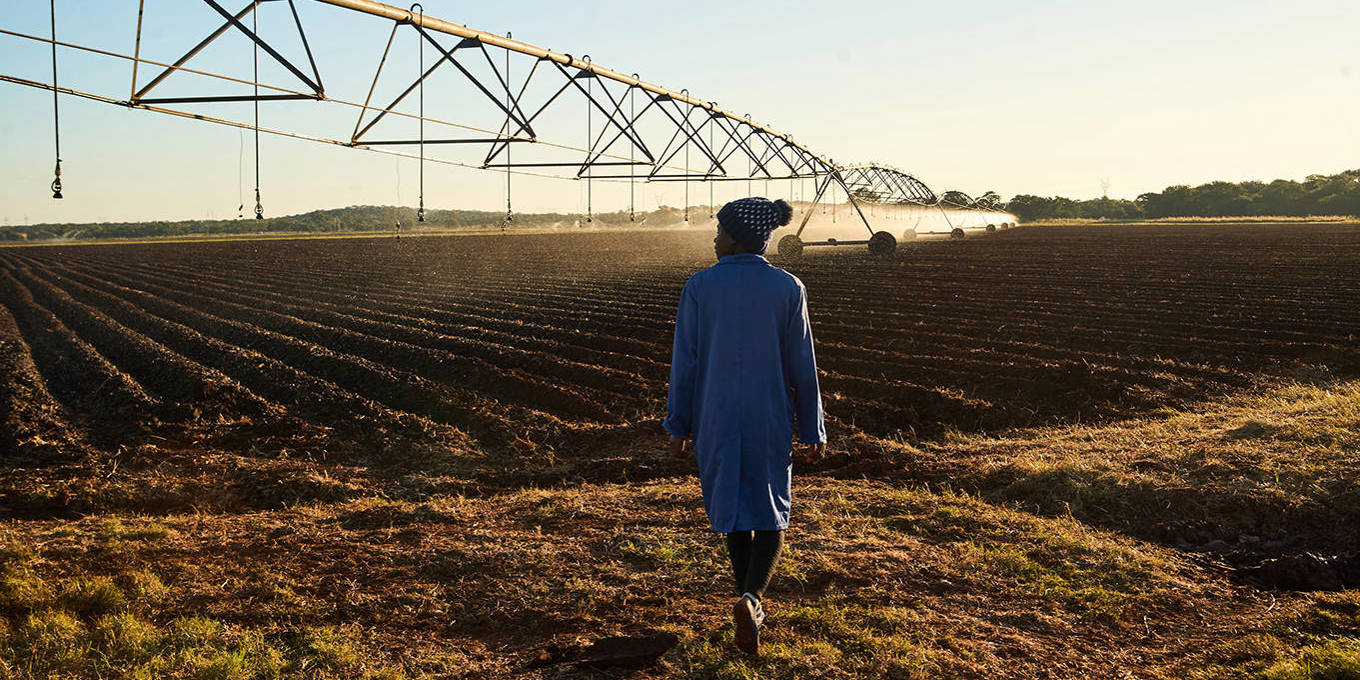
Even as hunger declines around the world, food insecurity remains prevalent in rural communities. Restoring soil health, expanding access to new technologies, strengthening land rights, and upgrading public infrastructure are essential to boost agricultural productivity and protect rural livelihoods.
URBANA, ILLINOIS—The United Nations recently released its State of Food Security and Nutrition in the World 2026 report, which, perhaps surprisingly, delivered some encouraging news. While roughly 645 million people experienced hunger in 2025, that was nearly 14 million fewer than in the previous year. For the first time in a decade, the number of hungry people in Africa also declined.
But despite these positive developments, significant regional disparities persist. Most notably, the report finds that food insecurity remains more prevalent in rural communities and disproportionately affects women. The key question facing governments and development organizations, then, is how to improve food security in those communities and accelerate progress toward eliminating hunger.
Four priorities stand out. First, enhancing food security in rural communities requires boosting agricultural productivity on existing farmland in ways that are sustainable and minimize environmental impacts. As growing populations place increasing demands on agricultural systems, simply expanding farmland risks accelerating deforestation and environmental degradation. Producing more on existing farmland is thus essential to meet rising demand without further damaging natural ecosystems.
Healthier soils are critical to efforts to boost agricultural productivity. Any strategy to strengthen food security in rural communities must therefore begin with a simple but fundamental question: Are soils healthy enough to support sustainable increases in crop production?
Unfortunately, recent studies suggest that agricultural productivity in hunger-affected regions remains severely constrained by extensive soil degradation despite decades of attempts to improve soil health. Recognizing that poor soil threatens food and nutrition security, rural livelihoods, and environmental sustainability, African leaders endorsed the ten-year African Fertilizer and Soil Health Action Plan and the longer-term Soil Initiative for Africa Framework in 2024.
The good news is that once the foundational questions about soil health and quality have been answered—using available soil-health tests, as well as science-based indicators and assessments—corrective measures can be taken. There are numerous principles and practices for building soil health, including cover cropping, intercropping, crop rotation, rotational grazing, and the use of organic fertilizers and biofertilizers, as well as minimizing soil tillage, maximizing soil cover, increasing biodiversity, and maintaining living roots.
Second, efforts to improve soil health must be accompanied by investments in rural farming communities. Food producers need access to improved seed varieties, biofertilizers, water, and emerging technologies such as precision agriculture. Together, these investments could further boost agricultural productivity and bolster food security.
Third, stronger land tenure is crucial to improving food security in rural communities. Land-tenure security has long been recognized as a fundamental pillar of agricultural production, development, and rural transformation, incentivizing farmers to make long-term investments in restoring soil health and adopt other productivity-enhancing practices.
The link between stronger land rights and agricultural productivity is well documented. This link is particularly important for women, who contribute significantly to agricultural production yet remain disadvantaged in land ownership and tenure security. Although the effects of greater land-tenure security vary across regions and policy contexts, ensuring women’s ownership rights can advance gender equality, enhance agricultural productivity, support rural livelihoods, and deliver lasting improvements in food security.
Lastly, governments must invest in the infrastructure that connects rural producers to markets, including electricity, refrigerated transportation, and roads. Better access to urban markets can help farmers generate additional income by enabling them to sell more of what they produce. Improved transport networks can also lower costs, enabling farmers to reinvest their savings in advanced technologies, thereby reducing post-harvest losses while diversifying into a wider range of higher-input crops.
With healthy soils, access to agricultural inputs and emerging technologies such as precision agriculture and AI, robust land-tenure rights, and upgraded infrastructure, rural farms around the world could sustainably increase agricultural productivity. Greater productivity would, in turn, protect livelihoods and help rural communities move from hunger to abundance.
But time is of the essence. While the latest decline in global hunger is encouraging, sustaining and building on this progress will require considerable investment in the rural communities where food insecurity is most entrenched, in Africa and beyond.
