


The global pet trade, particularly in exotic reptiles and amphibians, poses significant biodiversity and potential human health risks, scientists say; yet compared to other pressing crises like climate change, the solutions are relatively simple — if only governments would act on them.
Susan Lieberman, vice president for international policy at the Wildlife Conservation Society, based in the U.S., and Sandra Altherr, co-founder and head of science at Pro Wildlife, in Germany, join the Mongabay Newscast this week to discuss these solutions, which they’ve outlined in a commentary published in the journal Nature.
“The international wildlife trade for pets, reptiles, amphibians, and other species is a massive experiment,” Lieberman says. “It’s an experiment to see what diseases can come from one part of the world into another part of the world, and ‘let’s see what happens.’ I think it’s an experiment we should not be undertaking.”
But the “exotic pet trade could be regulated very quickly, and this risk could be reduced very quickly,” Altherr adds.
Both guests discuss what they identify as the main legal gaps that world governments could close, such as the fact that countries of origin have no or little legal recourse for species sold outside their borders.
Another gap is that the CITES, the global convention on the wildlife trade, is often poor at taking a proactive approach to protect species before they become threatened, the authors argue. And species being pushed toward the brink of extinction don’t have the luxury of time for the long process of being listed on CITES to receive protection. Lastly, penalties and enforcement for wildlife trafficking are weak internationally. Altherr says serious offenses often receive little more than a fine.
“What we see is that wildlife smugglers don’t have high risks. They have a high profit, but the risks to be sentenced to jail is almost zero,” she says.
But solutions currently exist in the form of what Lieberman calls “positive lists,” where nations accept only species approved for keeping as household pets, thereby prohibiting the import of any species not on that list. Another is the Lacey Act, a piece of U.S. legislation that makes it illegal to sell, trade, or import species that other countries have banned from export, which she says could be emulated by other nations.
“Only trade those species you know it’s fine, you know they can be in captivity, their populations are healthy, they’re not a risk of spreading disease,” Lieberman says. “People don’t need to have in their home animals that are endangered or threatened in the wild.”
Later this month, the United Nations Convention against Transnational Organized Crime (UNTOC) will convene in Vienna, where Lieberman and Altherr say delegates will discuss a resolution to create stricter international laws that could potentially address these problems. This would then spur a negotiation process, they say.
“The best-case scenario would be that the resolution is adopted overwhelmingly and the negotiations begin of a new protocol on crimes that affect the environment, including wildlife crime,” Lieberman says. “At the same time, there are other things that need to happen, as we mentioned … but the best case scenario would be those negotiations begin, and that stimulates more attention by governments at the national level as well on combating this trade.”
Mike DiGirolamo is the host & producer for the Mongabay Newscast based in Sydney. Find him on LinkedIn and Bluesky.
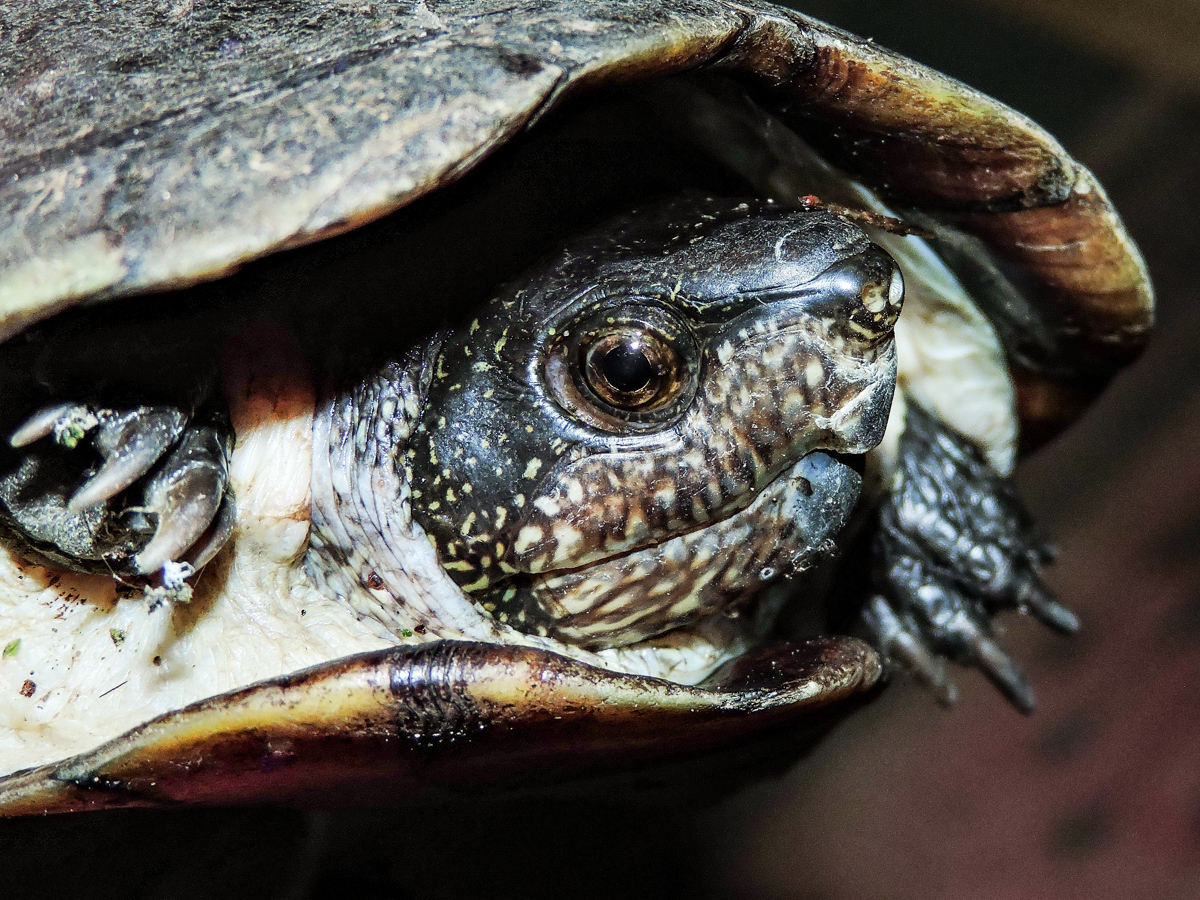
Banner image: The Jalisco mud turtle, endemic to the Jalisco and Colima states in Mexico, is a freshwater turtle found in rivers and wetlands. It is listed on CITES Appendix II, and its international trade is regulated. Image by Cheryl Harleston López Espino (CC-BY-NC-ND).
Related listening: Listen to our conversation with previous Newscast guest Neil Vora explain the growing threats to biodiversity and human health from increases in zoonotic outbreaks:
Notice: Transcripts are machine and human generated and lightly edited for accuracy. They may contain errors.
Why the Exotic Pet Trade is Booming
Sue Lieberman: The way to look at it is the international wildlife trade for pets, reptiles, amphibians, and other species is a massive experiment. It’s an experiment to see what diseases can come from one part of the world into another part of the world, and let’s see what happens. I think it’s an experiment we should not be undertaking, personally.
Sandra Altherr: The exotic pet trade is not the sole threat to many species. Of course, we also have climate change and habitat loss and pollution, et cetera. But these other risks are much more difficult to tackle. But while the exotic pet trade could be regulated very quickly, and this risk could be reduced very quickly, and that’s why it is so important to show the relevance of this topic.
Mike DiGirolamo: Welcome to the Mongabay Newscast. I’m your host, Mike DiGirolamo, bringing you weekly conversations with experts, authors, scientists, and activists working on the front lines of conservation, shining a light on some of the most pressing issues facing our planet and holding people in power to account. This podcast is edited on Gadigal land. Today on the newscast, we speak with Susan Lieberman, Vice President for International Policy at the Wildlife Conservation Society, and Sandra Altherr, co-founder and head of science at Pro Wildlife in Germany. The two of them are authors on a commentary published in Nature, which is urging governments worldwide to close legal gaps in the global pet trade and to collaborate on solutions. The two of them outline how the rise in the amphibian and reptile trade is putting biodiversity and perhaps human health at risk, as these animals can carry pathogens from one ecosystem to the next. I reported on this topic years ago, focusing on the chytrid fungus Bsal, which devastated salamander populations in Europe and could do the same when it reaches North America. Currently, if you capture and trade an amphibian in a country where it is illegal to do so, many nations make it legal to sell that amphibian once it is outside the country of origin. Both guests today describe how pioneering legislation in other countries, similar to the Lacey Act in the United States, could make this kind of trade illegal. Very soon this month, the United Nations Convention Against Transnational Organized Crime, UNTAC, will convene in Vienna, and my guests say delegates may discuss a resolution to create stricter international laws, which could include prison time for wildlife trafficking. Lieberman says this could spur negotiations to update the treaty, and they urge governments worldwide to take the solutions outlined in their commentary seriously. One solution really stood out to me, and that is the concept of a positive list, meaning that importing countries could theoretically create these positive lists and only accept approved species into their domain that are known not to present any biodiversity risk, thereby prohibiting the trade of any species that is not on that list. My guests both say that unlike many problems facing our planet right now, this one can be fixed relatively quickly, and they encourage governments to do so.
Sue Lieberman and Sandra Altherr, welcome to the Mongabay Newscast. Thank you for joining us.
Sandra: Hello.
Sue: My pleasure.
Mike: So you, you wrote a commentary in Nature, and you write that the exotic pet trade is becoming more popular, specifically amphibians and reptiles. Why? What, what factors are causing this?
Sandra: Yeah, I think there are different reasons for that. One is that the trade in these animals is seriously under-regulated, so it’s very easy to buy whatever you want. And another reason is that these animals have become fancy, pushed by social media, and for some people it’s just more interesting to keep these animals compared to rabbits or budgies.
Sue: Yeah, I would agree. There’s a lot on social media, influencers telling people, “Get a lizard, get a snake. Look how trendy it is. Look how cool it is.” There’s always been this, this pet trade, but we’re seeing where people don’t have to go into their local pet store and look at the animals and decide and maybe get advice on what might be appropriate in the home. They see it on the internet, “Oh, I want that. That’s really cool.” And we’re seeing it increase, as Sandra said, I agree, there’s not much regulation. The bird trade, the mammal trade, there’s more regulation, and people might think, that’s complicated.” We also saw an increase in many countries during the pandemic, where people thought, “Well, I c- I don’t have a dog or a cat, and that might take a lot of work. I’ll get a lizard.” And we’re seeing this proliferate, and we’re seeing negative impacts on species in the wild.
Sandra: And another factor that could play in is that reptiles are presented as easy to keep, so many people just buy it and underestimate the needs of these animals.
Mike: You mentioned that around 50 to 40% of reptiles and amphibians that are traded internationally as pets are caught from the wild. And so what are some populations and species that are being threatened by this?
Sandra: It’s more than a few. I think it’s increasing, and as the trade is so under-regulated, it’s always reactive. So animals are traded to extinction before they go to protection, and that’s, I think, one of the main problems. And we see- So many reptiles in the trade, many of them with decreasing populations in the wild, and I think Sue, I, and many others are trying to get these species under international protection, but that’s a very slow process.
Sue: Yeah. B- building on that, I think even a higher percentage are taken from the wild, but that’s based on those that are claimed when they’re traded to be from the wild or bred in captivity. There’s a lot of false claims, “Oh, don’t worry, they’re all bred in captivity,” a- and they’re not. Many reptiles such as turtles and tortoises are really long-lived. You see a 20 or 30-year tortoise coming in, odds are that wasn’t bred in– Nobody had that animal and fed it and cared for it for 20 or 30 years. They’re taken from the wild. And a lot of these animals, people think it’s gonna be easy, as Sandra said, and it’s not easy to care for them. And what happens is they buy one, it dies. They have all the equipment. They think, “Well, I better get another one.” So it proliferates that way as well. But we are seeing turtles and tortoises, and, and I work for the Wildlife Conservation Society. Across the globe, populations in the wild are decreasing massively. I can give you an example of one species, the really cool pancake tortoise of Tanzania. When I started in this field decades ago, it was common, then it became rare and went on CITES. Now it’s on CITES Appendix I. Trade is banned because it was just overexploited completely, again, for the pet trade. Just one of many examples we could give you.
Disease Transmission Risks
Mike: W- we need to explain or get into the dangers of this from, like, a pathogenic transmission perspective.
So about six years ago, I covered the Bsal scare, which when it does make it to North America, which is what I’m told it’s when, not if, could wipe out tons and tons of salamanders in one of the most biodiverse concentrations of salamanders in the world. So can you talk about what kind of risks we’re facing from a disease transmission perspective here?
Sue: When wildlife is imported, whether into the US or Europe, there are no controls on what pathogens might be coming from the wild, from the forest or wherever that, that reptile or other animal came from. And often those pathogens can wreak havoc, as you mentioned with Bsal. There are sometimes tortoises that come out of Africa have ticks on them. Heartworm disease is one such disease that can infect cattle as well. There’s a lot of attention to pathogen, the risk of pathogens from wildlife and trade that might harm people and cause epidemics or pandemics. But pathogens, what I mean, viruses, bacteria, et cetera, that are part of the normal flora and fauna of reptiles can threaten not only not necessarily people, but certainly can threaten other reptiles and amphibians. And you’re right, the US Southeast has the highest biodiversity of salamanders in the world, which would be significantly threatened. Yet we see no controls on imports into the US that might prevent spread of Bsal or some other disease we don’t even know about, and these are real risks.
Sandra: And I think these risks are highly underestimated because people just don’t know. We have seen different studies from Germany and Poland saying that Up to 85% of turtles, up to 92% of snakes, and up to 84% of lizards are carrying salmonella bacteria without showing symptoms. And I think these numbers are pretty shocking. And the other thing is that even six years after the COVID breakdown, the imports of wildlife, as long as they are not internationally protected, and this is just the minority in this case, are not even recorded. So it’s a total black box what’s coming in. And as Sue said, there’s no complete screening for diseases, so we just don’t know what comes in from where and what could be a, a risk for human health.
Sue: The way to look at it is the international wildlife trade for pets, reptiles, amphibians, and other species is a massive experiment. It’s an experiment to see what diseases can come from one part of the world into another part of the world, and let’s see what happens. I think it’s an experiment we should not be undertaking, personally.
Legal Gaps in the Pet Trade
Mike: So we’re gonna talk about the legal gaps that exist right now that enable this rise in the amphibian reptile trade, and there’s quite a few of them, and they get a little complex. But let’s go ahead and start. What are these gaps and why do they exist?
Sandra: I think one of the most serious gaps is that the importing countries just ignore the national legislation in the country of origin. In almost all countries of the world, it’s still allowed to import, to sell, and to keep animals which were illegally sourced in violation of the national legislation in the country of origin. And Sue is American. She knows a, a better system what could be done, but in Europe, as soon as these animals are smuggled out of the country of origin, they can be legally sold in Europe, and that’s a big problem.
Sue: Yeah, I agree that that’s a, that’s one of the, I would say one of the three big legal gaps. For example, there are iguanas f- in Fiji that it’s completely illegal under Fijian law to trade these animals, yet you bring one in the past, or now there’s a little more attention, but it comes into Europe, and Europe has no ability to stop the import. The US has good legislation on that. Hopefully it stays, but the US has good legislation that says if you have an animal that’s violating a country’s laws, you can’t import it into the US. But if something is not listed on this international treaty we’ll talk about in a minute, you can import it into Europe even if it’s a violation of the laws of Ecuador or Brazil or, or Fiji. That’s a real gap, and the public has no way of knowing. They go online, and they say, “Well, it must be legal because it came into the country.” Yet it’s the importing countries, and usually these are wealthier countries, are not supporting the conservation efforts of other countries in the world. So that creates this massive gap. Another gap is a lot of these species that are in trade are not covered by the Convention on International Trade in Endangered Species, CITES. CITES isn’t perfect at all. I’ve worked on it for way too many years, but it makes a big difference. But it’s really complicated to list a species on CITES, so what happens is species are abundant, then they get in the trade, then they get overexploited, then they get declined to, that they’re threatened with extinction, and then they’re protected. It’s a backwards way of looking at the problem.
Sandra: Yeah. It’s always reactive, and the burden of proof that a species needs protection is always on the conservation side at the moment, and what we would need is to shift the system to have a precautionary approach.
EU Solutions & Positive Lists
Mike: So you write that a forthcoming independent analysis will reveal how the European Union can help stymie harmful imports of reptiles and amphibians. Can you tell us more about that?
Sandra: Yes. The EU commissioned three different studies on exotic pet trade, and that was all part of its action plan against wildlife trafficking, which means the EU is very much aware of the problem we have. So they commissioned three different studies. One is the feasibility of a positive list, which means which species are at all suitable to be kept as pets in private facilities. The second one is feasibility of a new law which would prohibit the import of nationally protected species. And the third one is on a demand reduction strategy to reframe the exotic pet trade. Only one of those three studies is already published, the one on the nationally protected species and the illegal trade in, and that’s on the table since one year, and we are expecting the publication of the other two. It should be every single day.
Mike: And Sue, did you have anything to add to that?
Sue: Yeah, the one thing I would add is the current system, it originated really in the late ’60s and the early ’70s where we didn’t have the kind of globalization and trade, we didn’t have the internet at all, where you could trade something until there was evidence that there was a problem. But that system no longer is working because of globalization, because of the internet and all of this. We need to switch the burden from what I call innocent till proven guilty to guilty till proven innocent or a positive list. Only trade those species you know it’s fine, you know they can be in captivity, their populations are healthy, they’re not a risk of spreading disease. People don’t need to have in their home animals that are en- endangered or threatened in the wild. Shift it so that when people go online to buy something, what they see are only those that it would be safe to purchase. And I think we have to change the paradigm. The EU is looking at that, and I appreciate that, and several governments are also looking at that because the current system is also very complicated and very burdensome and more expensive. Instead of saying, “Here’s thousands of species you can trade, and then if there’s a problem, we’ll tell you,” to, “Okay, here’s the 20 species that are okay,” which one do you think is easier to enforce?
Mike: Hello listeners and thank you for tuning in. As I always like to mention, Mongabay is a non-profit news organization. We rely on the funding from listeners like you. I just want to say thank you to all the people who have donated to us. It makes a big difference, and it helps us offset production costs. So if you’d like to support the podcast, head to patreon.com/mongabay to become a monthly sponsor of the show. If you want to read the commentary in Nature discussed in this episode, please see the links in the show notes So this month, October, a United Nations convention against transnational organized crime is gonna meet in Vienna, and you write that it will provide a crucial opportunity to strengthen the international response to wildlife trafficking.
A New UNTOC Protocol
Mike: Yeah. Would that include some of the suggestions that you just said? What could be accomplished at this meeting, do you think?
Sue: Potentially. What’s going to happen at this meeting of the UN Convention on Transnational Organized Crime is a resolution will be submitted by several governments, probably Peru, Brazil, but we think 10 to 20 governments at least, to launch the negotiations of a new protocol under the Convention on Transnational Crime, dealing with what’s called crimes that affect the environment, wildlife crime, but also timber crime, fisheries crime, illegal mining. And that will not– what will happen in Vienna in a week and a half isn’t gonna be the actual text, just going to hopefully be adopted, launch the negotiations of saying, “Crimes that affect the environment, particularly but not only wildlife trafficking, are serious and need to be considered under a new protocol under this convention.” There’s a protocol on human trafficking, for example, and up to date, there hasn’t really been any ability sometimes for governments to even collaborate with each other when the wildlife crime rises to the level of transnational organized crime. So we’re optimistic, but working hard behind the scenes that the resolution will be adopted.
Sandra: And in addition, I think one of the possible outcomes of such a new protocol would be that organized wildlife smuggling would no longer be treated as a minor offense, but rather as a serious crime, as it would be lifted to the same level as drugs and weapons smuggling. And what we see is that wildlife smugglers don’t have high risks. They have a high profit, but the risks to be sentenced to jail is, almost zero, and maybe they have to pay a fine, but that’s on such a low level, even lower than the market value of these animals. So that needs to be changed. And just to mention an example, which is a very fresh one, two weeks ago in Spain, there was a raid in a trader’s facility, and they caught more than 200 reptiles. But at the same facility, they also seized several weapons, and this trader has a network all over the world to get the animals to his facility. So that’s a good example that this is not just a minor offense. It’s a transnational organized crime, and it must be treated as that.
Sue: Let me add, I just last week I was in Abu Dhabi for the UN Crime Congress that meets every five years talking about different forms of transnational crime. It’s a bit of a technical meeting, but it’s under the auspices of the UN Office of Drugs and Organized Crime, and wildlife trafficking was a major issue discussed. There was a lot of good events and governments really interested in the issue because there are some governments for whom it is a serious crime, but others for whom it isn’t, and they sometimes have no way to even collaborate with other governments. This treaty’s universal, every country’s a party to it, and we’re hoping that there’s a lot more attention on the issue, and we’ll see that as well at the conference that’s taking place in a week and a half in Vienna.
Mike: Now, you mentioned in the paper, you mentioned that there’s a couple of countries that have a good precautionary approach, and the two countries that I noted were Australia and Sri Lanka. What about their precautionary approach is worth highlighting?
Sandra: They belong to our favorite examples because they have a very simple rule. They just don’t allow the export of their wildlife, of their native wildlife. So if suddenly animals, lizards from Sri Lanka show up in the European pet trade, it’s very clear that these animals were illegally sourced. In other countries which have maybe a quota or a permit system, it’s more difficult to distinguish between the legal and the illegal part of the trade But countries like Australia and Sri Lanka and several others, they have a very clear legislation in place, and these are examples where we urge the importing countries, “Just stop the practice. These animals are illegally sourced.”
Mike: And yet, and this is the part I found interesting, despite this near complete ban on exports in Australia, 170 endemic reptile and amphibian species have still been found in the global trade, which I found- Mm-hmm … astonishing. So what are the legal courses of correction there that Australia can take? C- ’cause that’s a lot of species.
Sue: It is a lot of species. Unfortunately, some of the reptiles are easy to smuggle, and sometimes they’re easier to s- they’re quiet, they’re easier to smuggle. There’s a lot of mortalities in trade, but still they’re easier to smuggle. So it isn’t that Australia, it doesn’t have good enforcement. But unfortunately, people will smuggle them on aircraft, on flights for out of Australia. I think what needs to happen is importing countries need to be more vigilant, and not only looking at what comes in at airport or a seaport, but also looking on what’s offered for sale, and what’s offered for sale on the internet. There’s next to no regulation of that whatsoever. You know, we need to educate the public, obviously, but most of these species don’t have time for years of public awareness and education. I like to say there, there are really two kinds of people that are gonna buy these species. One is those that just want a pet. I say get a cat, but either way, get something common. And those are people that you can educate. But there are those who are collectors who just want whatever’s, the rarer it is, the more endangered it is, that more money. They’ll pay tens, thousands of euros or dollars for these animals. That’s not about education, that’s about enforcement, and governments need to go to these pet shows and go on the internet and actually crack down.
Sandra: And these collectors are absolutely aware of what they are doing. They take the risk that these animals are illegally sourced. They don’t care. They just want to have a rarity in their collection.
Lacey Act & Corruption Crackdown
Mike: Now I wanna talk about the Lacey Act because you highlight this piece of legislation. It’s a US piece of legislation, and you mentioned that it could be a helpful tool potentially to be emulated by other countries. Can you talk about it? What does it do? Mm-hmm. How could other countries follow suit?
Sue: I mean, the Lacey Act basically says if you have an animal, live animal or an animal product that is illegally obtained in another country, then it is a violation of US law to import it into the US. It is a felony. It’s actually- Lacey has some pretty high potential fines, in fact. It originated in the US when people would take animals from one state to the other. So it originated if you took something illegally in California, you couldn’t import it into Nevada, in one of the US states. But then it has been amended several times, and now it involves international trade. There have been some cases with millions of dollars worth of fines because of Lacey Act violations. That doesn’t mean the EU sometimes says, “Oh, it’s too complicated to implement.” I worked for the US government for many, many years. It’s not that complicated. They maintain a list, they maintain countries’ laws, and they maintain a database of which countries don’t allow any exports or which species can’t come out of certain countries, and something comes in on the computer, it has a red flag, and they’ll check. But the point is that in that regard, the US is assisting other countries with enforcing their own laws, and the US is saying, “We don’t want something for sale in the US that was illegally obtained.” And, that’s what we’re seeing. The European Union, other importing count- the UK, S- Switzerland, and China could adopt similar legislation. It’s a good model that really works. It’s not perfect at all, but it, it makes a difference.
Sandra: And it’s not just that the EU doesn’t have this regulation and just don’t care about their own market. The EU is also used as a laundering machine because animals illegally sourced are brought to Europe, then sold from there marked as captive bred, and those animals enter into the US and Canadian market, which have these laws. But by laundering these animals as captive bred, the traders are undermining the legislation like the US Lacey Act.
Mike: Now, you mentioned that there’s no convention for extradition to hold people accountable internationally. Is that something that could be created?
Sue: Under this protocol that I mentioned on the UN Convention on Transnational Organized Crime, that’s exactly what would be more possible. But we need that protocol in order to facilitate the, what’s called MLAT, Mutual Legal Assistance Treaties, the cooperation between governments in enforcement, in extradition, et cetera. That’s exactly what could be possible under the protocol. Yeah.
Sandra: And it would help to increase enforcement capacities, international cooperation, and also the awareness among prosecutors and courts that this is not a minor offense.
Sue: Exactly.
Mike: Now, you also say that there are measures the UN Convention against Corruption can provide here, and maybe some of those measures we’ve already discussed, but what are those? Can you explain what those are?
Sue: It’s a matter of the UN Convention against Corruption recognizing the serious risk of corruption associated with wildlife crime, and that’s real. A lot of times, species will be exported from a country or, or allowed to be imported. How could that happen? ‘Cause sometimes the officials doing, issuing the permits or clearing the shipment, there’s corruption. We’re not naive that there’s no corruption, and there’s a lot of money, particularly in the high-value endangered species. There’s a lot of corruption involved in that trade, and it’s just at the national level, governments need to deal with that. But also at the multilateral level, such as the Convention against Corruption, we’d like to see more attention paid to corruption in environmental crime in general, specifically wildlife crime.
Sandra: It’s just a general practice in some under-financed countries, and maybe even in wealthier countries, that officers in authorities are paid to issue permits or customs staff is paid for just closing their eyes when luggage is passing the control. So corruption is definitely part of the problem, and that’s why we also mention this convention. And we need awareness in all of these different conventions on the seriousness of that problem.
Mike: I want to give you an opportunity to highlight any other risks or solutions that we haven’t yet discussed. Is there anything that you really feel needs to be highlighted?
Sandra: Maybe one point I would like to make is that the exotic pet trade is not the sole threat to many species. Of course, we also have climate change and habitat loss and pollution, et cetera. But these other risks are much more difficult to tackle. But while the exotic pet trade could be regulated very quickly, and this risk could be reduced very quickly. And that’s why it is so important to show the relevance of this topic.
Sue: Yeah, I agree. I would also say that there are many species protected under the Convention on International Trade in Endangered Species. It’s not perfect, but it is helping. But there are many species, particularly reptiles, that also need to be protected. But the treaty that says it takes place every two years, now it’s every three years because it’s expensive, that there needs to be greater willingness by governments to protect all of these reptiles, at least list them on CITES, at least require some documentation. Also, I think there needs to be much more scrutiny on this whole issue of, “Oh, don’t worry, it was bred in captivity.” But if the original parents came out of the wild illegally, it doesn’t matter how many generations are bred in captivity. It’s not legal. There’s no– You don’t get cleansed of that illegality. In other words, if an animal comes out of the wild illegally and somebody breeds offspring, well, those offspring should not be in international trade at all, or domestic trade for that matter. So there needs to be much more scrutiny on this whole scam, if you will, of captive breeding for commercial purposes. I’m not talking about for conservation reintroduction or any of That, that’s fine. But there needs to be much more scrutiny, and a lot of governments, if the exporter says it’s captive bred, I’ll issue a permit. Well, who am I to question them? Well, they need to do the questioning.
Sandra: And coming back to the role of CITES, the Convention on International Trade in Endangered Species, one reason why this is such a slow procedure is that especially for reptiles, in situ studies are often underfinanced. The population data in the wild are scarce, but we need these kind of data to prepare a listing proposal under CITES. And so it’s often difficult to prove the impact of trade because the datas are so scarce. And then it’s also a political debate, of course, because there is an economic interest of some parties or for others, reptiles are just no priority. So it’s a slow process, highly political, and looking at the dynamics in the reptile trade with shifts to every new species which is described, I think it’s like in Germany, we say it’s, a run that you can’t win because you are always behind.
Mike: So if everything goes the way that you hope it to at this meeting this month, what would be the next step after that, and what would be the best case scenario from that?
Sue: The best case scenario would be that the resolution is adopted overwhelmingly and the negotiations begin of a new protocol on crimes that affect the environment, including wildlife crime. At the same time, there are other things that need to happen, as we mentioned, legislation in the EU, et cetera. But the best case scenario would be those negotiations begin, and that stimulates more attention by governments at the national level as well on combating this trade. Just one thing to add to something Sandra said, because I did my PhD field research on reptiles and amphibians, research on populations in the wild, particularly of reptiles and amphibians, is way underfunded. And I’m not saying there’s enough funding for tigers and elephants. There’s never enough funding for wildlife science, but there really is not funding. But then you want to protect a species and they, the traders say, “Well, you don’t have the data, and you don’t have the trade data.” Of course there’s no trade data because most governments don’t record trade in non-CITES species. So they say, “See? There’s no trade.” But there’s also no real support for young scientists wanting to do research on these species, and that, that’s also a gap that needs to be addressed.
Sandra: And because you asked for the difference, that could be the result of the conference in October. We had just a couple of months ago a huge case of wild bird smuggling in Germany, and a guy smuggled in tens of thousands of birds despite the EU wild bird import ban and despite the fact that many of these animals were under CITES, and this guy was prosecuted to just a monetary fine And we really hope that with a new protocol under ONJOG, those cases would be treated differently.
Mike: All right, Sue Lieberman and Sandra Altar, thank you so much for explaining this very important complex issue to our audience, and thank you for joining me today.
Sandra: It was a pleasure. Thank you. Thank you very much.
Mike: As always, if you’re enjoying the Mongabay Newscast or any of our podcast content and you wanna help us out, we encourage you to spread the word about the work we’re doing by telling a friend and leaving a review. Word of mouth is among the best ways to help expand our reach, but you can also support us by becoming a monthly sponsor by going to our Patreon page at patreon.com/mongabay to learn more and support the Mongabay Newscast. But you can also read our news and inspiration from nature’s frontline at mongabay.com, or you can follow us on social media. Find Mongabay on LinkedIn, at Mongabay News, and on Instagram, Threads, Blue Sky, Mastodon, and Facebook, where our handle is @mongabay, and on YouTube at MongabayTV. Thank you as always for listening
