


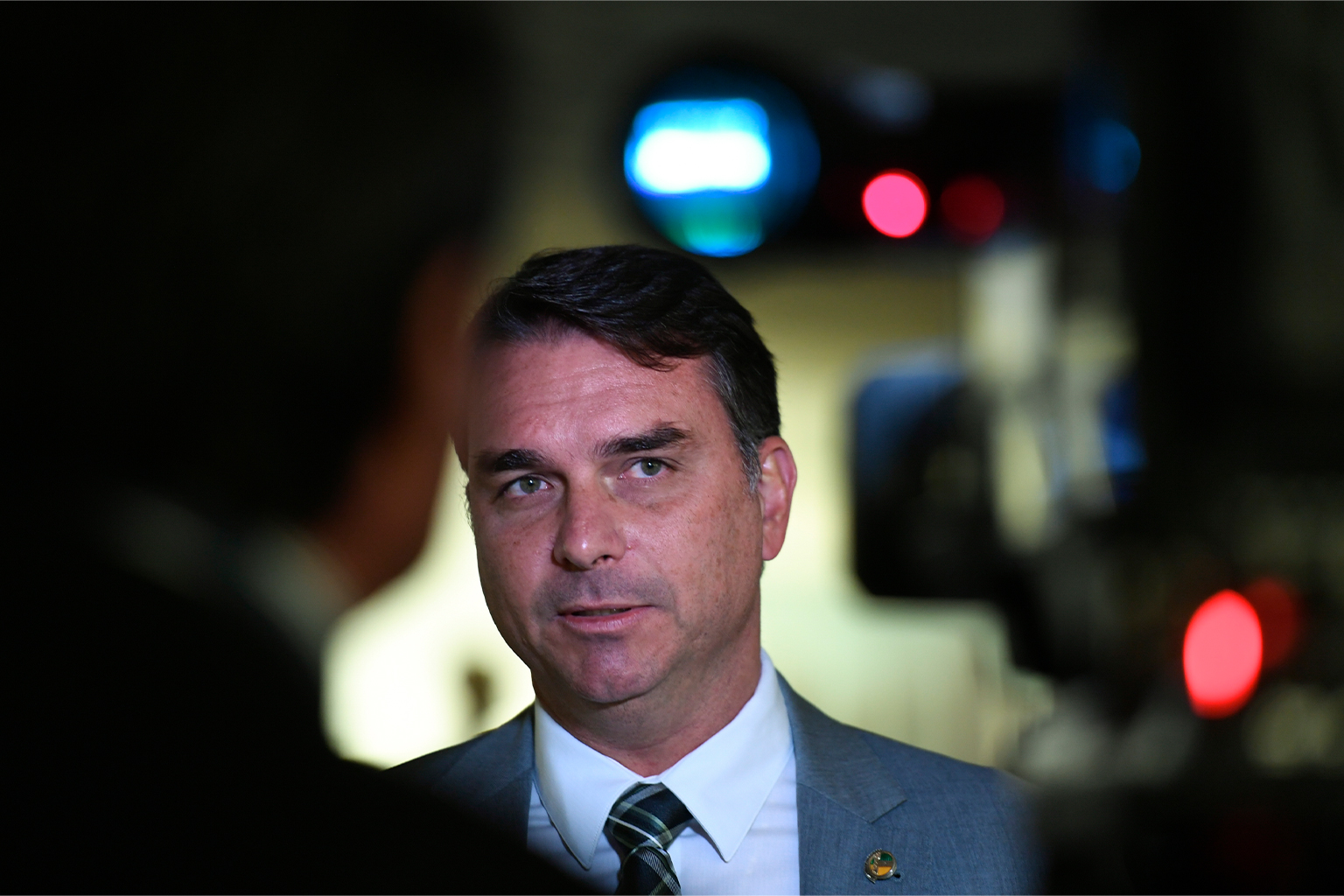
Seven of Brazil’s nine Amazonian states are set to be governed by politicians aligned with far-right candidate Flávio Bolsonaro, Lucas Berti reported for Mongabay Brasil.
On Oct. 25, Brazil will have an electoral face-off between the top two candidates for several races that were not able to secure more than 50% of the vote in the first round of the elections.
The second round election includes the decision for president, where incumbent leftist President Luiz Inácio Lula da Silva is up against Flávio Bolsonaro, the son of far-right former President Jair Bolsonaro who is barred from public office after being convicted of planning a coup d’état in 2022. The second vote will also define many of the state governments in the Brazilian Amazon.
In the first round on Oct. 4, five candidates won a clear majority and have already been elected. Mato Grosso, an agricultural state in the southwest of the Brazilian Amazon, elected agribusinessman Otaviano Pivetta, aligned with the right-wing party Republicanos.
Pará elected Daniel Santos, known as Dr. Daniel, with the Podemos party. He has promised to designate Vinícius Borba to lead the environment department. Borba is a lawyer who gained notoriety for representing farmers illegally raising cattle on Indigenous land.
In Roraima, Brazil’s northernmost state that borders Venezuela and Guyana, nearly 70% of voters elected Arthur Henrique, affiliated with Flávio Bolsonaro’s Liberal Party. He previously served as the popular mayor of the state’s capital city, Boa Vista. He supports legalizing mining in Indigenous territories.
The state of Rondônia, which borders Bolivia in the western Brazilian Amazon, also elected a Liberal Party candidate, Marcos Rogério.
The only exception so far to the pro-Bolsonaro dominance among Amazonian governors is the state of Maranhão, where the elected governor Eduardo Braide has chosen to remain neutral regarding presidential support.
In Amapá state, in the eastern Amazon, the elected governor Antônio Paulo de Oliveira Furlan has not publicly declared support for either presidential candidate, but his campaign is supported by the Liberal Party.
Three states, Amazonas, Acre and Tocantins, will have their state governors decided by the second round of voting. In Acre and Tocantins states, both candidates still in the running support Flávio Bolsonaro.
Amazonas state may be the second of all nine Amazonian states to elect a Lula-allied governor, as candidate Omar Aziz led the popular vote.
Adriana Ramos, executive director of the environmental nonprofit Instituto Socioambiental, told Mongabay Brasil that changes in the political landscape may bring back “the expansion of illegal activities, the presence of organized crime and the lack of control over the exploitation of natural resources” that marked Jair Bolsonaro’s government from 2019-2022.
“We are concerned because we know that Indigenous, quilombola and riverside communities will be the first to be impacted,” the current Minister of Indigenous Peoples Eloy Terena told Mongabay Brasil.
Banner image: Far-right presidential candidate Flávio Bolsonaro. Image courtesy of Edilson Rodrigues/Agência Senado.
