


Welcome to Foreign Policy’s China Brief.
The highlights this week: China’s surveillance state returns to the spotlight, rumors about Chinese President Xi Jinping’s health resurface, and three Chinese scammers are sentenced to death for pig-butchering schemes.
Welcome to Foreign Policy’s China Brief.
The highlights this week: China’s surveillance state returns to the spotlight, rumors about Chinese President Xi Jinping’s health resurface, and three Chinese scammers are sentenced to death for pig-butchering schemes.
China’s Expanding Surveillance State
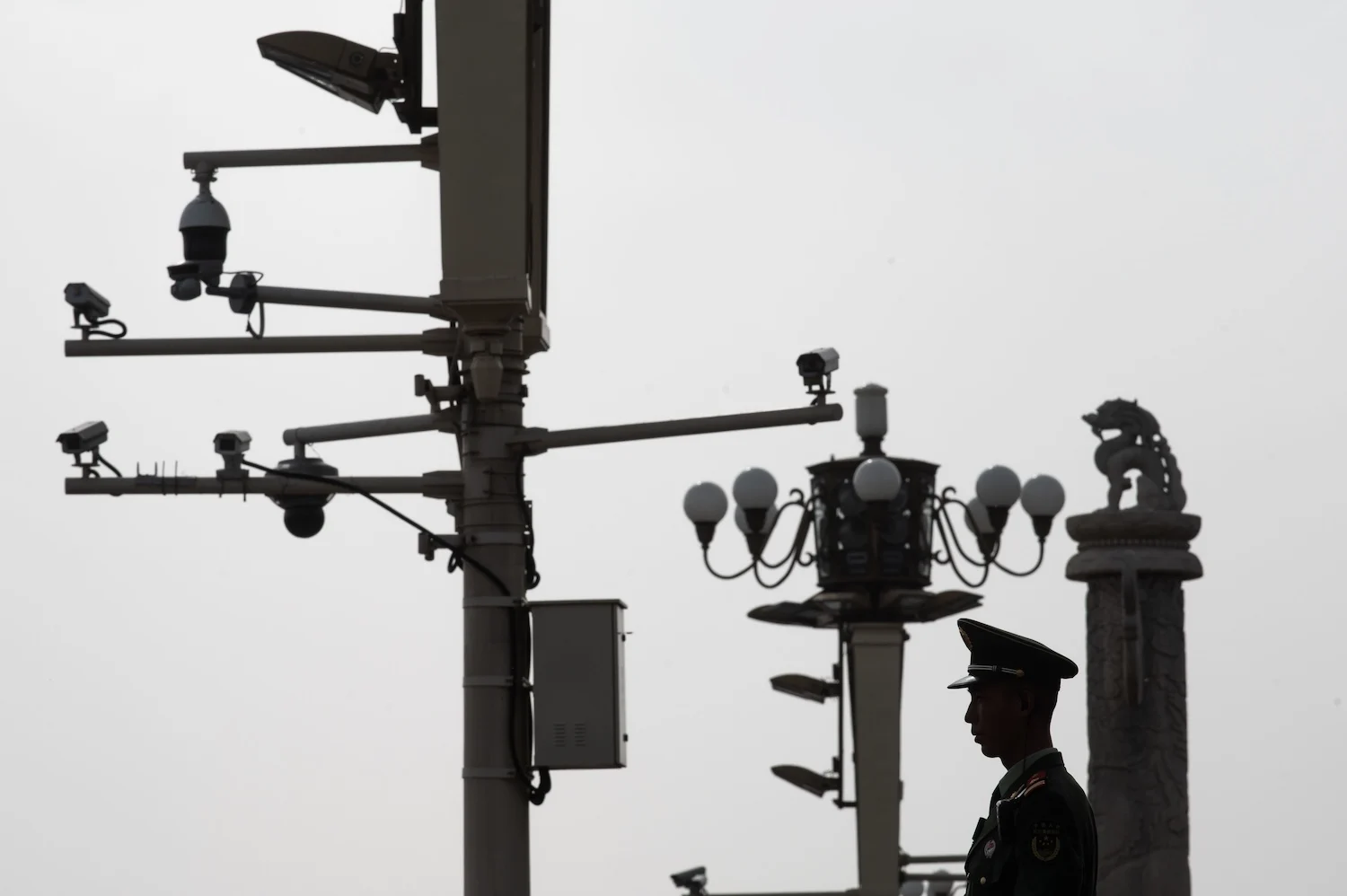
Two excellent New York Times pieces have recently put China’s surveillance state—at home and abroad—back in the spotlight. Unlike the foreign-media panic over social credit several years ago, the reporting underscores how monitoring and control have expanded in genuinely worrying ways under Chinese President Xi Jinping.
Security cameras are now omnipresent in Chinese cities. The foreign internet is effectively inaccessible, and once-common VPNs require a trip abroad to install. Informing on fellow students is on the rise. Much of life in China today is subject to identification requirements.
Real-name registration for mobile phones was introduced in 2010; though unregistered SIM cards remained available for years, today it’s nearly impossible to get mobile internet without an ID card. So-called no-show motels, which rented rooms without ID, have almost disappeared—a trend accelerated by the crackdown on Uyghur Muslims, who were among their biggest customers.
These technological surveillance networks are supplemented by boots on the ground. Monitoring a single prominent activist in 2010 took as many as 100 people—and he escaped anyway, despite being blind. By the end of the decade, security paranoia had put an armed police officer on every alley corner in central Beijing and half a dozen people running checkpoints at each subway stop.
Even so, China’s surveillance system has gaps, and many restrictions are only partially implemented. For instance, residential compounds have facial recognition systems, but most keep a side gate open for delivery workers.
These surveillance measures together give the state an unprecedented ability to watch and direct daily life. But they come with serious costs in terms of time, money, and manpower, which local governments often push onto the private sector. No example is clearer than the restrictions adopted during the COVID-19 pandemic.
Every part of China’s surveillance and control systems was activated between 2020 and 2022 under the zero-COVID policy. If a person ate at a restaurant at the same time as someone who later tested positive, they could be tracked down within a day and forcibly quarantined for two weeks. Testing sites were everywhere, and it wasn’t unusual to be tested two or three times a day.
Enforcing all this required a massive workforce to run testing, guard gates, and disinfect streets. There are no official figures for how many people were employed in this zero-COVID work, though recruiting seems to have drawn heavily on unemployed migrants.
The system helped to keep deaths from COVID-19 low in 2020, but it understandably failed to contain the virus in the end. It also largely couldn’t stretch beyond urban areas. In the early stages of the pandemic, villages took matters into their own hands, sealing their gates against outsiders and improvising quarantine facilities.
The zero-COVID years were enormously costly, both for the daily social and economic friction that the restrictions created and for the burden they placed on local governments, which still haven’t recovered from the debts they incurred, despite Beijing’s attempt to bail them out. In the end, Beijing reversed course, driven in part by mass protests in 2022.
It wasn’t the first time public pressure forced the state to back down from intense surveillance. From 1982 to 2003, China ran a custody and repatriation system in which workers without local residence permits were detained and sent back to their home villages. (Police usually took their money along the way, too.) After a young worker died in police custody, public outrage forced the abolition of the strained system.
Today’s systems could meet a similar fate, should friction grow or police abuses spark protest. From Beijing’s perspective, however, total control is sometimes worth the backlash.
Take Muslim-majority Xinjiang, where deadly riots and ethnic violence in 2009 led to a complete internet shutdown for nearly a year. That set off a cycle of resistance and oppression in the region that would result in mass internment, Han monitors in Uyghur homes, coerced labor, and the attempted destruction of Uyghur culture.
Today, Xinjiang is more closely monitored than any region in China except perhaps Tibet. As costly as the intense surveillance is, Beijing appears to regard it as a win. Uyghur resistance has been crushed, Han settlement is encouraged, and extractive industries are booming.
Many of these policies bear the stamp of Xi’s own anxieties, about the Chinese Communist Party’s future and his own survival. Not even their architects are safe: In a final irony, Ma Xingrui, who helped build the surveillance system in Xinjiang, was himself purged this year.
What We’re Following
Rumors about Xi’s health resurface. After Xi needed extra rest during his state visit to the United States last month, appeared to walk shakily at the airport, and was reportedly sick on an earlier visit to India, speculation about his health is swirling. Rumors about an autocrat’s health are a feature of dictatorships; Beijing’s refusal to ever admit a leader is sick doesn’t help.
Xi is also 73, and aging leaders are nothing new. Zhongnanhai, the Chinese leadership compound in Beijing, has kept a dedicated gerontological medical team on-site since at least the 1970s. The bigger question is what happens if Xi dies suddenly, given that he has purged every potential successor.
Scammers receive death sentences. Three prominent members of a China-Myanmar crime family have been sentenced to death for their role in so-called pig-butchering scams—online fraud networks that often relied on kidnapped labor—and for running protection rackets. Dozens more members of the group received lesser sentences.
The family is one of four major clan-based, ethnically Chinese gangs targeted in a border crackdown in 2023 and 2024. The most notable revelation from the latest trial may be that an entire Myanmar border guard unit was on the gang’s payroll. China’s decision to let that come out in court looks like a signal of displeasure to its Myanmar junta allies.
FP’s Most Read This Week
Tech and Business
Weak holiday spending. China’s National Week is usually a peak for both domestic and international travel. This month, the holiday period saw weak spending in this area, hitting a four-year low. With unemployment high and economic anxieties growing about artificial intelligence, Chinese animal spirits are low.
Even the cinema disappointed, with box office takings down 36 percent from last year. All this may eventually push Beijing toward greater stimulus spending, despite Xi’s distaste for opening the purse strings.
F-35 shipment mishap. This summer, a shipment of F-35 fighter jet parts was mistakenly delivered to Hong Kong—allowing China greater insight into the workings of one of the U.S. military’s most advanced aircraft. Some pundits initially speculated that this was a coup pulled off by Chinese intelligence.
The real explanation appears far more mundane. Last week, Bloomberg reported that a UPS employee missed an email warning not to ship the sensitive package through Hong Kong. As the old saying goes: Never attribute to malice what can be adequately explained by stupidity.
