


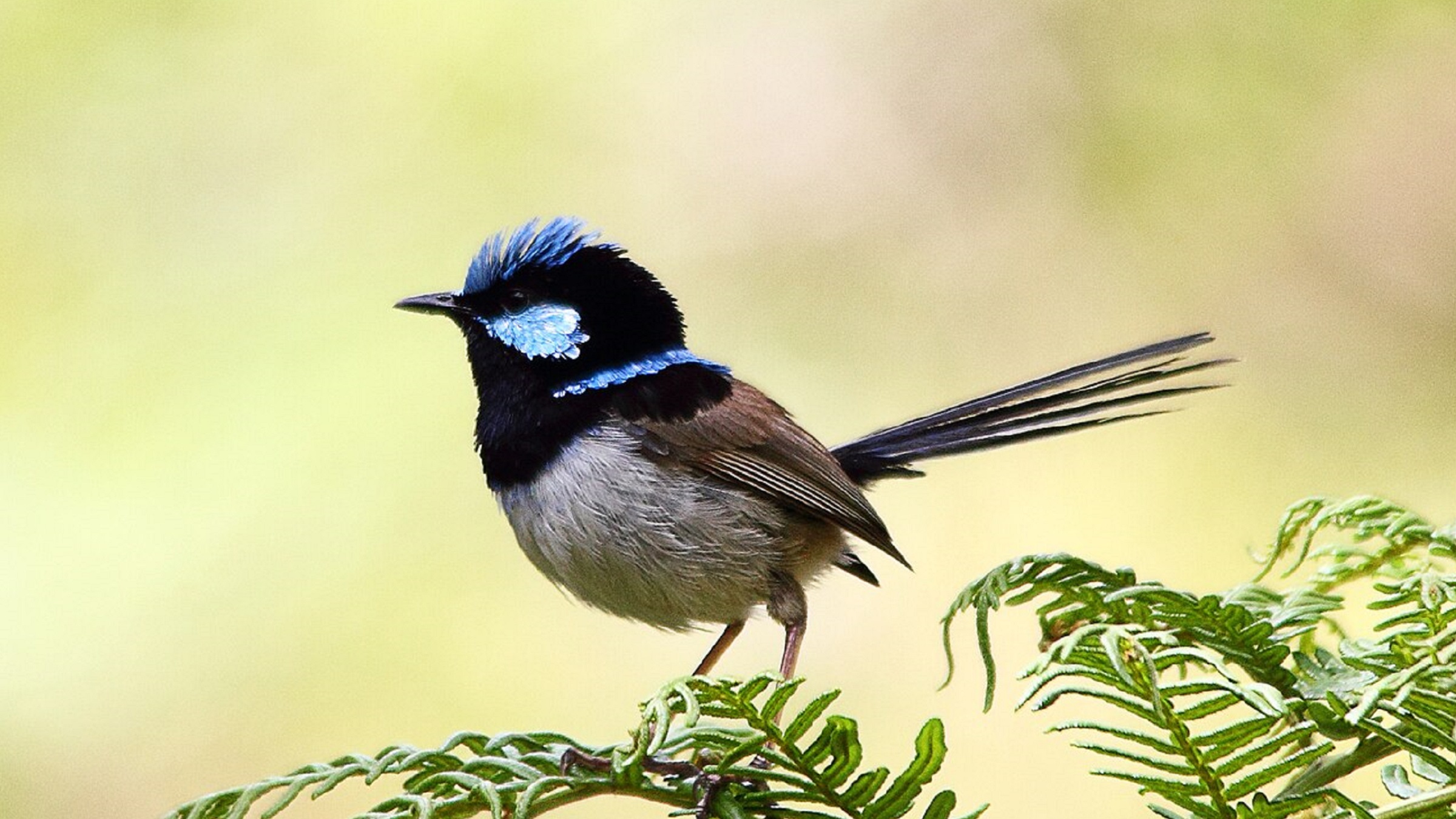
- A three-decade study of Australia’s beloved superb fairywren revealed a substantial decline in what was previously considered a common species in the capital, Canberra. This population could disappear within decades.
- Researchers say this is part of a worrying trend of declining woodland birds and insects in Australia and across the globe, mainly driven by loss of habitat, pesticides and changing climate.
- The study highlighted the “catastrophic cumulative effect” that multiple small impacts from climate change can have on wildlife.
- Through collaborative efforts between ornithologists, entomologists and local communities, Australia could reshape its urban environments and better monitor the health of its birds: creating insect-friendly gardens and protecting and restoring bushy habitat could help slow its decline.
If you sit in an Australian park or garden for long enough, chances are you might catch a flash of brilliant feathers out of the corner of your eye: the superb fairywren.
With its bright blue and soft brown plumage, it was voted Australia’s “bird of the year” in 2021, “narrowly defeating the tawny frogmouth in a nail-biting finish” in a poll by Guardian Australia and BirdLife Australia.
Yet, despite its seeming abundance in gardens and backyards, this iconic bird is showing worrying signs of decline.
Superb fairywrens (Malurus cyaneus) are found in any habitat with dense shrubbery along the east coast of Australia, parts of South Australia and Tasmania.
Despite being categorized as least concern on the IUCN Red List, a long-term study of superb fairywrens conducted in the Australian National Botanic Gardens in Canberra determined that they’re disappearing, with climate change impacting their survival.
Scientists have been monitoring these superb fairywrens since 1988, and research led by the Australian National University’s Cockburn Group found that this population has rapidly declined. In a recently published article in Nature Communications, the researchers write that this “common species … is in imminent danger, with virtually no time or way to prevent it.”
“We have seen some dramatic changes in the fairywren population in the Australian National Botanic Gardens,” said Damien Farine, a researcher from the Australian National University, who took over monitoring of the population in 2024.
During the Australian winter of 2025, more than 50% of adult birds perished and nearly all juveniles — 95% — in the gardens died. Farine said he believes this was likely caused by a combination of warm autumn temperatures followed by a sudden cold winter in Canberra, a weather phenomenon sometimes called weather whiplash.
Farine assessed the rate of the superb fairywren’s historical decline using data gathered in the gardens from the period of 1993 until 2022. This informed projections of the species’ future under various climate scenarios, from no further climate change to low, intermediate and very high emissions.
He found that population extinction was likely within the next 30-40 years under the intermediate and very high emissions scenarios. However, the actual decline in the two years following the study was even more concerning, outstripping modeling.
“Within two years … the declines are worse than every single prediction from even the worst-case scenario model,” Farine said.
The findings highlighted the “catastrophic cumulative effect” that multiple small impacts from climate change can have on wildlife.
For the fairywren, this includes poor breeding, with few chicks successfully fledged in abnormally dry springs where little rainfall contributes to female bird deaths and low migration between populations.

A worrying trend
This is indicative of a larger, worrying worldwide: native birds, insects and biodiversity are slipping away.
“The superb fairywren is just one example of a large suite of small and medium woodland birds that are declining at roughly similar rates,” Farine said.
It’s a global phenomenon. These declines aren’t limited to Australia, he added, but are being “reported almost everywhere — even in undisturbed habitats … and point to some fundamental issues with the functioning of our ecosystems.”
One reason is food, he said. Climate change, as well as habitat loss, and use of pesticides is making it harder for birds that survive on a diet of insects, like the superb fairywren, to find enough to eat. Australia experiences from one to three invertebrate extinctions every week, according to a study published in Cambridge University Press.
“Climate change impacts multiple aspects of insect life, such as survival rates, feeding patterns, fecundity and movement patterns,” said Christina Zdenek, who serves as urban birds program coordinator at BirdLife Australia.
Fewer insects mean fewer fairywrens, she said.
The relationship between less food and declines of woodland birds remains understudied. There have been calls in the scientific community for greater collaboration between ornithologists and entomologists in Australia to fully understand the link.

What can we do?
Amid increasing extreme weather and changing climate, Anne Peters, deputy head of the School of Biological Sciences at Monash University, said Australians impassioned by the plight of the fairywren can take action.
One way to support woodland birds and superb fairywrens is to cultivate insect-friendly urban gardens that include an abundance of native plants and shrubs.
“If we, as a society, take actions that would improve insect numbers … it would probably directly and indirectly benefit small songbirds,” she said.
“I think every individual could, even if you don’t have a garden, use your balcony or plant something in your nature strip.
“We need connected green space, high-quality native habitats [and] gardens that are bird and insect friendly … a good understory, midstory, overstory, a little bit of tangled, messy, dense vegetation.”
Michael Gisick, editor of the Canberra Organic Growers Society’s magazine and local gardener, is passionate about gardening with insects and birds in mind.
“Community gardens and other urban and suburban gardens certainly can play a role in supporting biodiversity, even when they are oriented primarily toward growing food for people,” he said.
“Setting aside areas of the garden for wildlife and dense shrubbery provides especially important habitat for small birds [as well as] providing sources of water, especially when the weather is hot,” he said.
However, BirdLife Australia’s Zdenek noted that insects are only part of the conservation picture.
“Boosting insect numbers may have a positive impact on fairywrens, but food is just one of the key requirements for fairywren survival,” she said.

“They also need structure and complexity of vegetation in their environment to protect them while they hunt … Without structures like shrubs that occupy the 1 to 3-meter [3.2 to 9.8-foot] strata in the environment, they’re super vulnerable to aggressive ‘mobbing’ behavior by noisy miners — birds that are already extremely favored by our love of lawns with scattered gum trees.”
Noisy miners (Manorina melanocephala) are an aggressive and territorial Australian native that relentlessly swoop and attack other birds. Their population has boomed alongside urban development, as they adapt well to altered landscapes. Their mobbing behavior can harm — or kill — superb fairywrens and other native bird species.
Superb fairywrens hold a special place in the hearts of Australians. Communities can take charge to shape a better world for their beloved bird, Zdenek noted.
“The science is clear: the biggest threat to Australian species is habitat destruction, so utilizing already-cleared land more wisely and preventing more land-clearing is the number one recommendation to conserve fairywren populations,” she said.
“Beyond protection, there’s restoration. People can pressure local governments to plant a diversity of locally native shrubs and groundcovers to replace lawn wherever possible.”

Citizen science and community action
But while boosting insect numbers through gardening may help, more research into the exact drivers of this decline and the correlation between insect and bird health in Australia is needed.
Australian National University’s Farine said they don’t know enough about the causes. “This is because our data are largely limited to systematic counts. This can tell us about the declines, but not about why they are happening. We can’t go back in the past to collect these data, so we’re limited to a handful of studies that can give us the historical perspective against which we can understand contemporary changes.”
Experts say that identifying the driving forces behind the rapid global declines of woodland birds is critical to conservation efforts. More collaboration between ornithologists, and entomologists could be key to this work.
While studies such as the one conducted at Canberra’s National Botanic Gardens paint a bleak picture, everyday citizens and communities are already taking meaningful action by ensuring their gardens and outdoor spaces offer sanctuary for birds and insects alike, particularly Australia’s beloved superb fairywren.

Banner image: The superb fairywren is one of 30 endemic Australasian wrens. Image by Wayne Butterworth via Wikimedia Commons (CC BY 4.0).
More to explore:
Amid efforts to save Australia’s southern cassowaries, their numbers remain unknown
Citations:
Braby, M. F., Yeates, D. K., & Joseph, L. (2023). Woodland birds and insect decline.
Emu – Austral Ornithology, 123(3), 255-257. doi:10.1080/01584197.2023.2233758
Burgess, M. D., Smith, K. W., Evans, K. L., Leech, D., Pearce-Higgins, J. W., Branston, C. J., … Phillimore, A. B. (2018). Tritrophic phenological match–mismatch in space and time. Nature Ecology & Evolution, 2(6), 970-975. doi:10.1038/s41559-018-0543-1
Lv, L., Zhao, Q., Liu, Y., Li, X., Osmond, H. L., Kruuk, L. E., … Van de Pol, M. (2026). Many small climate change impacts presage rapid population extinction in a common iconic bird. Nature Communications, 17(1). doi:10.1038/s41467-026-70758-9
Woinarski, J. C., Braby, M. F., Gibb, H., Harvey, M. S., Legge, S. M., Marsh, J. R., … Murphy, B. P. (2024). This is the way the world ends; not with a bang but a whimper: Estimating the number and ongoing rate of extinctions of Australian non-marine invertebrates. Cambridge Prisms: Extinction, 2. doi:10.1017/ext.2024.26
FEEDBACK: Use this form to send a message to the author or editor of this post. If you’d like to post a public comment, you can do so at the bottom of the page.
Cite this article
Cooper Williams (2026). Superb fairywrens disappearing in Australia’s capital: Conserving insects could help save them. Mongabay Conservation news. DOI: https://doi.org/10.66709/news-327825

