


- A recent report sheds light on Southeast Asia’s important oak tree diversity and underlines that many of these species are highly threatened.
- Many threatened oak species in the region have limited distribution data, lack protected area coverage and aren’t found in ex situ collections.
- The report authors are calling for surveys targeted at oaks, expansion of protected areas, and propagation of seedlings for restoration.
Southeast and East Asia may be famous for towering dipterocarps or massive conifers, but a new report highlights that the region is also home to more threatened oak species than anywhere else in the world.
“While it may not be the region that first comes to mind when we think of oaks, it’s a really important region for oak biodiversity and as a result, oak conservation,” study author Kate Good, a research manager at The Morton Arboretum, told Mongabay in an interview. There are 430 oak species globally and 172 of those occur within Southeast Asia and East Asia.
Researchers examined 54 threatened or data deficient oak species found in Vietnam, Laos, Thailand, Cambodia, Myanmar, Brunei, Malaysia, Singapore, Indonesia, Philippines, Timor-Leste, Korea, Japan and Taiwan.
“Many of these species are under dire threat,” Good said. The report found that 46 of 54 oak species surveyed faced “very high” or “high” human pressure in over 50% of their range in 2024. “One of the goals of this report was to really raise the alarm about the urgent need for oak conservation in Asia,” she said.
Expansion of agriculture, notably wood and pulp plantations, is a major threat to two-thirds of the species analyzed in the report. Oil palm and rubber plantations also pose a threat, Good said. Other threats identified include small population sizes, ongoing infrastructure and urban development, and climate change.
Vietnam is considered the center of Southeast Asia’s oak biodiversity and is home to 33 species of oak, with 15 of those endemic. The Annamite mountain range — that spans Vietnam, Laos and Cambodia is particularly important, with three out of four oak biodiversity hotspots identified by the report found there. Good said that the region will be a conservation focus going forward.
“Vietnam is an important country for the conservation of Asian oaks, but the new report shows how vulnerable many of these species are,” Lam Van Hoang, country director for Vietnam, at Fauna & Flora International who wasn’t involved in the report, told Mongabay in an email. “The findings reinforce the need to combine effective protection of remaining natural forests with targeted surveys, restoration and propagation, so that these unique components of Vietnam’s forest biodiversity are not lost before we fully understand them.”
The fourth hotspot for oak biodiversity is located in Doi Inthanon National Park, Thailand.

No insurance policy
The authors identified key conservation needs for oak trees in Asia. That includes creating new and expanding existing protected areas to cover oak populations. None of the 54 species surveyed had more than 40% of their native range covered by protected areas. Ten species had less than 10% coverage, the report notes.
Hoang agrees that ensuring oaks are covered by protected areas is important but adds other solutions should also be pursued in tandem. Within protected areas, that could include controlling logging, maintaining connectivity and integrating oak species into management plans.
“For populations outside protected areas, conservation should also be incorporated into wider forest and landscape planning, working with forest owners, local communities and authorities to retain important trees and habitat patches,” he wrote.
Priority should also be given to biodiversity surveys targeted at oaks in the region to better understand population ranges, size and threats, Good said.
Little is known about specific threats facing some species, such as the critically endangered Quercus baniensis, endemic to Vietnam. Other species have limited data on their distributions and population sizes. Similarly, climate change is currently only listed as a threat to six threatened species, but that “likely reflects a significant knowledge gap rather than a lack of threat,” the authors write.
The report also found that only 14 of the 54 species are currently held in ex situ collections. Amongst 16 critically endangered species within the region, only one — Quercus camusiae, held in a botanic garden in China — is in an ex situ collection. By contrast, a 2017 report found that of 91 oak species surveyed in the United States only one — Quercus tardifolia — wasn’t held in a collection at that time.


Ex situ tree populations, held in private collections or botanic gardens, can act as an insurance policy against extinction. “Southeast Asia having 40 species that aren’t in collections is a really significant gap in their conservation,” Good said.
Huang strongly supports the need for increasing ex situ populations, but stresses that “collections should be strategic, prioritising the most threatened species and ensuring sufficient genetic diversity and well-documented wild provenance.”
“We’re hopeful that this report can drive some of that conservation,” Good said. Going forward her organization and its partners plan to conduct surveys to locate species in the wild, and collect acorns and propagate them for reintroduction and distribution to botanic gardens. “So stay tuned for hopefully some exciting next steps,” she said.
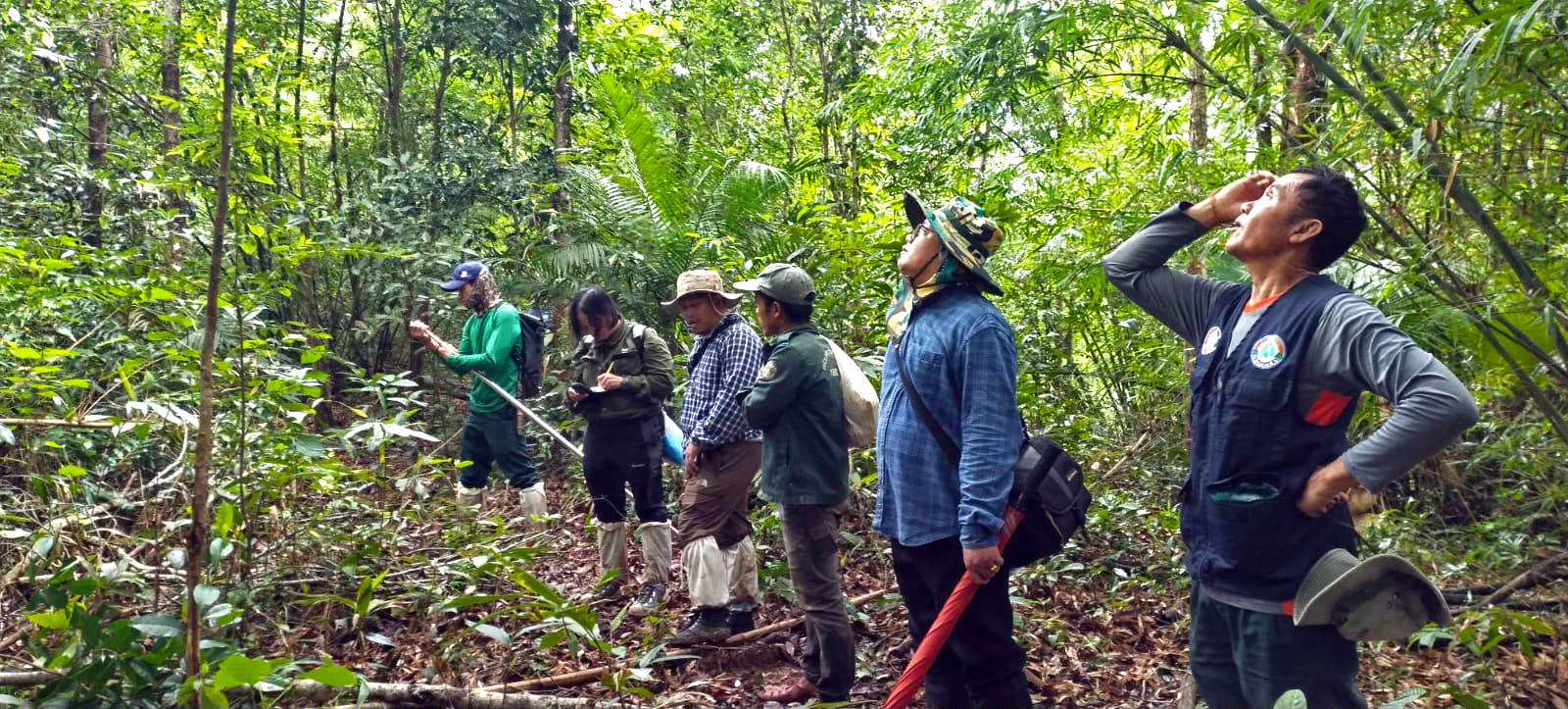
Banner image: National park staff, government officials and local community members conduct a tree survey in Nakai-Nam Theun National Park, Laos, located in the Annamite mountain range. Image by Oudomphone Insisiengmay.
Global agarwood trade heavily dependent on wild, threatened trees: Study
Conservation efforts help an endangered dipterocarp spread roots in Bangladesh
Cite this article
Sean Mowbray (2026). Southeast Asia is a hotspot for oak trees, many under ‘dire threat’. Mongabay Conservation news. DOI: https://doi.org/10.66709/news-326874

