


Sugar substitutes are often marketed as a better choice than foods loaded with refined sugar (glucose). Common examples include aspartame, the sweetener used in Equal packets, sucralose (Splenda), and sugar alcohols such as sorbitol.
But growing research is complicating the idea that these alternatives are automatically healthier. A new study suggests that sorbitol, in particular, may have metabolic effects that make it less harmless than many people assume.
Sorbitol May Be One Step Away From Fructose
The research, published recently in Science Signaling, builds on a line of research from Gary Patti’s laboratory at Washington University in St. Louis examining how fructose affects the liver and other parts of the body.
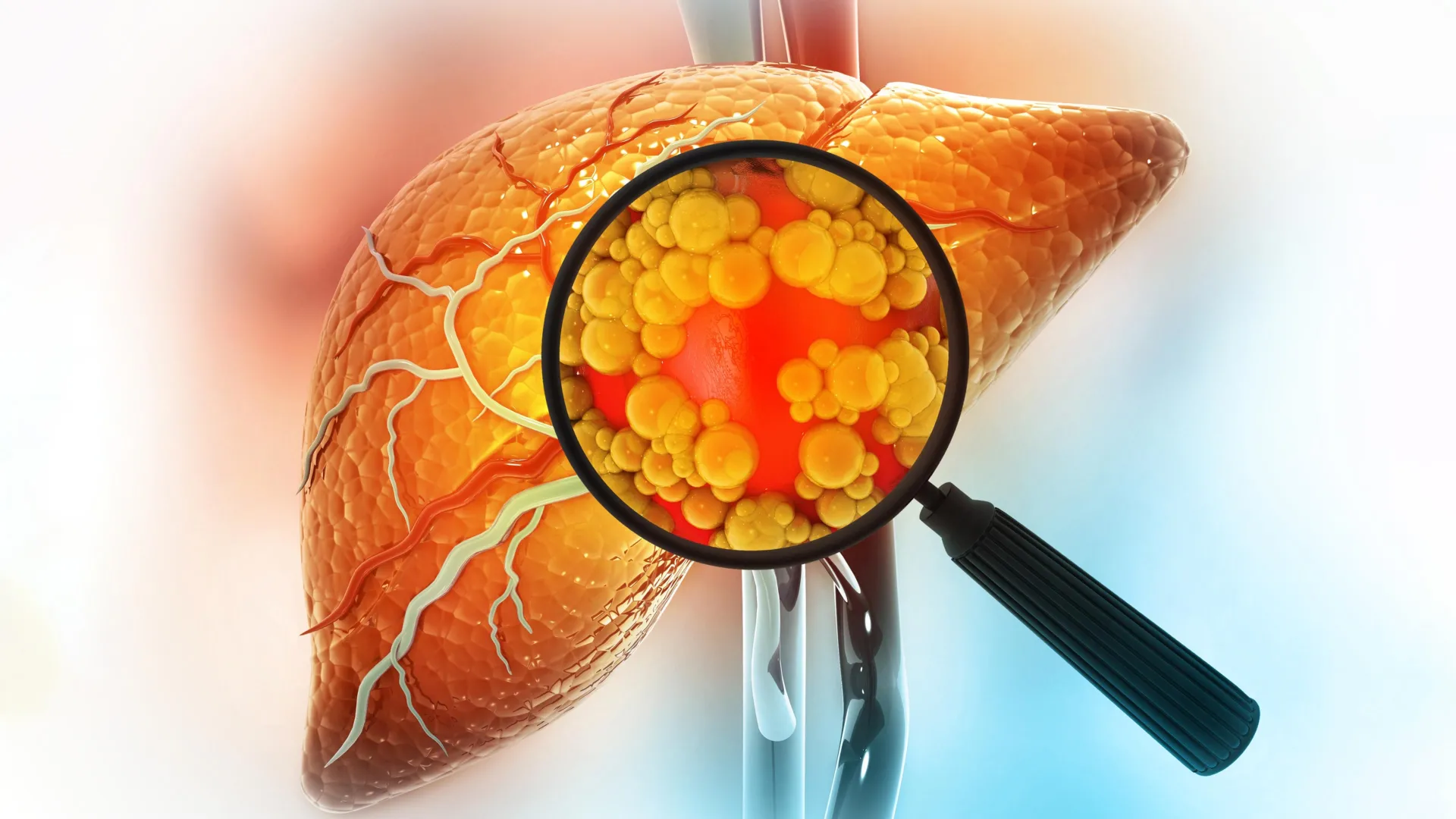
Patti, the Michael and Tana Powell Professor of Chemistry, in Art & Sciences, and of genetics and medicine, at WashU Medicine, has previously investigated what happens when fructose is processed by the liver. His earlier work showed that the products of fructose metabolism can be exploited by cancer cells to promote their growth. Other research has identified fructose as an important contributor to steatotic liver disease, a condition involving excess fat accumulation in the liver that affects about 30% of adults worldwide.
The new findings raise concerns about sorbitol because of how closely it is connected to fructose metabolically. Patti described sorbitol as being essentially “one transformation away from fructose,” meaning the body can convert it into a closely related form that may produce similar effects.
From the Gut to the Liver
The researchers performed experiments in zebrafish to trace what happens to sorbitol inside the body. Sorbitol is commonly added to “low-calorie” candy and chewing gum, but it also occurs naturally in stone fruits.
The team found that sorbitol does not have to come directly from food. Enzymes in the intestine can also produce it from glucose after a meal. Once sorbitol is present, its eventual fate can depend on how much glucose and sorbitol has been consumed and on the types of bacteria living in the gut.
That creates several possible routes through which fructose-related compounds can ultimately appear in the liver.
Much of the previous research on sorbitol metabolism has centered on diseases such as diabetes. Under those conditions, unusually high glucose levels can drive the body to produce larger amounts of sorbitol.
The enzyme responsible for making sorbitol has a relatively low affinity for glucose. In simple terms, it generally does not become very active until glucose concentrations rise substantially. For that reason, sorbitol production has historically been associated with diabetes, where blood glucose can reach high levels.
The zebrafish experiments, however, showed that diabetes is not required. Even under healthy conditions, glucose concentrations inside the gut can become high enough after eating to trigger significant sorbitol production in the intestine.
“It can be produced in the body at significant levels,” said Patti. “But if you have the right bacteria, turns out, it doesn’t matter.”
Gut Bacteria Can Act as a Protective Filter
Certain bacteria appear to prevent sorbitol from becoming a problem. Sorbitol-degrading Aeromonas bacterial strains can consume the sugar alcohol and convert it into a harmless bacterial byproduct.
That microbial cleanup process may determine whether sorbitol stays in the gut or travels farther into the body.
“However, if you don’t have the right bacteria, that’s when it becomes problematic. Because in those conditions, sorbitol doesn’t get degraded and as a result, it is passed on to the liver,” he said.
After reaching the liver, sorbitol can be converted into a derivative of fructose.
That finding is particularly relevant because people with diabetes and other metabolic disorders may deliberately choose products labeled “sugar free” in an effort to avoid the health effects associated with table sugar. Understanding whether alternative sweeteners truly offer a healthier metabolic outcome is therefore important.
Too Much Sorbitol Can Overwhelm the Gut
At relatively low levels, including the quantities typically obtained from fruit, gut bacteria appear to be effective at removing sorbitol.
The situation can change when the amount of sorbitol rises beyond what those microbes can process. That can happen in at least two ways. Consuming large amounts of glucose can cause the intestine to produce more glucose-derived sorbitol, while consuming large quantities of sorbitol directly can also increase the total load.
As glucose and sorbitol intake climbs, even people who carry beneficial sorbitol-degrading bacteria may eventually overwhelm those microbes’ ability to keep up.
That makes navigating sweeteners increasingly difficult. Many processed foods contain several forms of sugar and sugar substitutes at the same time. Patti discovered this firsthand when he realized that his own favorite protein bar contained a large amount of sorbitol.
Sugar Alcohols May Not Simply Pass Through the Body
Sorbitol belongs to a group of compounds known as polyols, commonly called sugar alcohols. They are widely used because they provide sweetness while often supplying fewer calories than ordinary sugar.
A common assumption has been that these compounds are largely expelled from the body without causing major metabolic effects. The new findings suggest the story may be more complicated.
Patti’s laboratory still needs to determine exactly how bacteria break down and remove sorbitol, but the researchers found clear evidence that sorbitol does not necessarily remain confined to the digestive tract.
“We do absolutely see that sorbitol given to animals ends up in tissues all over the body,” he said.
The findings reinforce a broader lesson emerging from research on alternative sweeteners. Replacing ordinary sugar with another sweet-tasting compound does not necessarily eliminate metabolic consequences.
As Patti summarized it, “there is no free lunch” when searching for sugar alternatives, particularly when several metabolic pathways can ultimately lead toward liver dysfunction.
This work was supported by the National Institutes of Health, grants R35ES028365 (G.J.P.) and P30DK056341 (S.K.).
