


Years ago, I was in Washington DC when Prince Harry blew through on an official engagement. He was 28, with a full head of hair, a slightly louche gait and a public image that, on a tour of the Senate led by a baffled-looking John McCain, caused people to lose their minds.
Senate staffers stood five deep to get a glimpse; women materialised from every corner, more glamorously dressed for the office than usual. The excitement was so great that there were actual screams from behind the security line. I remember noting the prince’s prominent ears, the high colour in his cheeks and his habit, when addressed, of bowing his head, as if humbled by what he was hearing. Aw, I thought. Bless him.
But that was a long time ago. This week, Harry, now 42, appeared on camera in an interview in New York with GQ, playing to a very different audience. He looked older and schlubbier – don’t we all – the diffidence of youth replaced by something more pompous and belligerent, undergirded by what, in recent years, has appeared to be his bottomless well of hurt feelings. Harry was promoting something – a masterclass on “grief science”, which he has undertaken with Dr Mary-Frances O’Connor. But the question of why on earth he would double down on previous US media appearances, none of them successful, sat alongside the bigger royal question of the season: namely, what are he and his wife, Meghan, going to do?
Since the pair arrived back in the UK this summer after a six-year absence, watching them try to settle on a role has been a veritable festival of awkwardness, not least because it’s not entirely obvious where they have left to go. In March, Netflix ended its partnership with Meghan’s lifestyle brand, As Ever, less than a year after it replaced the pair’s $100m mega-contract with a first-look deal. These well-publicised failures were compounded by the previous death of Meghan’s podcast, the couple’s parting with Spotify and what might politely be called their low productivity metric when it comes to anything not immediately related to the royal family.
In this, the Sussexes are no different to any other creators endlessly raking over their own lives for content. The difference, of course, is that Harry, with a lofty mindset inculcated from birth and which is presumably incredibly hard to shake, presents his every gesture as automatically belonging to that higher calling, public service. “I don’t do it for myself,” he says in the interview in New York when explaining the venture with MasterClass. (Side note: the real masterclass here is in watching the GQ hack trying to use Harry’s grief project as a Trojan horse for questions about the royal family, among them: “Do you grieve that?” in relation to Harry’s fallout with King Charles, and a sleight of hand reference to “anticipatory grief” in a reach to get his father’s health on the table. Honestly, I tip my hat).
“Trying to make an impact in the world, that is genuinely what energises me,” says Harry, sinuously pivoting away from the awkward questions. And if he stuck to harmless banalities about grief and, oh God, what he calls his mission as a storyteller, one might be inclined to say good luck to him. Harder to stomach is what appears to be his and his wife’s need for the public to participate in their grandiose delusions.
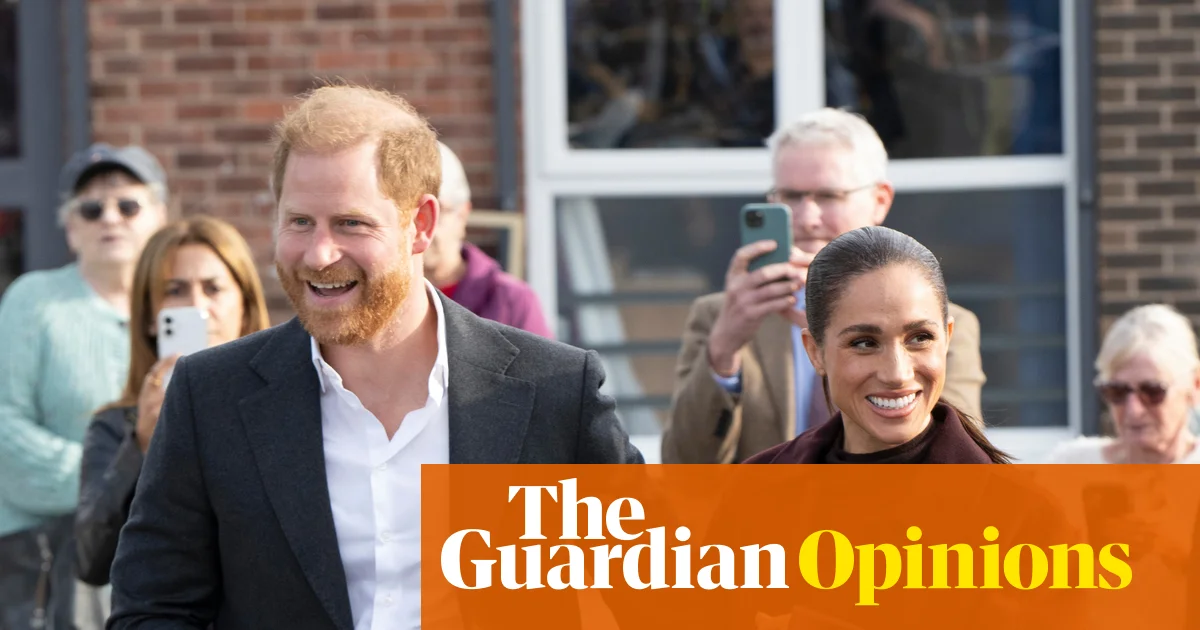
Witness the Sussexes in Nottingham last week, going on a walkabout under the auspices of a charity event that, to me, looked more like an exercise in self-gratification. As the king had already sternly warned the pair: they’re private citizens, now, with no officially sanctioned public engagements, and yet here they were, working a crowd like any active-duty royals. While Meghan smiled excessively with her “hello, little people!” act, her husband alternated between mild engagement with the well-wishers and sending category-five death stares to the hacks, poor sods, who’d turned up to cover this non-event. It was embarrassing, and awkward, and as someone pointed out on the internet, like watching David Brent return to the office after being fired.
And so, while the top line from the interview in New York focused on Harry’s indirect call for reconciliation with his family, it was another takeaway that struck me more forcefully. More than once, the prince talked about the importance of knowing yourself, adding that he had “put in the work” and clearly positioning himself as more evolved than his father and brother. I would suggest Harry’s journey of self-awareness has a way to go yet.
after newsletter promotion
