


Founder’s Briefs: An occasional series where Mongabay founder Rhett Ayers Butler shares analysis, perspectives and story summaries.
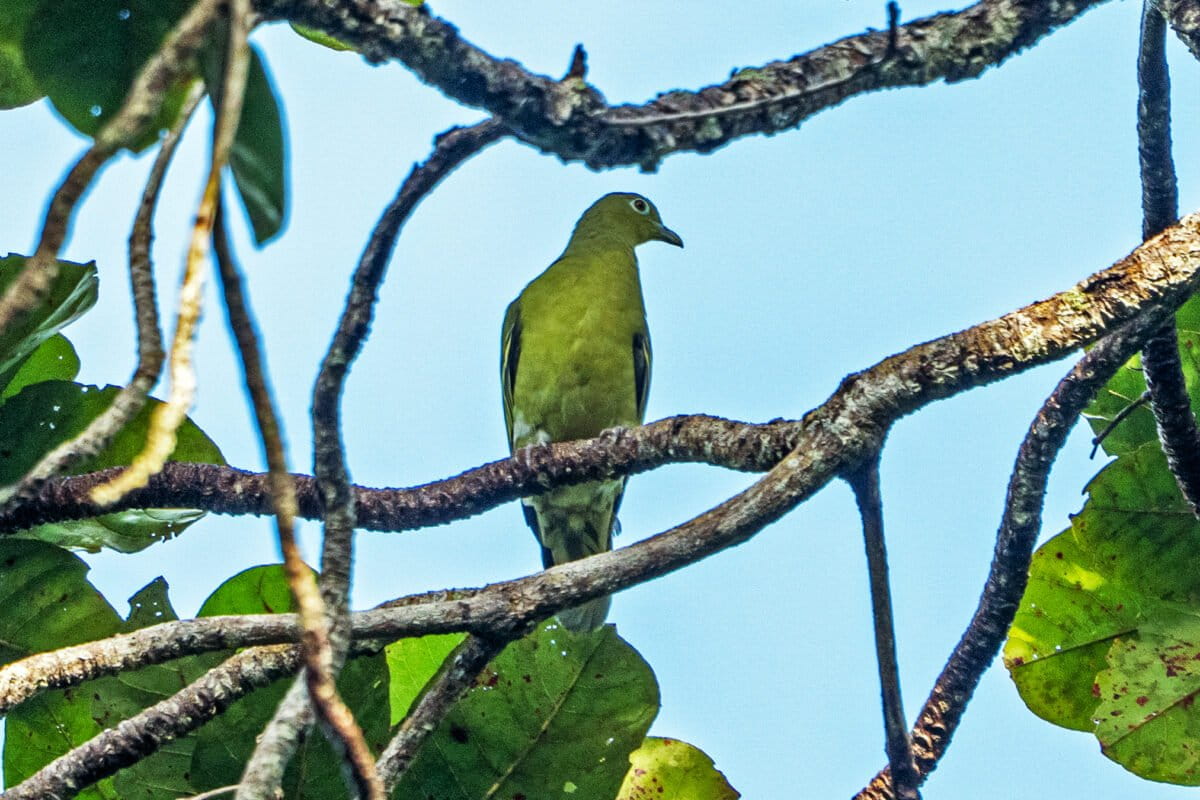
On April 20, on the south coast of Timor-Leste, Jafet Potenzo Lopes saw three green pigeons. He had not seen the species for years. The birds were Timor green pigeons, and the site, in Manatuto municipality, had no previous record of them. With the species nearing extinction, finding three birds in a new place was encouraging.
The latest estimates suggest how few remain. A study published this year in Oryx, drawing on more than 1,400 days of field surveys between 2002 and 2025, estimates the global population at 100-500 birds across eight sites. The true number may be near the lower end of that range. Only Nino Konis Santana National Park in eastern Timor-Leste is thought to hold more than 50 birds. The researchers recommend changing the status of the Timor green pigeon (Treron psittaceus) on the IUCN Red List from endangered to critically endangered, reports contributor Timothy Mihocik for Mongabay.
In Indonesia, where many older records came from West Timor and nearby islands, the pigeon may already be functionally extinct. Most of the remaining birds are in Timor-Leste, where hunting continues even in protected areas.
Timor green pigeons gather at fruiting trees and are unusually vulnerable: After one bird is shot, others may stay in the canopy. Forest conversion has also reduced their habitat. More than 80% of known records come from protected areas, yet researchers say those areas lack the funding and staff needed to control hunting effectively.
The danger has been recognized for years. The species has been classed as endangered since 2000, while dedicated recovery work, regular monitoring and sustained investment have remained limited. The Timor green pigeon was not among the initial 100 species selected by the Phoenix Species Project, a $200 million initiative by Re:wild and the Bezos Earth Fund to support recovery of some of the world’s most threatened species.
Researchers say the pigeon can still be saved. They recommend more surveys, monitoring of its main population every three to five years, a national action plan and work with hunters and local communities to reduce hunting. Timor-Leste already protects the species under national law and customary systems protect some of the forests where it survives. Researchers have also suggested involving former hunters in surveys and conservation work.
The three birds found in Manatuto do little to change the species’ overall position. They do show that some birds remain in places where they had not previously been recorded. With perhaps only a few hundred Timor green pigeons left, the margin is narrow. The steps needed to improve their chances are already known.
Read the full story by Timothy Mihocik here.
Banner image: A Timor green pigeon is seen on Apr. 20, 2026, during a Conservation International wetland survey on the south coast of Timor-Leste. Image courtesy of Jafet Potenzo Lopes.
