


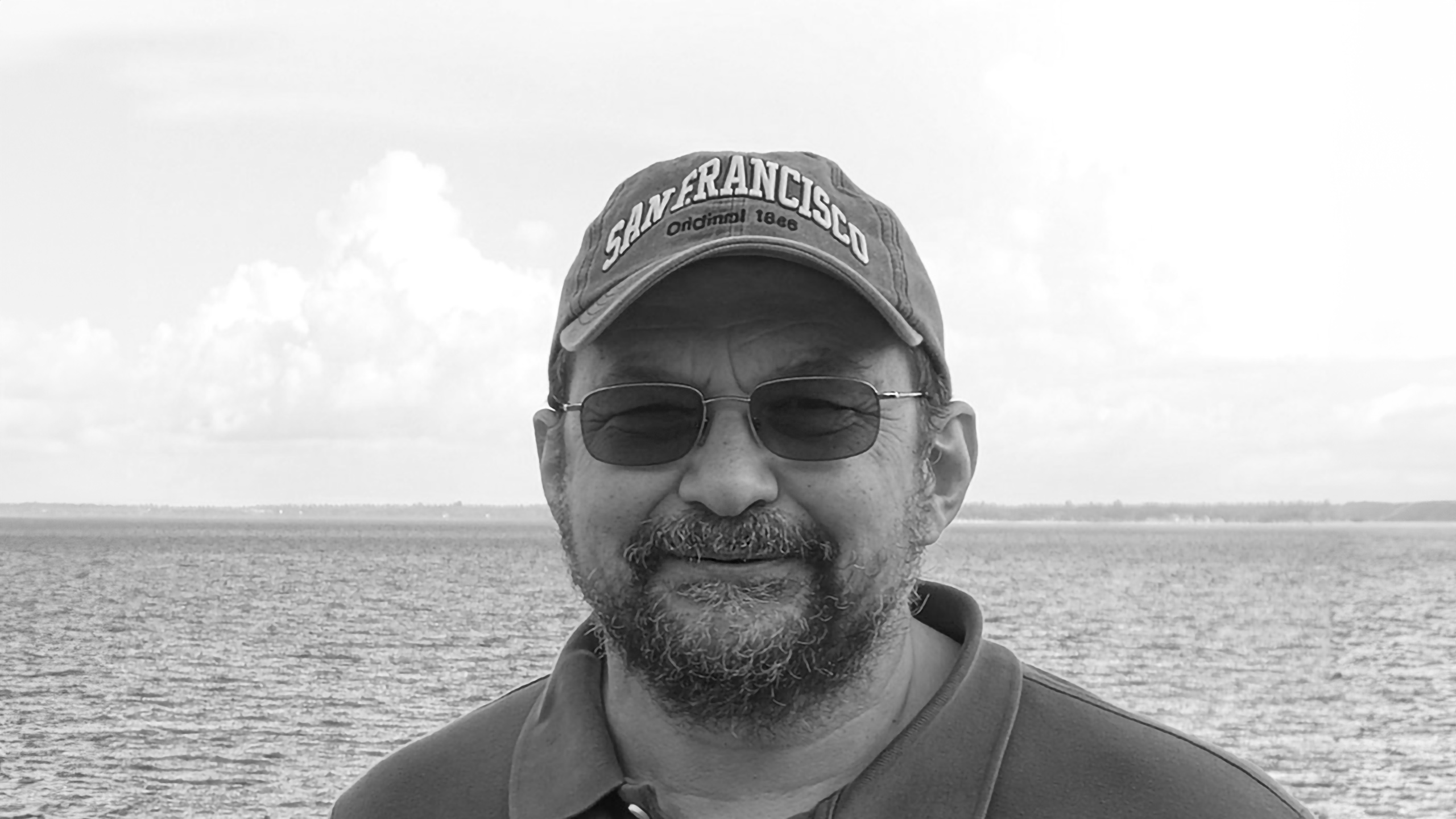
- Michael Painter, an ecological anthropologist who joined the Wildlife Conservation Society in 1997, spent much of his career working at the intersection of conservation, Indigenous land rights, and rural development.
- In Bolivia, he helped strengthen partnerships with Indigenous organizations in the Gran Chaco and Greater Madidi, including efforts that supported the titling and management of large Indigenous territories.
- Painter later worked within WCS to advance a human-rights-based approach to conservation, including safeguards for research involving people and stronger recognition of Indigenous rights and governance.
- Painter died on February 11, 2026.
In the Bolivian Chaco, the Isoceño Guaraní did not need conservationists to tell them that their land was under pressure. Agricultural settlement was pushing into the region, and their organization, the Capitanía de Alto y Bajo Izozog (CABI), had its own territorial aims. What outsiders could provide was scientific expertise, legal support, money, and access to institutions that could help turn those claims into recognized rights.
Working with the Wildlife Conservation Society (WCS), CABI developed the proposal for Kaa-Iya del Gran Chaco National Park, which Bolivia created in 1995. At 3.4 million hectares, it was enormous even by the standards of South American protected areas. CABI became its co-administrator. The partnership also helped develop a mechanism for securing Indigenous land under Bolivia’s agrarian reform law. It was used to title 273,000 hectares for the Ayoreode and 560,000 hectares for the Isoceño Guaraní, as well as land for 43 Chiquitano communities. WCS says the process helped establish precedents for Indigenous land titling elsewhere in Bolivia.
Michael Painter arrived at WCS in 1997 to direct the Kaa-Iya project. For an ecological anthropologist, its implications were hard to miss. Conservation did not have to mean setting land aside and then persuading the people living around it to cooperate. Indigenous organizations could be conservation partners in their own right, with territorial goals, political interests, and knowledge of their own. A useful role for an organization such as WCS was sometimes to strengthen their ability to deal with governments, companies, donors, and conservationists themselves.
Painter, who died on February 11th, 2026, had reached that point by a circuitous route. He earned a Ph.D. in anthropology from the University of Florida and joined the Institute for Development Anthropology in Binghamton, New York. He studied rural development: settlement in Bolivia’s lowlands, the Chapare development program, land degradation, class formation, and the forces determining who used land and how. In 1985 he published a study of ethnicity and social class in Santa Cruz; other work examined agricultural development and settlement in the Chapare.
He also worked as an adviser to Botswana’s Department of Wildlife and National Parks, evaluating community-based natural-resource management. The subjects shifted, but his preoccupation did not. Land use was shaped by economics and power as much as by ecology.
In 1995 Painter and William Durham of Stanford University edited The Social Causes of Environmental Destruction in Latin America. The book rejected explanations of environmental damage that rested mainly on population growth. Unequal access to land, poverty, concessions granted to powerful interests, and other social relations could create incentives for destructive land use. Social equity, the editors argued, had ecological consequences.
Kaa-Iya gave Painter a chance to apply such thinking. He was interested not simply in consulting Indigenous people, but in who possessed the information and authority needed to make decisions. Indigenous technicians were trained to gather and interpret ecological data. An organization able to produce evidence of its own was in a stronger position when governments or companies arrived with competing claims about what should happen to its land.
The approach carried into the Amazon. Painter became WCS country director in Bolivia and later Peru, then directed its Amazon program. Around Greater Madidi, WCS worked with protected-area authorities while also supporting Indigenous organizations seeking control over neighboring territories. By 2008, 372,000 hectares of the Tacana I Indigenous Community Land had been titled, most of it alongside Madidi. Other work involved Lecos territories and the management of Madidi and Pilón Lajas.
The paperwork could be difficult and the stakes high. Zulema Lehm of WCS Bolivia remembered Painter guiding colleagues through the “complex process” of obtaining the title for Tacana I. Years later, she was still using materials he prepared on research ethics when training WCS partners.

Painter eventually moved from running field programs to trying to change some of the practices of conservation organizations themselves. In 2009 he joined WCS in New York, where he worked on Indigenous partnerships, livelihoods, rights, and what became a human-rights-based approach to conservation. He helped establish the Conservation Initiative on Human Rights and represented WCS in it. He also helped create the organization’s Institutional Review Board for research involving human subjects and chaired it from 2018 until 2025.
This was not always an easy fit for an institution built around wildlife science. Conservation projects had political consequences whether scientists intended them to or not: they affected access to land and resources and could strengthen one group at the expense of another. Painter argued that conservationists therefore had to pay attention to rights, governance, and the quality of people’s lives.
In a 2014 commentary for Mongabay, he argued that protected areas remained essential but were insufficient. Conservation also depended on what happened beyond their boundaries, particularly on lands managed by Indigenous peoples and local communities. Recognizing their land and resource rights could both protect biodiversity and build political support for conservation.
In later writing, he argued that conservationists and human-rights advocates had interests in common. In a Scientific American essay published in 2017, he described biodiversity loss as a “double injustice”: ecosystems were degraded, but so were the lives and livelihoods of Indigenous and traditional peoples who depended on them.

He was no romantic about partnerships. Years of development work had made him skeptical of projects that assumed conservation and economic development would naturally reinforce one another. Interests could clash. Participation could be promised while decisions remained with outsiders. The harder task was to build institutions capable of negotiating those disagreements.
Painter briefly left WCS in 2015 for the Gordon and Betty Moore Foundation, where he worked on its Andes-Amazon Initiative. He returned two years later and, with David Wilkie, helped lay the groundwork for what became WCS’s Rights and Communities Program.
Colleagues repeatedly described the same manner behind this work. Lilian Painter recalled his “pragmatism, patience and generosity” and his ability to navigate difficult situations and build alliances. John Polisar, whose jaguar work in the Gran Chaco followed years later, said much of it might not have been possible without the partnerships Painter had helped put in place.
WCS colleagues did not learn of Painter’s death until late August, more than six months after he died. Its announcement described a man who had become a sounding board for staff wrestling with social research, Indigenous partnerships, and questions of rights. Lehm put it more simply. She had grown accustomed to knowing that Mike was there, “always available to kindly answer any questions.”
Banner image: Michael Painter. Photo courtesy of WCS Colombia.

