


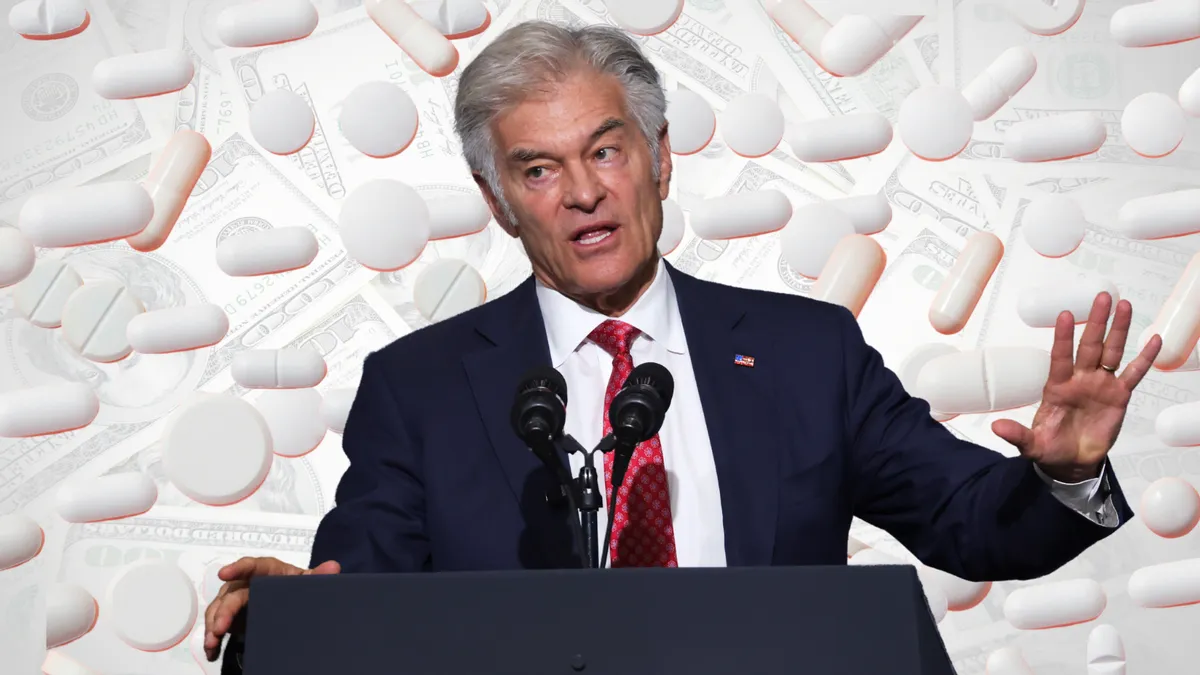
The administration of U.S. President Donald Trump announced the end of a Medicare subsidy program aimed to help lower the cost of prescription drugs.
Rumors that the Centers for Medicare and Medicaid Services planned to roll back government-provided subsidies in a Medicare program called Part D, which helps enrollees cover the cost of their prescriptions, circulated online in late July 2026.
Users on social media platforms posted about the alleged policy change, some claiming it would raise the “costs for more than 11 million Americans,” while others claimed the “Trump administration is again ‘saving money’ by taking away support from the Americans who need it the most.”
The claim was true.
The agency, known as CMS, announced the change within its annual release of Medicare’s national average bid amount on July 28, in which it said it was “announcing the conclusion of the Part D Premium Stabilization Demonstration,” a program that aimed to help mitigate costs of prescription drugs.
Additionally, a report originating with The Wall Street Journal was subsequently verified by outlets such as ABC News, Newsweek and USA Today that summarized the announcement made by CMS.
CMS and the White House responded to an email inquiry from Snopes referring to social media posts from Mehmet Oz, the agency’s administrator, that discussed the changes.
Alongside the announcement from CMS on July 28, Oz posted on X:
The Biden admin gave BILLIONS of taxpayer money DIRECTLY to Big Insurance Companies. This is unacceptable.
We are stabilizing the market so this bailout is no longer needed. Premiums will go up by less than $10 for most Medicare recipients, with many even seeing LOWER premiums.
Every Medicare beneficiary still has access to low-cost plans, and we will continue to lower prescription drug prices for every American patient, from more MFN deals to our policy giving seniors access to GLP-1s for $50 a month.
Oz followed up with a post on July 29 declaring: “The Biden administration created a bailout for insurance companies. We ended it.”
The July 29 post also featured Oz on camera stating:
Over the past two years, the president’s efforts to reduce pharmaceutical prices have stabilized the Medicare drug plan market, and now over 90% of beneficiaries will be able to access plans that cost them less than $10 per month. So we did our job protecting the integrity of Medicare and ended the bailout of insurance companies. That’s what happens when you solve problems instead of subsidizing them.
The references to former President Joe Biden’s administration in both posts appeared to refer to his signing of the 2022 Inflation Reduction Act, part of which aimed to lower the cost of prescription drugs through Medicare’s Part D by allowing Medicaid to have more negotiating power with pharmaceutical companies.
In October 2023, Biden’s HHS announced the initial 10 companies whose drugs were selected for the subsidy program had agreed to negotiation and that “up to 15 more drugs covered under Part D for 2027, up to 15 more drugs for 2028 (including drugs covered under Part B and Part D), and up to 20 more drugs for each year after that” could be affected.
In July 2024, CMS said of the program:
These changes mean that the government subsidy to Part D plans is shifting from largely being reconciled on the back end based on beneficiary costs (i.e., reinsurance payments) to a larger risk-adjusted government Part D subsidy payment upfront.
By design, plans will have more liability requiring them to better manage costs within that upfront payment amount. The IRA also provides a premium stabilization mechanism to limit the average premium increases for people enrolled in Part D to about $2 per month on average.
Due to both of these changes, a higher percentage of the plan bid amounts (i.e., plans’ estimates of expected costs for an average enrollee) will be paid by the government subsidy to plans, and thus changes to plan bid amounts do not reflect potential premium changes to enrollees.
The Wall Street Journal reported a Trump administration official said about 25% of Part D enrollees would have their monthly premiums stay the same or decrease after the change, while “around 30%” would have “an increase of less than $10 to their monthly bill.”
The report added that the remaining enrollees, about 45%, would see an increase “in the $11 to $20 range” per month.
The article also posited that “higher premiums for the Part D plans could push more Medicare enrollees into Medicare Advantage, the private-insurer version of Medicare, which generally wrap in drug benefits and often charge no premiums at all.”
Juliette Cubanski, vice president and director of the program on Medicare policy at health policy research nonprofit organization KFF, said that “without these extra subsidies in place for 2027, some Part D stand-alone drug plan enrollees could face a larger premium increase for drug coverage” than they have in recent years. However, she also noted that while the subsidies “helped cushion the impact” of some cost increases, they “didn’t address broader cost pressures facing Part D plan sponsors associated with rising drug prices and increasing use of GLP-1s and expensive specialty drugs.”
