


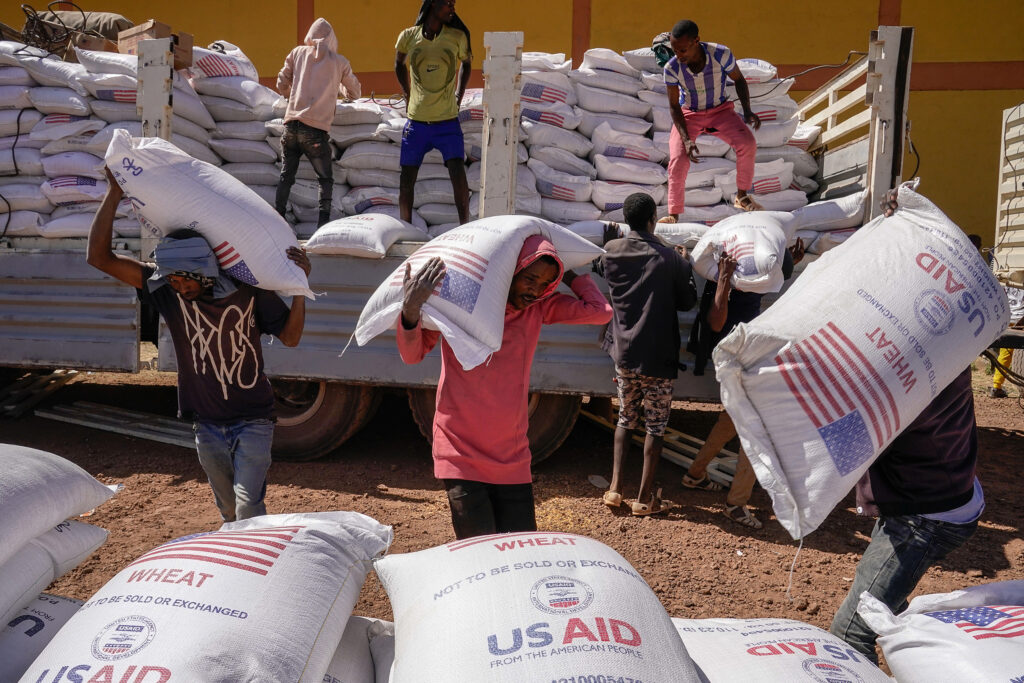
Before its abrupt dismantling last year, the U.S. Agency for International Development was one of the world’s largest funders of conservation, climate resilience and other environmental programs. The money aimed to curb deforestation in the tropics, help farmers and communities cope with extreme weather, increase clean energy development and more.
Now, a year and a half after its shuttering by the Trump administration, few if any funders are filling the gap. Deforestation and illicit activity have spiked. Governments are more reluctant to advance environmental programs. The civil society groups and agencies that USAID partnered with have fewer resources and less access to data. And the U.S. government has less intelligence about what is happening in many countries to support its diplomatic work. These are the findings of an analysis published Tuesday by two former senior staffers at USAID and based on scores of interviews and survey responses collected from former agency partners around the globe.
USAID was unparalleled in its scope and scale. For climate and the environment alone it gave $1 billion annually, the report said. The agency tended to write large grants that lasted years, which the people interviewed said allowed them to build programs they couldn’t with other types of funding—conservation efforts that crossed international borders, for example. The agency also worked in high risk, complex environments where many other donors do not, including post-conflict zones.
To assess the impacts of this loss, the authors interviewed 150 people who worked with or for USAID in five countries—Bangladesh, Colombia, Kenya, Peru and Vietnam. They supplemented the interviews with survey responses gathered from 175 people or organizations across the globe.
They heard consistently that USAID’s withdrawal led to immediate backsliding on environmental standards and accountability in the countries where it had worked. Without the agency’s backing, the responses said, government officials lost support for pushing reforms in their own countries.
Governments and civil society groups also reported facing a loss of access to many types of data. USAID supported websites that served as clearinghouses and digital libraries for development and environmental programs, for example, with decades of knowledge built into them.
“It’s not just funding,” said Hadas Kushnir, one of the report’s authors. “You’ve pulled capacity support, you’ve pulled data and websites and all that kind of access that local organizations were relying on. So what we now have is a system where organizations working in the environment space are fundamentally weaker than they were before.”
Kushnir was the natural climate solutions division chief at USAID before it was disbanded last year. She co-founded One Earth Partners, an advisory firm focused on climate and environmental development, with Monica Bansal, who was the director of the Center for Energy, Infrastructure and Cities at USAID. The pair received a grant from The Navigation Fund to assess what was lost with the end of the agency’s climate and environment funding.
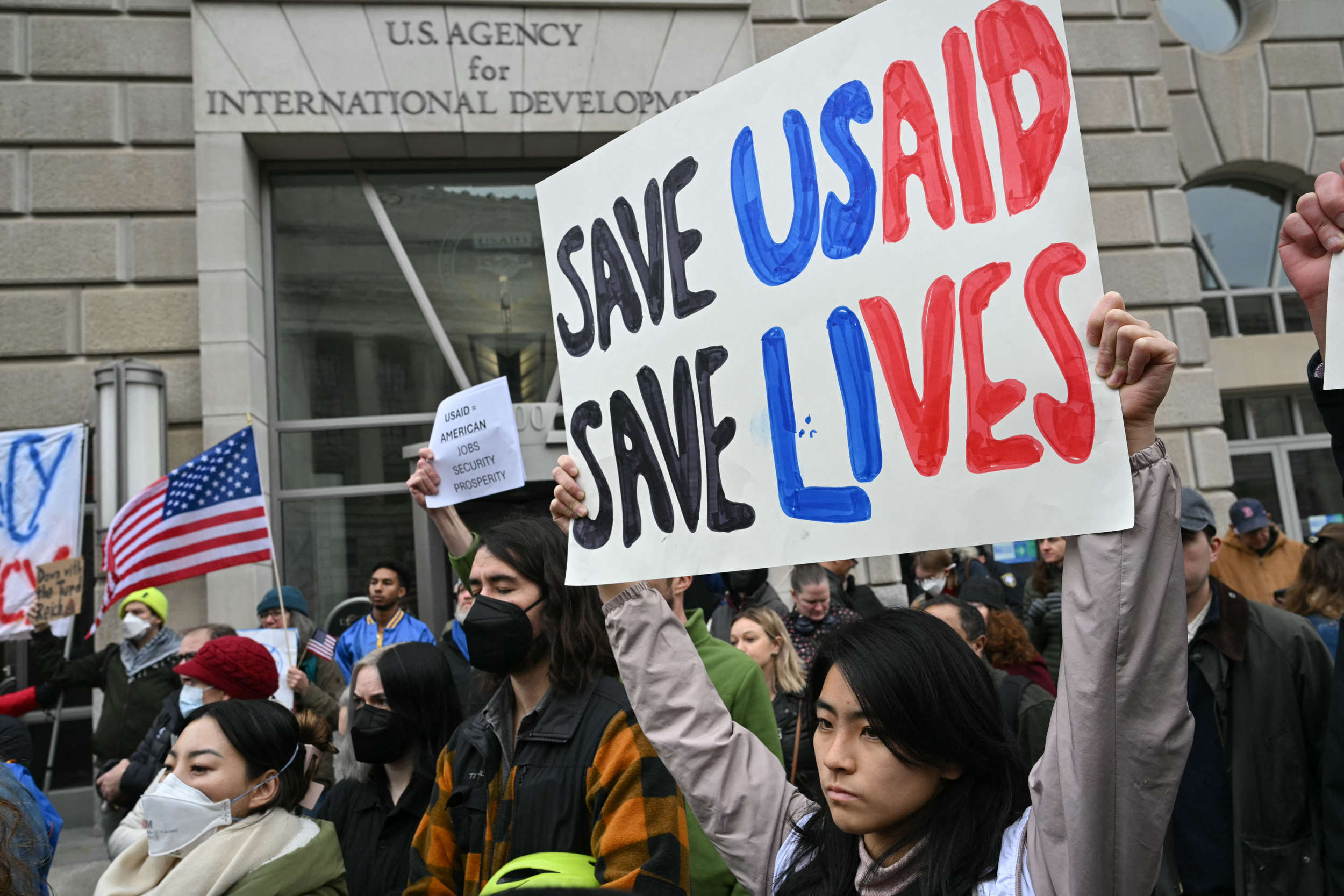
Some of the findings match reports by other experts who say USAID worked as a tool of soft power, building goodwill while also supporting U.S. diplomatic and even military efforts with on-the-ground intelligence. The abrupt halt to the work achieved the opposite, breaking the trust of partners around the globe.
In some cases, people reported spikes in illicit activity in their countries, including a more than doubling in the number of landing strips in the Ucayali region of the Peruvian Amazon, where illegal mining and coca cultivation are contributing to deforestation and violence. In Kenya, people told Bansal and Kushnir, USAID’s environmental work helped counter the draw of terrorist groups.
“That was one of the things that came up everywhere,” Bansal said. “Real on-the-ground impacts and risks, real risks going forward to national security and directly to American competitiveness.”
The U.S. Department of State did not answer questions about the report for Inside Climate News. But Trump administration officials, including Secretary of State Marco Rubio, have criticized USAID as wasteful and ineffective. They claimed it had enriched nonprofit organizations while delivering few if any development results, and had failed to generate goodwill toward the United States.
This story is funded by readers like you.
Our nonprofit newsroom provides award-winning climate coverage free of charge and advertising. We rely on donations from readers like you to keep going. Please donate now to support our work.
The new report found little to support the Trump administration’s claims, but it did identify some systemic problems and areas of waste.
People interviewed reported consistently that USAID’s use of large contractors sometimes inflated costs and diverted money from places it was most needed. In some cases, USAID simply gave more money to an organization than it was equipped to handle. At times, interviewees said, local needs were outweighed by politically driven mandates from Washington. All of this, the report said, means future efforts should work more closely with local partners to identify needs and their capacity.
These problems were real, said Ariel BenYishay, chief economist and director of research and evaluation at AidData, an international development research lab at The College of William and Mary. And yet, BenYishay said, his work analyzing the efficacy of aid programs consistently found that USAID’s yielded results. He said the agency tended to provide more publicly available data on its work than multilateral banks or other governments, allowing greater scrutiny.
With USAID gone, BenYishay said, “it’s hard to even know what’s happening” with much development aid.
USAID devoted hundreds of millions of dollars a year to developing energy programs in Africa and Southeast Asia. Much of the work was unglamorous and technical, like building the solvency of utility companies or their capacity to hold auctions. Katie Auth, who worked at USAID until 2020 and is now deputy executive director at Energy for Growth Hub, a think tank, said much of the funding was market oriented and helped support private-sector development.
“All of that is gone,” Auth said.
If there is one consistent takeaway from the report and other expert assessments, it is that USAID was not, by and large, replaced by anything else. BenYishay said that on environmental issues especially, the agency served as an anchor, drawing in funding from other donors. If anything, he said, those donors have retreated.
According to the report, many of the impacts appear to be lasting.
“The reality is that stepping into a gap this big, no one expects that to happen,” Bansal said.
About This Story
Perhaps you noticed: This story, like all the news we publish, is free to read. That’s because Inside Climate News is a 501c3 nonprofit organization. We do not charge a subscription fee, lock our news behind a paywall, or clutter our website with ads. We make our news on climate and the environment freely available to you and anyone who wants it.
That’s not all. We also share our news for free with scores of other media organizations around the country. Many of them can’t afford to do environmental journalism of their own. We’ve built bureaus from coast to coast to report local stories, collaborate with local newsrooms and co-publish articles so that this vital work is shared as widely as possible.
Two of us launched ICN in 2007. Six years later we earned a Pulitzer Prize for National Reporting, and now we run the oldest and largest dedicated climate newsroom in the nation. We tell the story in all its complexity. We hold polluters accountable. We expose environmental injustice. We debunk misinformation. We scrutinize solutions and inspire action.
Donations from readers like you fund every aspect of what we do. If you don’t already, will you support our ongoing work, our reporting on the biggest crisis facing our planet, and help us reach even more readers in more places?
Please take a moment to make a tax-deductible donation. Every one of them makes a difference.
Thank you,

Reporter, New York
