


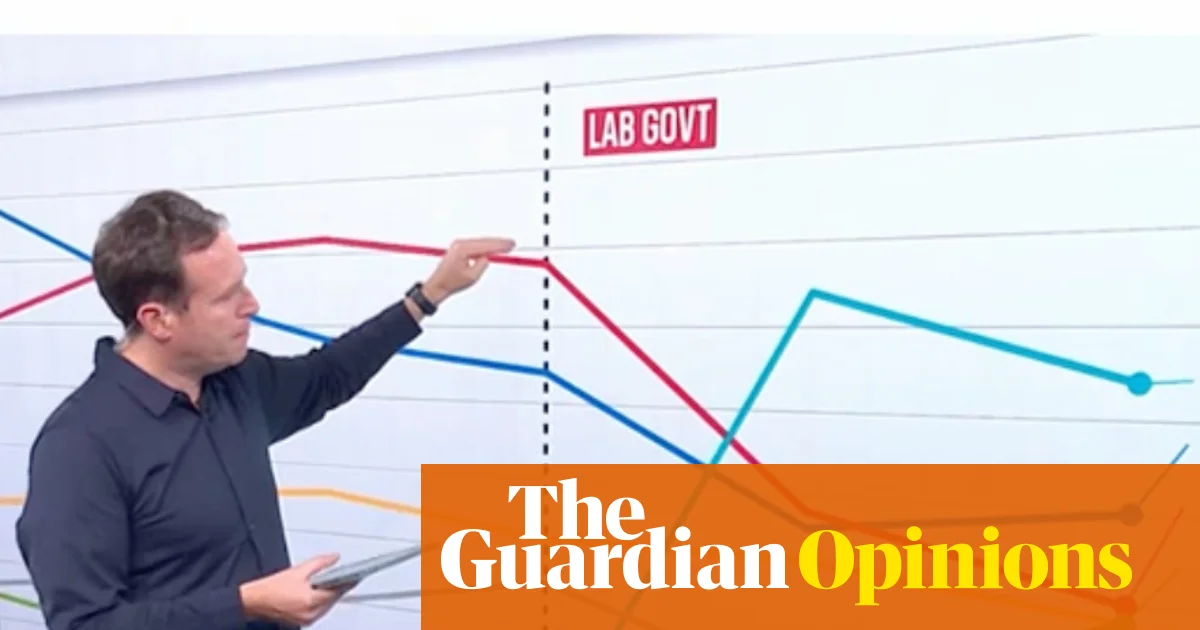
Solemn faces all round. We will listen. We will learn. We will hone and improve. Yes, it’s time for the latest bout of profound soul-searching in the UK polling industry following the allegations raised by the recent Channel 4 investigation that a polling firm reportedly failed to declare that three polls it published before the local elections in May were commissioned by Reform. By now these reckonings are becoming a regular occurrence in the wake of big elections: pollsters gather in a room, nibble biscuits, ritually self-flagellate, and pledge to learn all the right lessons from the electorate they’ve just catastrophically misread.
Yet for all its very public ignominies, political polling is one of those rare and precious industries that somehow manages to keep failing upwards. You might think that after botching the 2015 and 2017 general elections, the 2016 Brexit vote and the 2021 London mayoral poll, we might have learned better than to trust in the mystical magic graph. In this parallel universe Keir Starmer is now sitting on a colossal 318-seat majority, as forecast by Survation in its final MRP poll on the eve of the 2024 general election, overstating the actual result by a mere 144 parliamentary seats.
I am, of course, being slightly unfair. Most of the reputable pollsters enjoy just as many hits as misses – and are, by and large, staffed by smart and diligent people who genuinely care about their craft. Doubtless many among their number would object to any suggestion that the apparent misbehaviour of one firm – JL Partners, who were secretly filmed agreeing to carry out a poll favourable to Reform without disclosing who was commissioning it – can somehow be extrapolated to the wider profession as a whole. To which the only reasonable response is: well, let’s see how you like it.
And rest assured, I’ve read the Substacks. I’ve signed up to (the free version of) the newsletters. I’ve talked to polling experts. I’ve swished a curious finger up and down the interactive graphics. I’ve sat through interminable briefings in which a very nice man explains why he decided to carve up the voting public into 16 distinct blocs with catchy but absurd names: Flag Shaggers, Jealous Judies, Digital Wombats. And because Westminster is basically like the inside of a very small conch, these terms quickly pass into common parlance. “As you can see,” some wonk on the radio will opine, “the Tories are down eight points among the Angry Trevors, a whopping 13 with Disconsolate Flexitarians. But they are at least holding firm with Be At One Mums.”
But my problem has virtually nothing to do with methodology and almost everything to do with volume. There’s simply too much of this stuff, and people are taking it too seriously, investing too much predictive power. The British Polling Council (BPC) has swollen to 39 member organisations, many of them new and completely untested. In the first two weeks of September alone there have been 10 separate voting intention surveys issued by seven separate companies. We are all fatally beholden to the cult of Big Poll.
There are plenty of noble and legitimate defences of polls. They help to shape and test policy. They allow voters to make their choice with the fullest possible information. Perhaps they even function as a kind of check on an unfair electoral system, signposting to potential tactical switchers where their vote might profitably be spent. But even these defences highlight a paradox: this is a method of measuring and reflecting public opinion – and of subtly influencing it. Which is why so many lobbyists, PR firms and corporate interests are desperate to get involved.
Pollsters are not doing this out of some great altruistic duty to democracy. This is a business like any other, often using techniques borrowed wholesale from the market research and advertising sectors, and preying on a resource-starved, click-hungry media desperate for high-impact, low-cost content. “You aren’t going to pay for polling unless you are confident they can deliver the answer you want,” one public affairs executive told Politico last week. Or as George Gallup, one of the pioneers of modern-day polling, put it: “If it works for toothpaste, why not for politics?”
And so what started out as a small table in the newspaper every month has essentially become a biddable political actor in its own right, and there is a cosy symbiotic relationship between the people who conduct the polls, the people who pay for the polls and the people who publish the polls. This is how Reform can be treated like a government in waiting when they have eight MPs. This is how Starmer ends up as a lame duck within two years of his own landslide. In his 2018 memoir, the former FBI director James Comey admitted that his decision to reopen the investigation into Hillary Clinton’s emails may have been affected by the fact that she was well ahead of Donald Trump in the polls.
Beyond this, polls encourage us all to see politics as a kind of game within a game, a permanent rolling market ticker, in which the aim is not to improve the lives of human beings but to master the line on the graph, where winning elections is the end rather than the means. The BPC, with no fixed office and no full-time staff, was never going to fix this. In reality it is more of a trade body than a regulator, self-run and concerned less with ethics than trust and marketability.
And so JL Partners and the industry it belongs to are not the sole culprits here. In reality, the problem is the messenger: the people who consume and regurgitate politics for an audience, seduced by the idea that there is some all-seeing eye, a soup of numbers that will tell us all the answers. As someone whose very job deals in opinion, I know its fragility and malleability, the ridiculousness of treating it like a sacred stone tablet, or – I dunno – basing an entire generation of foreign and economic policy on how 635,000 people felt when they woke up on a Thursday in June 2016.
after newsletter promotion
West Germany banned the death penalty in 1949 even though 77% of people were in favour of it. By 2000 that had fallen to 23%. Explanation, exemplar, persuasion, principle: these are the real tools of politics, at least a politics that seeks not to chase or triangulate public opinion but to mould and shape it. But if your entire existence is tied to a little line on a graph, then you’re never even going to try.
