

Close Menu
NCIJ Network NCIJ Network
    What's Hot

    Why financial empowerment is the UK’s next great economic opportunity – POLITICO

    November 3, 2026

    NASA reveals a haunting skull hidden in Antarctica’s ice

    November 3, 2026

    New index tracks countries’ vulnerability to conflict between large and small-scale fishers

    November 3, 2026
    Facebook X (Twitter) Instagram
    Trending
    • Why financial empowerment is the UK’s next great economic opportunity – POLITICO
    • NASA reveals a haunting skull hidden in Antarctica’s ice
    • New index tracks countries’ vulnerability to conflict between large and small-scale fishers
    • Inside the Secretive World of Campaign Ads Funded by AI Super PACs
    • Watch: Unseen images of drone sinking Greek tanker off Bulgarian coast
    • UK and EU agree draft deal to scrap Brexit red tape over food exports
    • Zyphra AI Introduces Zyphra Hierarchical Attention (ZHA): A Path to True Subquadratic Attention
    • Extreme heat no longer confined to summer, extending health risks, study finds
    • About
      • Our Team
      • Editorial Policy
      • Editorial Independence
      • International Support
    • Trust & Standards
      • AI Usage Policy
      • Conflict of Interest Policy
      • Corrections Policy
      • Ethics Policy
      • Fact-Checking Policy
      • Source Protection
    • Get Involved
      • Guide for Sources
      • Support Independent Journalism
    • Legal
      • Cookie Policy
      • Privacy Policy
      • Terms of Use
    Facebook X (Twitter) Instagram
    NCIJ Network NCIJ Network
    Tuesday, November 3
    • Home
    • World
    • Ai
    • Business
    • Politics
    • Health
    • Crypto
    • Science
    • Technology
    • Cybersecurity
    • Defense & Security
    • Economy
    • Energy
    • Europe
    • More
      • Fact Check
      • Investigations
      • Opinion & Analysis
      • Environment
    NCIJ Network NCIJ Network
    Home»Environment

    Roads, infrastructure prevent tigers from settling in Indian tiger reserve

    NCIJ NETWNCIJ NETWORKBy NCIJ NETWNCIJ NETWORKSeptember 15, 2026 Environment No Comments3 Mins Read
    Share
    Facebook Twitter LinkedIn Pinterest Email

    A forested tiger reserve in southern India is home to a thriving population of spotted and sambar deer, nilgai antelopes, and wild pigs — all ideal prey for tigers. Yet the reserve has no resident tigers, reports contributor Nivedhika Krishnan for Mongabay India.

    Kawal Tiger Reserve in the state of Telangana connects key tiger populations in the reserves of Tadoba-Andhari, in Maharashtra state to the west, and Indravati, in Chhattisgarh state to the east. Since 2015, researchers have confirmed that only 15 tigers entered Kawal from Maharashtra. Of these, only two were females.

    Lead researcher Imran Siddiqui told Mongabay India that tigers traveling from Maharashtra to Kawal face heavy infrastructure throughout their journey.

    “The corridor is fragmented by open-cast coal mines, the Ada irrigation project, electrified farm fences, and the main Hyderabad-Nagpur railway line,” Siddiqui said. “National Highway 44 acts as the most formidable barrier of all with its heavy traffic and high fencing. It isn’t just one obstacle — it is a cumulative mosaic of risks that forces dispersing tigers to turn back.”

    He added that while male tigers dispersing from their birthplace are “bolder risk-takers” and can move long distances through human-dominated landscapes, female tigers are more risk-averse and “require quiet, undisturbed habitat to raise cubs.”

    “Crossing busy highways, railways, and mines poses a massive perceived threat to females,” Siddiqui said. “That is why males occasionally dodge traffic to reach Kawal, but females turn back. Without females, you simply cannot build a breeding population.”

    Anish Andheria, president and CEO of the Wildlife Conservation Trust, told Mongabay India that the reserve itself needs a core area free from human settlements, like in India’s other tiger reserves. As of 2023, there were 37 villages and 67 small settlements inside Kawal Tiger Reserve’s core, he said.

    But keeping people out of the ecosystem is a fraught issue. When Kawal was declared a tiger reserve in 2012, authorities had promised the resident Indigenous communities, the Adivasis, that the change wouldn’t harm their legal rights or survival, said Siddam Bhujang Rao, a local Adivasi leader. “But once the reserve was established, their stance completely shifted.”

    Families who were relocated from the core reserve, for instance, received little of what was promised to them in the official relocation package for the villages, Rao said.

    “They promised us land, water, and model villages,” he said. “Instead, families were moved to houses with crumbling plaster, and the agricultural lands were never handed over.”

    Wildlife managers have also floated the idea of “assisted dispersal,” where wild female tigers from dense populations in states like Maharashtra are airlifted directly into Kawal. But Siddiqui warned that such manual translocations aren’t “a shortcut for fixing broken corridors.”

    “Bringing tigers from outside will not work,” Rao agreed. “It is a flawed idea, and it should be abandoned.”

    Read the full story by Nivedhika Krishnan here.

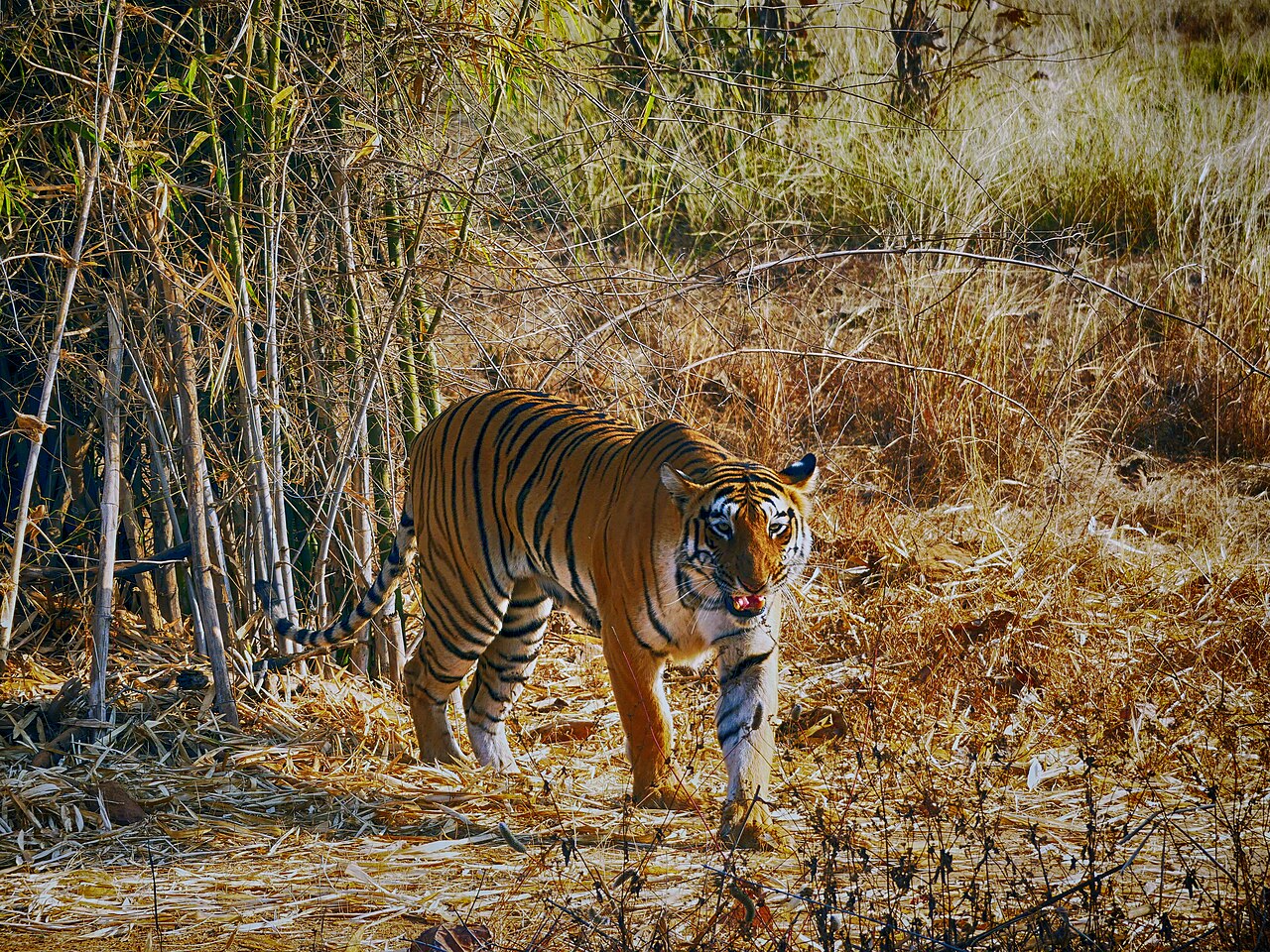
    Banner image: A tiger in Tadoba-Andhari Tiger Reserve, from where tigers move to Kawal Tiger Reserve but do not live there. Representative image by A.J.T Johnsingh, WWF-India & NCF via Wikimedia Commons (CC BY-SA 4.0).


    Indian infrastructure prevent reserve roads settling tiger tigers
    NCIJ NETWNCIJ NETWORK
    • Website

    Keep Reading

    New index tracks countries’ vulnerability to conflict between large and small-scale fishers

    Extreme heat no longer confined to summer, extending health risks, study finds

    Diverse forests can better withstand extreme weather events, study finds. Here’s why

    Two public servants in Brazil removed after threatening to poison Indigenous people

    Indigenous peoples and local communities solidify decision-making powers at COP17

    ‘Bookkeeping Trick’ and Fuzzy Math Conceal the Climate Impacts of Beef, Researchers Say

    Add A Comment
    Leave A Reply Cancel Reply

    Editors Picks

    Why financial empowerment is the UK’s next great economic opportunity – POLITICO

    November 3, 2026

    NASA reveals a haunting skull hidden in Antarctica’s ice

    November 3, 2026

    New index tracks countries’ vulnerability to conflict between large and small-scale fishers

    November 3, 2026

    Inside the Secretive World of Campaign Ads Funded by AI Super PACs

    November 3, 2026
    Latest Posts

    Is the world experiencing more earthquakes now than before? | Earthquakes News

    August 17, 2026

    Disabled creatives like me are behind many of your favourite shows – so why has our work support been withdrawn? | Annalisa Dinnella

    August 17, 2026

    A little-known protein may be fueling Alzheimer’s — and scientists found a way to block it

    August 17, 2026

    Subscribe to News

    Get the latest sports news from NewsSite about world, sports and politics.

    NCIJ Network is an independent digital news platform delivering trusted investigative journalism, European and global news, in-depth analysis, and fact-based reporting with accuracy, transparency, and integrity.

    Facebook X (Twitter) Instagram Pinterest YouTube

    Why financial empowerment is the UK’s next great economic opportunity – POLITICO

    November 3, 2026

    NASA reveals a haunting skull hidden in Antarctica’s ice

    November 3, 2026

    New index tracks countries’ vulnerability to conflict between large and small-scale fishers

    November 3, 2026

    Subscribe to Updates

    Get the latest creative news from FooBar about art, design and business.

    Type above and press Enter to search. Press Esc to cancel.