


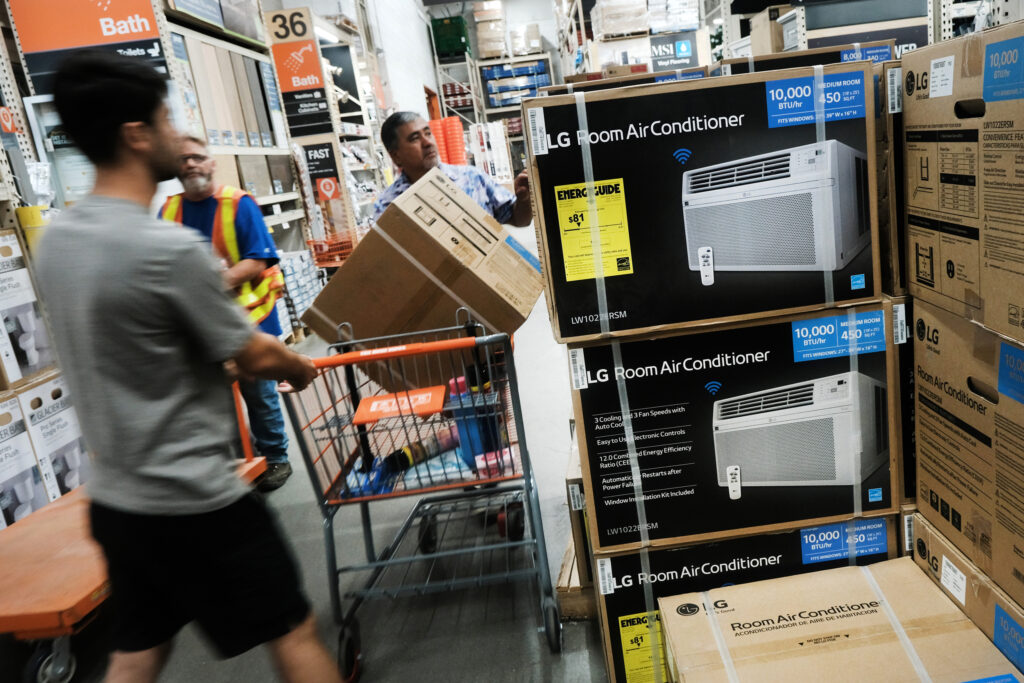
New York City is getting hotter, and for some residents, staying cool can be a matter of life and death.
Mayor Zohran Mamdani has declared at least three heat emergencies this summer, some lasting more than two days and the city’s latest heat mortality report estimates that around 500 people die prematurely from heat every year.
The report identified 19 heat-stress deaths during the June 2025 heatwave. In the decade prior, the city averaged seven such fatalities a year.
Many of the 71 New Yorkers who died of heat-stress between 2016 and 2025 died indoors, according to city data. Of the 25 indoor deaths for which the city has information, they either did not have air conditioning or were not using it.
During heat emergencies, the city opens hundreds of cooling centers, providing air-conditioned spaces for residents who may not have access to reliable home cooling and face greater risk of heat-stress, which is caused directly by exposure to heat.
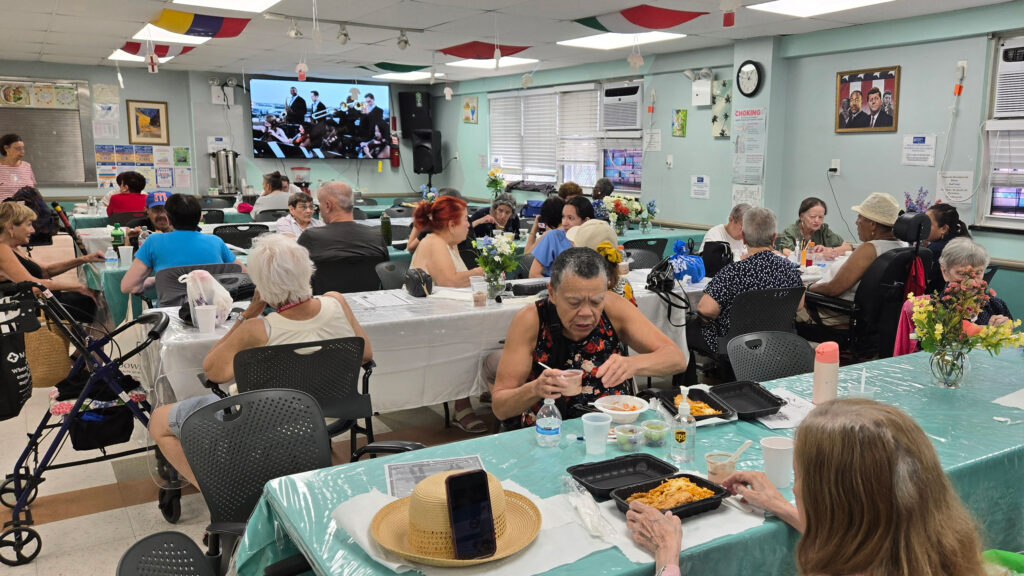
At the Swinging Sixties Social Adult Day Center run by St. Nick’s Alliance, people can escape the heat.
Over the July 4 holiday weekend, when temperatures hit 100 degrees in the city, the center welcomed 245 seniors and 35 younger adults, said Cheryl Kamen, the alliance’s deputy director of elder care for older adult centers. Three people died in their homes during that heatwave. Data on the total number of heat-related deaths in 2026 is not yet available.
Owning an air conditioner isn’t enough, because some people can’t afford to use them, Kamen said.
“For many of them, Social Security is their only income,” she said. “A lot of them won’t run an air conditioner if they have it, or they don’t want one because they don’t want to incur the expense.”
Without the center, she said, they could become another statistic in the heat mortality report.
Most heat-related deaths that the city counts are considered ‘heat-exacerbated,’ meaning extreme heat aggravated underlying conditions such as diabetes or heart disease.
From 2014 through 2023, the city recorded an average of 490 such heat-exacerbated deaths a year.
The heat is expected to get worse. Climate projections suggest New York summers could be 4 to 6 degrees Fahrenheit hotter by mid-century and up to 10 degrees hotter by the 2080s, said Daniel Bader, with Columbia University’s Lamont-Doherty Earth Observatory.
Heatwaves are expected to become more frequent and intense as average temperatures rise.
To combat rising temperatures, the city’s heat mortality report calls for expanding residential air conditioning and lowering utility costs for low-income New Yorkers to help cut the number of heat-related deaths.
This story is funded by readers like you.
Our nonprofit newsroom provides award-winning climate coverage free of charge and advertising. We rely on donations from readers like you to keep going. Please donate now to support our work.
A national study found that household air conditioning prevented an estimated 5,300 heat-related deaths annually between 2010 and 2020, although researchers said its protective benefits eventually plateaued.
People don’t always know when someone is at risk of dying until it’s too late, said Cara Taubman, the assistant director of the Emergency Medicine Residency Program at the Harlem and Metropolitan Hospital Centers. Signs of heat exhaustion like sweating, cramps and nausea can usually be reversed by resting and hydrating, she said.
But once it becomes heat stroke, she said, that’s a medical emergency. Confusion, a fast heartbeat, dry skin because of dehydration—these are all signs that require a trip to the emergency room during a heat wave.
“It’s life threatening,” Taubman said.
But cooling remains unaffordable for many households. A 2022 study by researchers at Columbia University and the New York City Department of Health and Mental Hygiene found that 30 percent of city adults are unable to meet their household’s energy needs. More than 130,000 Con Edison customers were at least two months overdue on their utility bills by the end of July, according to state records.
The burden is also unequal. Black New Yorkers die from heat-stress at three times the rate of white residents, according to the city. Historic redlining and disinvestment have left many communities of color with fewer trees, making neighborhoods hotter and slower to cool.
All of these things factor into the city’s “heat vulnerability index,” which identifies neighborhoods where residents face greater risk of heat-related health impacts. East and Central Harlem in Upper Manhattan, for example, are considered high risk.
“A lot of it is due to infrastructure, lack of green space, and the inability to run air conditioning,” said Lonnie Portis, the director of policy and legislative affairs at WE ACT for Environmental Justice, a Harlem-based nonprofit.
WE ACT backed a law that passed last year requiring landlords to provide cooling systems capable of keeping tenants’ bedrooms at 78 degrees by 2030. Tenants would still be responsible for the ensuing electricity costs that aren’t included with their rent.
Next summer could also bring higher-than-normal temperatures because of El Niño—a recurring climate pattern that can amplify heatwaves and drought. For Portis, the message is clear: extreme heat is no longer just uncomfortable; it’s life threatening.
“It actually does impact your health in a lot of negative ways,” he said. “And one of the results is death.”
About This Story
Perhaps you noticed: This story, like all the news we publish, is free to read. That’s because Inside Climate News is a 501c3 nonprofit organization. We do not charge a subscription fee, lock our news behind a paywall, or clutter our website with ads. We make our news on climate and the environment freely available to you and anyone who wants it.
That’s not all. We also share our news for free with scores of other media organizations around the country. Many of them can’t afford to do environmental journalism of their own. We’ve built bureaus from coast to coast to report local stories, collaborate with local newsrooms and co-publish articles so that this vital work is shared as widely as possible.
Two of us launched ICN in 2007. Six years later we earned a Pulitzer Prize for National Reporting, and now we run the oldest and largest dedicated climate newsroom in the nation. We tell the story in all its complexity. We hold polluters accountable. We expose environmental injustice. We debunk misinformation. We scrutinize solutions and inspire action.
Donations from readers like you fund every aspect of what we do. If you don’t already, will you support our ongoing work, our reporting on the biggest crisis facing our planet, and help us reach even more readers in more places?
Please take a moment to make a tax-deductible donation. Every one of them makes a difference.
Thank you,

Reporter, New York City
Lauren Dalban is a New York City-based reporter with a background in local journalism. A former ICN fellow, she now covers environmental issues in all five boroughs. Originally from London, she earned a B.A. in History and English from the University of Virginia, and an M.S. from Columbia Graduate School of Journalism.
