


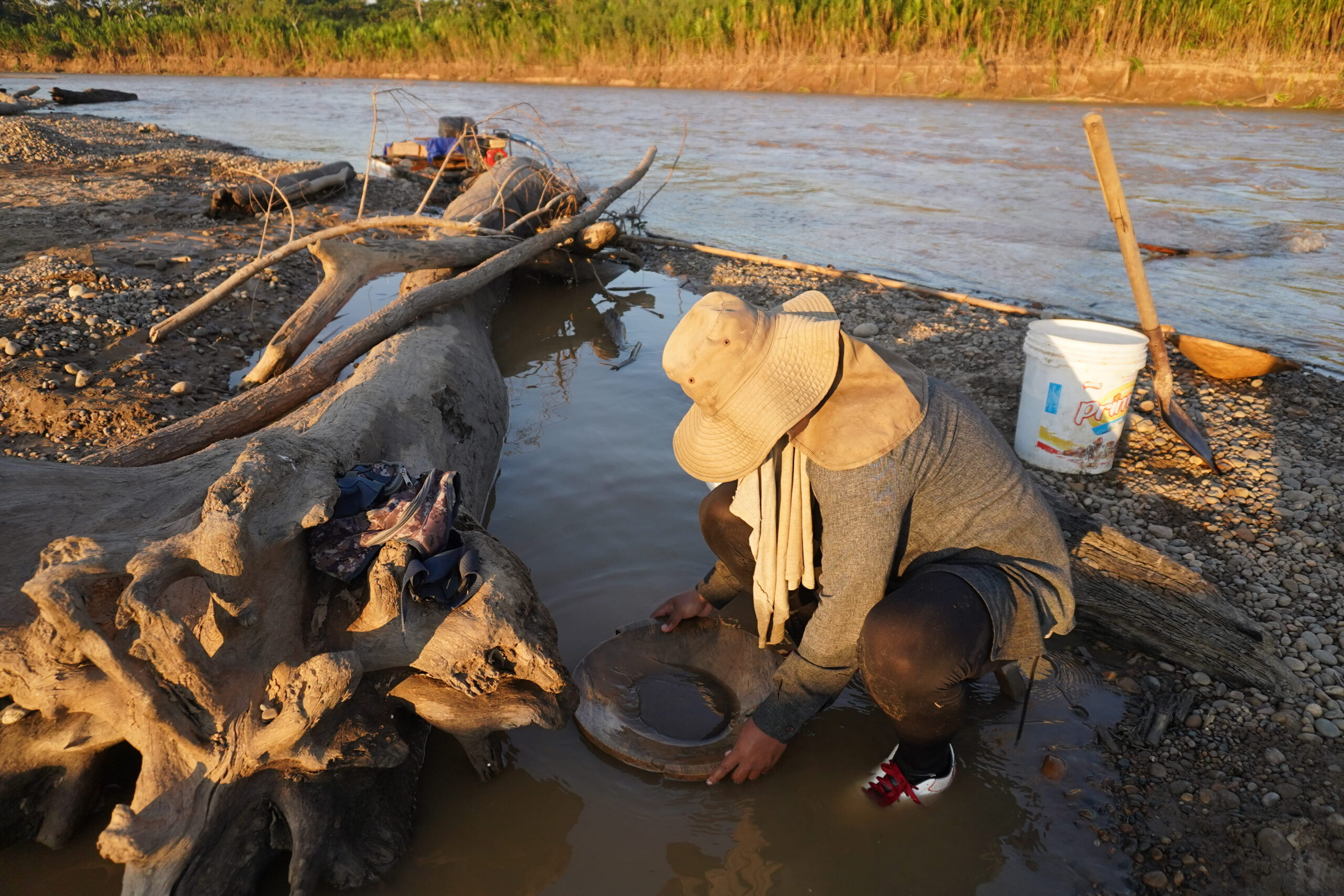
- Mongabay found that 39 communities in Bolivia are suffering from mercury poisoning and that 125 more face a similar risk.
- The findings were part of a scientific and geographic analysis covering 42 investigations published over 27 years. Seven were conducted in Bolivia.
- The Indigenous and riverside communities affected consume fish daily. Mongabay’s database showed that the protein is contaminated with mercury in at least 17 communities.
- Mongabay reached five Indigenous communities located on the banks of the Beni River (northern Bolivia). In some of them, such as Santa Rosita, mercury levels are nine times higher than the limit permitted by the World Health Organization.
BENI, Bolivia — Gilberto Vaca Muiba fears that the mercury in his body will end his life. Yet, the fear does not change his routine. He takes his old fishing rod, walks toward the river, and waits patiently for the meal of the day. He is on his knees on one of the shores of the Beni River, in the Bolivian Amazon, waiting for a fish to bite — so he can take the food home. It is a July afternoon in the Bolivian community of Puerto Yumani, and he has just caught a small surubí. The local fish is likely contaminated with mercury, but he brings it to his table nonetheless.
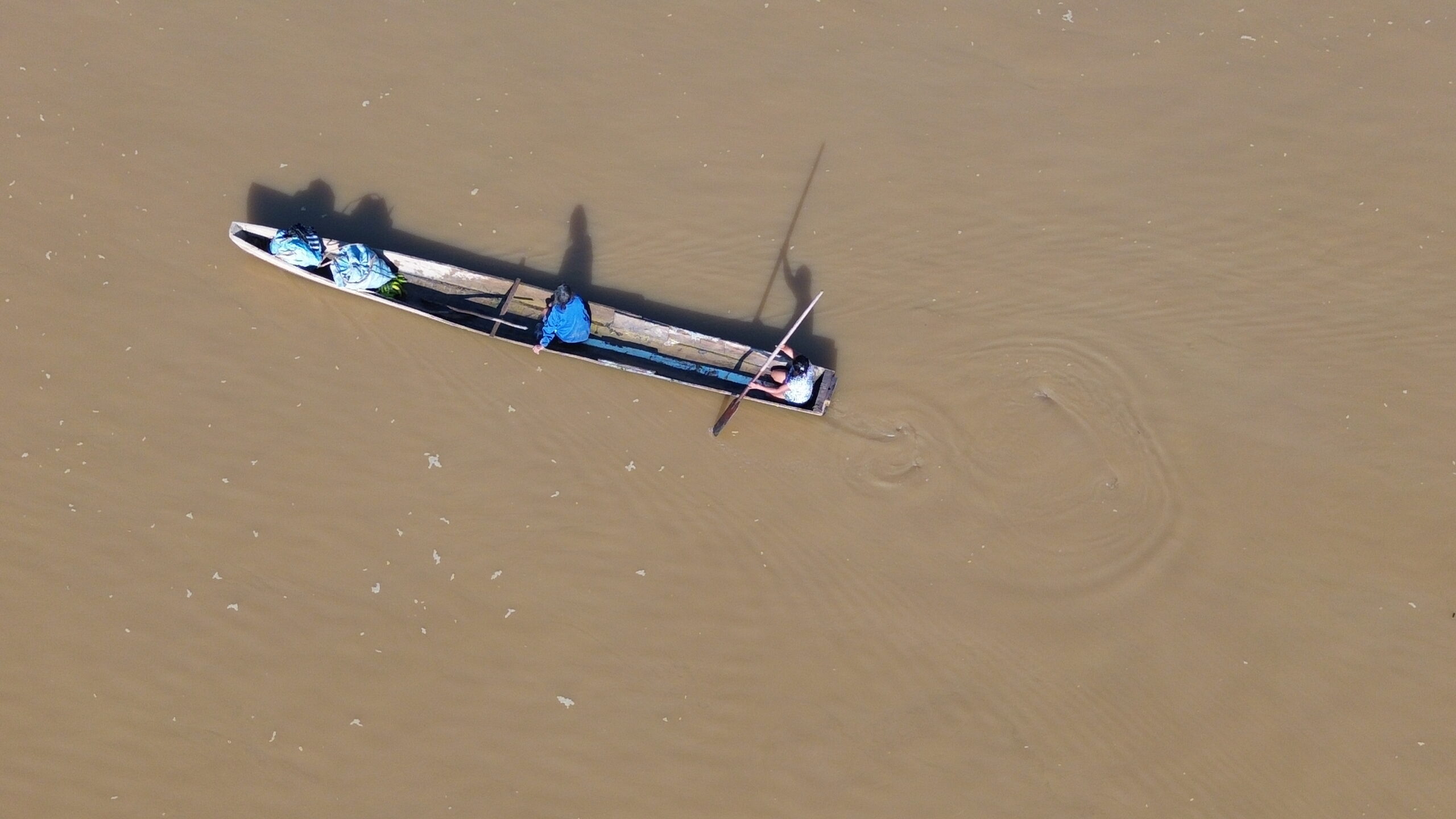
Puerto Yumani is one of the five Indigenous communities Mongabay visited along a 41-kilometer (25.48 miles) stretch of the Beni River. The other four are Carmen Soledad and Puerto Motor, in the municipality of Rurrenabaque (in the Beni department), and Eyiyoquibo and Buena Vista, in the municipality of San Buenaventura (north of La Paz department). All these territories, belonging to the Tacana, Leco, and Ese Ejja Indigenous peoples, are exposed to mercury contamination arising in the river.
Because of that, the Beni River is perceived in two ways: As a source of subsistence for the communities but also as the center of all their ills.
“We eat fish every day; it is our common diet because buying meat or chicken is too expensive for us. In the rivers, we have our food, but this very food is contaminated. And we are suffering because of it,” said Guido Alfaro, president of the Indigenous Peoples’ Central of La Paz (CPILAP, in Spanish), which represents Amazonian communities in the north of the same department. “That is why we ask them to hear us and to have the law enforced, which says that illegal mining is prohibited.”
According to Óscar Campanini, director of the Center for Documentation and Information of Bolivia (Cedib), “what has already been identified, with scientific evidence, is the impact mercury has on fish in the rivers of the Bolivian Amazon basin. The miner dumps mercury into the river until it reaches people through the fish they consume.”
When residents eat contaminated meat, Campanini explains, they absorb the heavy metal, and it accumulates in their bodies. “The amount increases as the individual continues to consume the source of mercury,” he said.
To understand the magnitude of this problem, Mongabay built a database that assembled more than 7,000 mercury samples in humans and more than 5,900 in fish. The samples were taken along the banks of three connected Amazonian rivers: The Madre de Dios River in Peru, the Beni River in Bolivia, and the Madeira River in Brazil. The analysis of 42 scientific studies — seven of them in the Beni River and published between 1995 and 2024 — revealed that inhabitants of at least 249 Indigenous and riverside communities have been exposed to contamination over 27 years.

Additionally, another 702 communities are at risk — 125 in Bolivia alone — as they are situated between illegal mining hotspots and areas where people tested positive for mercury.
In Bolivia, researchers collected 533 samples from people in 36 communities, and all had mercury levels above the limit allowed by the World Health Organization (WHO). Regarding the 186 fish samples taken in 17 communities of the Beni River basin, studies revealed that 15 species highly consumed by Indigenous and riverside populations contain mercury in their tissues.
“We know we are contaminated by mercury. But what can we do? There is no money because of this crisis; we cannot farm because our plots are affected by floods; that land is like it’s rotten,” said Grover Yumani, the corregidor (similar to a local authority) of the Puerto Yumani community. He says they are living in a vicious circle that forces residents to work for subsistence in an activity that is slowly killing them.

Mercury used in mining, especially in the search for gold, can cause serious and irreversible damage to human health by attacking the central nervous system, as well as the lungs and kidneys, and impacting fetal development, according to the WHO. The inhalation of toxic vapors when amalgams are burned, and the consumption of contaminated fish (in the form of methylmercury), can cause tremors, memory loss, cognitive disorders, kidney failure, and, even, death.
“We don’t know how mercury damages us; it was never explained to us, but there are many of our brothers who are vomiting, who have fevers, they have lost their appetite,” Alfaro says.

Puerto Motor has an invisible enemy
For the five Amazonian Indigenous peoples of the La Paz and Beni departments in Bolivia, the river means everything. It is the primary provider of their food. There they fish for surubí (Pseudoplatystoma), sábalo (Prochilodus lineatus), boga (Megaleporinus obtusidens), pacú (Myleus pacu), tucunaré (Cichla ocellaris), dorado (Brachyplatystoma rousseauxii), and palometa (Mylossoma aureum).
Those fishes, however, travel miles upstream carrying mercury from mining in their tissues. The heavy metal bathes the riverbanks where communities like Puerto Motor are settled. It houses 28 families who live amid the fear of seeing their health deteriorate.
Edith Guzmán Marupa, the corregidora or highest authority of Puerto Motor, rings the bell of the small community to call the residents. She wants them to share their experiences around the river. She takes a glass of water from the table and, with a breaking voice, says: “We know we have mercury in our bodies, but we can’t do anything.”

The community leader recalls a visit to her territory a decade ago by an organization that collected samples to verify the heavy metal levels in their bodies. “They said we had mercury,” she said.
Fish is the main food in the community’s daily diet; they eat it “almost every day,” despite knowing it has mercury, Guzmán said.
When asked if anyone assisted the community after confirming the presence of the heavy metal in their bodies, she said: “A medical commission only came once — in 2019 — to visit us, but they only gave us basic medicines.”
Guzmán’s story coincides with that of Dora Quispe, who has lived in Puerto Motor for 20 years. Quispe says she prays every day that the mercury in her body does not affect her daily life or that of the children and community members. “There is nothing to be done.”
“Every single one of us is affected by mercury. The doctor told us that we all have mercury, 100%,” Quispe says. “And we are like this because of consuming fish. Fishing is our way of life; here we are all fishers. We sell part of what we catch and eat the rest. If we stop fishing, we could die of hunger; we won’t have money for anything.”
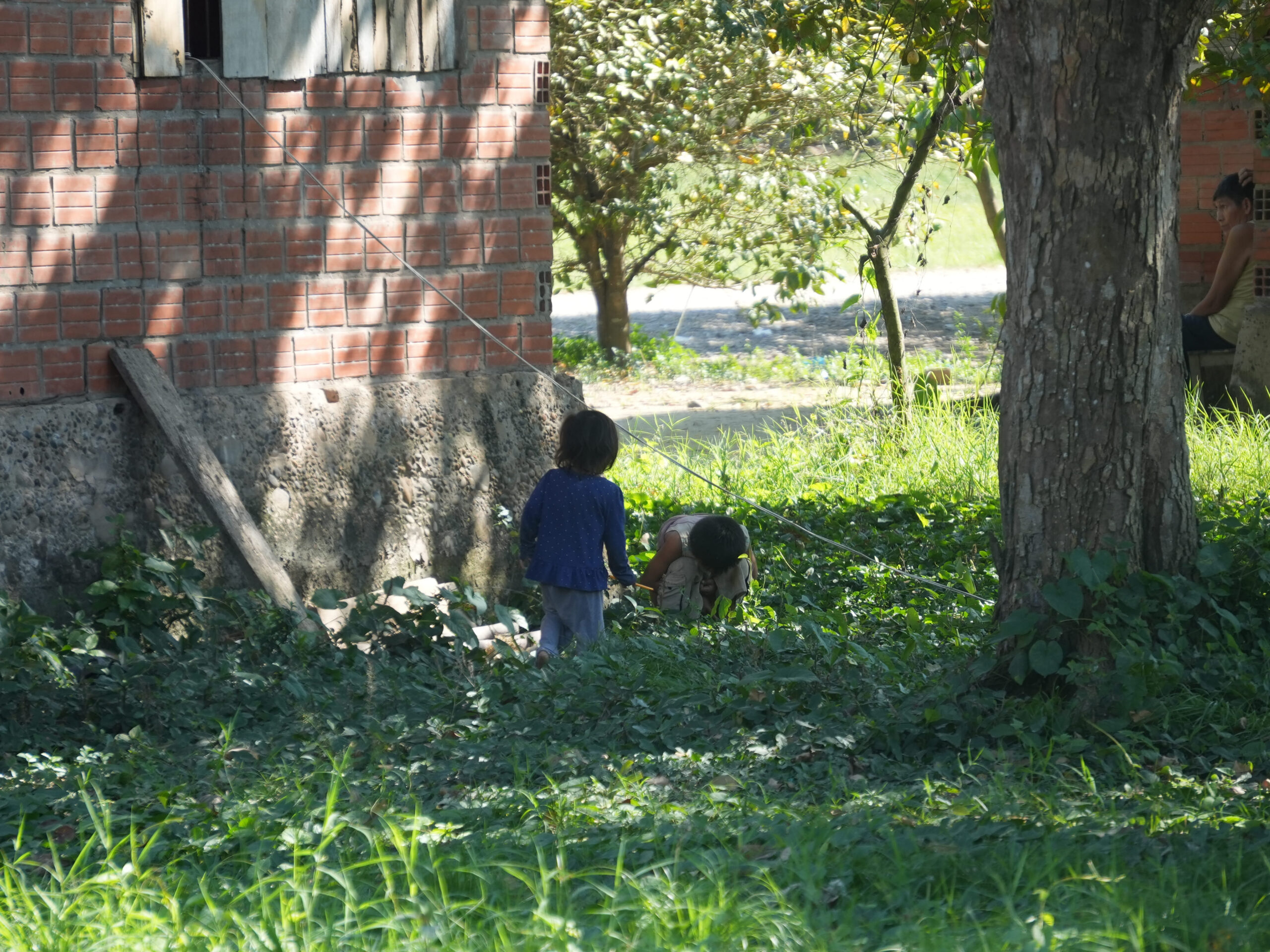
Both residents live haunted by statistics. Nine out of 10 Indigenous women of childbearing age in the Bolivian Amazon have concentrations above safe limits. This is one of the findings of a 2023 report by scientists from the University of Cartagena (Colombia), the Institute of Diagnostic Laboratory Services and Health Research (Seladis) of the Higher University of San Andrés (UMSA) in La Paz, and nonprofit CEDIB. Samples were taken from 119 women living in communities near the Beni, Mamoré and Madre de Dios basins.
According to the WHO, the acceptable level of mercury in the human body is 2.0 milligrams per kilogram. However, a scientific study, published in 2012, examined a more comprehensive picture, establishing that levels in human hair in the Beni River basin — where Puerto Motor is located and where Guzmán and Quispe live — reached up to 19 mg/kg in some communities.
Eyiyoquibo: Turning their backs on mercury
The Ese Ejja are an Indigenous population of recent contact. They are concentrated in the Eyiyoquibo community, in the Bolivian Amazon, and left the condition of isolation about 80 years ago.
In this territory, days pass slowly. They are dominated by a calm that leaves no room for concerns like mercury. It is a topic that is not discussed, because it is not among their priorities. Their attention is on other problems they feel are closer to their lives, such as floods, the lack of land for cultivation, drought, or the absence of resources to live.
Rosa Juse is one of the elders of Eyiyoquibo and tells Mongabay she is not contaminated, or at least that is what she wants to believe. She gathers firewood and places it in a rustic stove in the dirt patio of her precarious home. She lights a fire and immediately starts cooking. While she prepares a fish soup, her grandson, Manuel Noza, speaks in a low tone to prevent his grandmother from hearing that she is contaminated.

For Noza, symptoms do not lie. He notices it in his grandmother’s tired walk, the headaches, and the stomach problems she suffers. Doña Rosa, as she is also called, hurries, pouring rice into a pot with raw water while watching the cassava cooking nearby.
From a black bag, she takes the remains of a fish. They are parts of a sábalo, because the best of the catch went to the market in Rurrenabaque or San Buenaventura, the nearest urban towns. “We eat these parts. We boil them as soup, and when there is oil, we fry them,” she says in a tired voice.
Upriver are the villages of Mapiri, Tipuani, Teoponte, Mayaya, and Guanay, where illegal gold mining is practiced — polluting Amazonian waters. The currents carry mercury through the tributary rivers that flow into the Beni River, which in turn distributes those contaminated waters to the populations living along its course.
Among them are the residents of Eyiyoquibo.
For Ignacio Julio Monasterio, the corregidor of this community, the symptoms are evident.
“Our eyesight is bad. We can’t see, and that’s from eating fish. They say it’s contaminated, but there is also a headache,” he describes.
Monasterio admits that medical brigades visit his community often and bring generic medicines, but not to treat mercury contamination. “The damage is already done; we are unwell. Some people cannot work because of these problems; some pregnant women had problems with their children,” he says.
Samples taken in Eyiyoquibo from 47 people, according to a Mongabay database, revealed that mercury levels in the hair of residents reached 8.1 mg/kg. This is one of the most affected populations among those studied, as it far exceeds WHO-accepted levels.

During the investigation, access was granted to other local studies conducted in Eyiyoquibo, such as one by UMSA in La Paz, where researchers took samples of residents’ hair. The conclusions are similar to the study included in the Mongabay database: The Ese Ejja Indigenous people are contaminated by consuming fish with mercury.
“The area where there is the most gold extraction in the Beni River basin is in the upper part, but it affects the entire length of the river. Many Indigenous peoples do not have mining in their territories. However, that impact, which has been evidenced in different studies, is due to mining done hundreds of miles away,” explains Campanini, from CEDIB.
Jorge Vásquez, an environmental toxicology expert at UMSA, adds that the contamination extends to all Amazon basin communities that live alongside cooperative miners who use mercury to separate and extract gold from river rocks or stones. “After using it, miners dump the mercury into the rivers, contaminating the fish and ignoring local regulations that force them to recycle this toxic metal,” Vásquez said.
In Bolivia, mercury can be bought without special permits, contrary to what happens in neighboring countries Colombia and Peru, as well as in the European Union. According to the Minamata Convention on Mercury, of which Bolivia has ratified, the sale of mercury for use in mining is prohibited, as it is one of the 10 chemicals that most threaten public health, according to the WHO. Even so, a one-liter bottle of mercury can be obtained in the country for between 2,000 and 8,000 bolivianos ($300-$1,100). The price varies according to the type of mercury and its origin.
Medical care that fails to arrive
In the Tacana Indigenous community of Carmen Soledad, there are about 40 families. They say they do not exceed 200 inhabitants. Since ancestral times, their life has been nomadic, moving up and down the river in small wooden boats they built themselves.
Antonio Vilca, the corregidor of Carmen Soledad, focuses on repairing one of the nets, which he uses when he goes out to fish daily in the Beni River. The Indigenous leader, who also engages in agriculture, says that fishing is easier in the dry season, although he knows those waters carry all the waste generated by mining camps.
“We see mercury containers, of the brand ‘El Español,’ that reach these areas. We also see dirty water, like it has ‘vehicle oil.’ We are practically the miners’ dumpster,” Vilca says.
His brother, Freddy, says that 20 years ago they could drink the water from the Beni River, but now, it is impossible. “The water is dirty; it is contaminated, but we eat fish anyway.”

The health center in San Buenaventura, the nearest urban hub, has a modern building and 24/7 working staff. However, no Indigenous resident has come to this public hospital to be treated for mercury poisoning-related problems, according to Mario Chacón, the municipal health officer. Even so, the doctor recognizes that both the water and the fish of the Beni River are contaminated. In fact, he mentions that in 2021, specialists detected mercury poisoning in Eyiyoquibo and other communities.
“We do not know of a treatment for these cases; we can only give generic medicines. But also, the [Indigenous people’s] diet is deficient. They eat rice, fish, and eggs; that is their life. They cannot be recommended [otherwise] because it is their way of life: They fish, sell, and eat; they do that daily,” Chacón said. “We eat fish only a few times; they do it daily. That affects them.”
The story is the same at the Rurrenabaque hospital. Indigenous residents do not go there for treatment. That is why medical brigades visit their communities along the banks of the Beni River, according to the municipal health director, Marco Lozano. The doctor said they currently cannot attribute specific diseases to mercury contamination — although in Rurrenabaque, there are related health problems, such as infantile cerebral palsy, seizures and other conditions.
“We would like studies to determine whether the accumulation of heavy metals in the body could be related to these conditions [mining contamination] or if they are due to other causes,” Lozano said.

Ten kilometers (6.2 miles) upriver from Carmen Soledad lives Limberth Miquere, the corregidor of the Buena Vista community. This Tacana Indigenous leader says that most residents of his community suffer from “some pains due to mining” and are unaware that the fish they eat every day contain high levels of mercury. Just like the inhabitants of the other communities visited by Mongabay, he finds no solution to the problem in nearby medical establishments.
“We are tired of asking for medical help; we must travel very far by land to be seen. We go to San Buenaventura, and they don’t know if our pains are due to fish contamination, but it is obvious that they are,” he complains.
According to the database built by Mongabay, mercury was detected in both the Carmen Soledad and Buena Vista communities, where samples were taken from 45 and 103 residents, respectively.
These results coincide with the 2023 evaluation conducted by CPILAP. The laboratory study (with 302 inhabitants from 36 communities of six Indigenous peoples — Tacanas, Tsimanes, Uchupiamonas, Lecos, Ese Ejjas and Mosetenes in the Beni River basin and its tributaries — confirmed that 74.5% of the evaluated residents had mercury levels above the limits permitted by global health organizations. The rest are continuously exposed to contamination from the activity of mining cooperatives that exploit gold upstream with large mining dredges.
Plans on paper
Although Bolivia is one of the 113 countries that signed the Minamata Convention prohibiting the use of mercury, so far that commitment has not been reflected in a concrete plan of action.
The heavy metal continues to be used in alluvial mining, and Bolivia remains the world’s largest buyer of mercury, according to official statistics.
The mercury business, even, takes place on social media. They offer the metal without any control, but there are also streets dedicated to this market, such as Tarapacá in the city of La Paz (the country’s capital), where the supply of the heavy metal is the main economic activity in the area.
In mid-2025, at the birth of Mongabay’s investigation, the then-current Ministry of Environment and Water in Bolivia responded that the National Action Plan (PAN) for the reduction of mercury use in gold mining, which was developed starting in 2023 by the Bolivian government and the United Nations Industrial Development Organization (UNIDO), was in the process of implementation.
The public entity said it seeks to reduce mercury use in artisanal and small-scale mining by 60% by 2031 and would also promote alternative technologies for the implementation of mercury-free gold extraction methods.
In fact, current vice ministry of Environment, Biodiversity, Climate Change, and Forest Management and Development Jorge Ávila said that by May 2026 at the latest, the plan to reduce mercury use in gold mining would be adjusted and the Minamata Convention would be fully implemented.
“We have the obligation to comply with the convention, and we have already given the instruction to the Vice-ministry’s departments, especially those dealing with the mercury problem, to redirect the State’s conduct,” Ávila stated.
The environmental authority added that, while they cannot solve the problem overnight, they are willing to “act with the greatest responsibility to find a solution, first within a framework of persuasion, inviting (gold cooperatives) to formalize their work, because the vast majority of these activities are not within the law. The use of mercury continues to be absolutely irregular.”
Almost two months have passed since the date announced to adjust the PAN for mercury reduction — and that project has not seen daylight. Along the way, the government of Bolivia President Rodrigo Paz Pereira, who was sworn in in November 2025, dissolved the Ministry of Environment and reduced it to a vice-ministry. This sub-department has not yet called upon Indigenous peoples to make adjustments to the PAN, even though they are the most affected by gold mining.
The Bolivian Ministry of Health and Sports informed Mongabay that it created the “Mercury and Health Plan” to fight this public health problem, covering everything — from risk assessment and management in the exposed population to the reduction, elimination, and management of products with added mercury. Furthermore, they specified that they met with Indigenous leaders to coordinate medical actions in affected communities and that such measures are applied in coordination with subnational governments and other ministries.
“We have already had visits with medical brigades to different spaces, dealing directly with Indigenous peoples. We take three samples: Hair, urine, and blood, because we want to know what is happening and we want to know what they are eating, how they feel. Then we go back in, as we want to educate the population so they know what they have to do, what treatment they should follow,” the country’s former Minister of Health, María Renée Castro, told Mongabay.
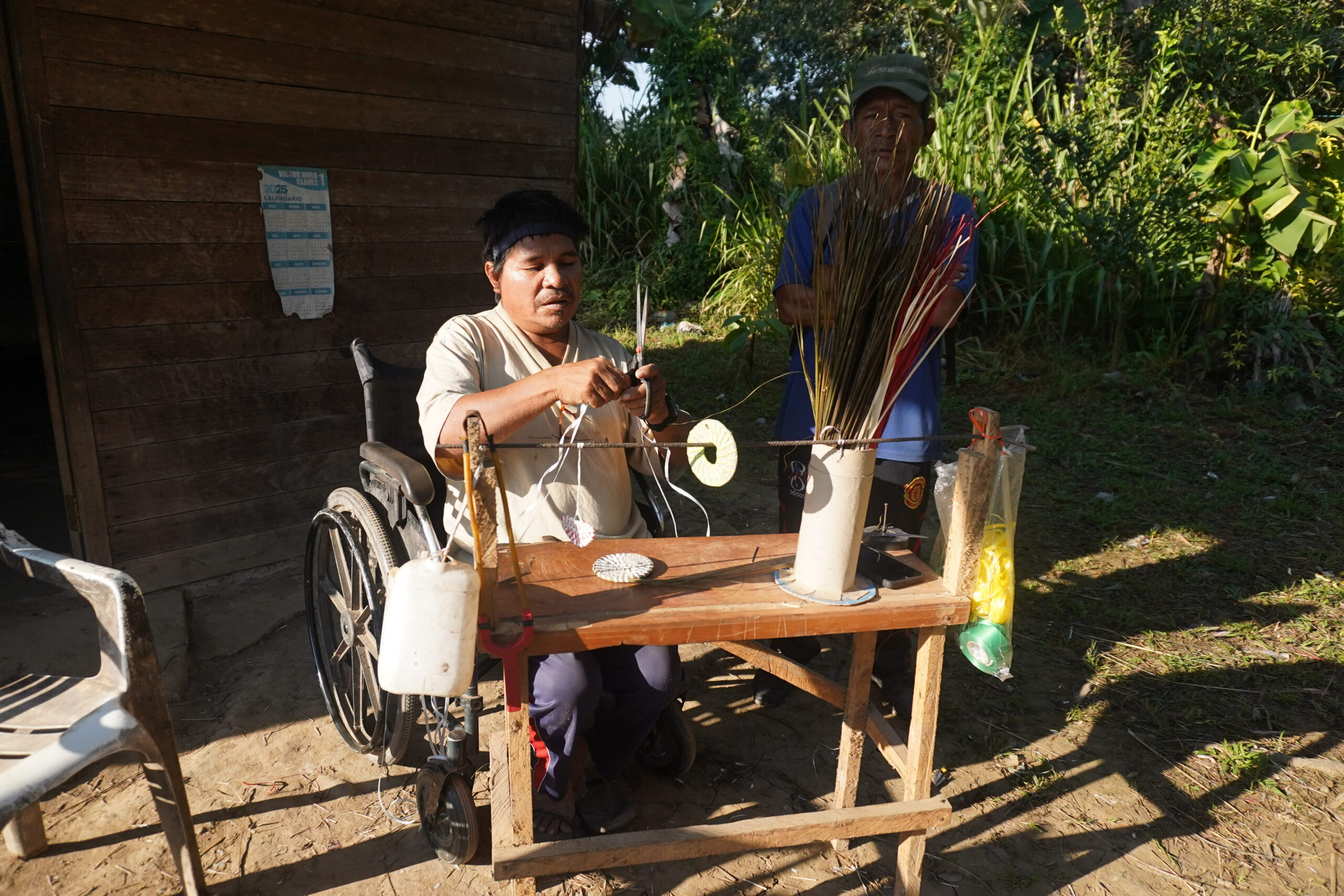
The former health official detailed that those brigades reached the Beni River and that the results were not good. She admitted that Indigenous residents have a certain degree of contamination but did not provide official results — as it must be presented by the new authorities of the Ministry of Health and Sports. The office has not provided any information since.
Meanwhile, Hermenegildo Leal, corregidor of Buena Vista, walks through his community until he reaches a path with a natural descent. It is a small passage leading to the Beni River. Two fishers are waiting for their reward. Leal shouts to them: “Did you catch anything?” he asks. They answer: “No.”
“There aren’t many fish around here; the little that is caught is for our consumption, and that little bit of fish is contaminated,” he remarks.
Life in the Indigenous communities settled on the banks of the Beni River continues the same — the pollution is the same, and the inaction of the Bolivian State follows it.
Banner image: In the Beni River, mining advances without control. Some residents engage in artisanal mining using mercury. The waters of this tributary are contaminated. Image by Javier Mamani.
The story is part of a special report and was also published in Spanish.
New analysis maps mercury threat to 951 Amazon communities in three countries
Copy editor: Jamie Forsythe
Citation: Tschirhart, C., Handschumacher, P., Laffly, D. … Bénéfice, E. (2012). Resource management, networks and spatial contrasts in human mercury contamination along the Rio Beni (Bolivian Amazon). Human ecology, 40(4), 511-523. doi:10.1007/s10745-012-9500-9
Cite this article
Iván Paredes Tamayo (2026). Mercury threatens over 160 communities in Bolivia’s Beni River basin. Mongabay Conservation news. DOI: https://doi.org/10.66709/news-327431


