

Close Menu
NCIJ Network NCIJ Network
    What's Hot

    ICE Has Been Dumping Protester Photos Into a Palantir Database

    October 3, 2026

    Warlock Expands SharePoint Exploitation in Critical Infrastructure Attacks

    October 3, 2026

    Absa Becomes First African Bank To Custody Bitcoin

    October 3, 2026
    Facebook X (Twitter) Instagram
    Trending
    • ICE Has Been Dumping Protester Photos Into a Palantir Database
    • Warlock Expands SharePoint Exploitation in Critical Infrastructure Attacks
    • Absa Becomes First African Bank To Custody Bitcoin
    • Long-Awaited Senate Deal to Speed Permitting Faces Familiar Hurdles
    • Climate Resilience Starts With Care by Caren Grown & Kendall Trelegan
    • What has happened to ‘Cornell 7’ after lawsuit accused them of rape?
    • Partner of Gypsy Rose Blanchard found dead in Louisiana home | Louisiana
    • Digested week: My heart sank at seeing Labour’s ‘Hope Again’ conference slogan. But then came Andy Burnham | John Crace
    • About
      • Our Team
      • Editorial Policy
      • Editorial Independence
      • International Support
    • Trust & Standards
      • AI Usage Policy
      • Conflict of Interest Policy
      • Corrections Policy
      • Ethics Policy
      • Fact-Checking Policy
      • Source Protection
    • Get Involved
      • Guide for Sources
      • Support Independent Journalism
    • Legal
      • Cookie Policy
      • Privacy Policy
      • Terms of Use
    Facebook X (Twitter) Instagram
    NCIJ Network NCIJ Network
    Saturday, October 3
    • Home
    • World
    • Ai
    • Business
    • Politics
    • Health
    • Crypto
    • Science
    • Technology
    • Cybersecurity
    • Defense & Security
    • Economy
    • Energy
    • Europe
    • More
      • Fact Check
      • Investigations
      • Opinion & Analysis
      • Environment
    NCIJ Network NCIJ Network
    Home»Opinion & Analysis

    Climate Resilience Starts With Care by Caren Grown & Kendall Trelegan

    NCIJ NETWNCIJ NETWORKBy NCIJ NETWNCIJ NETWORKOctober 3, 2026 Opinion & Analysis No Comments6 Mins Read
    Share
    Facebook Twitter LinkedIn Pinterest Email

    Climate shocks can disrupt services that millions of vulnerable people rely on, yet care is largely absent from adaptation plans and national funding estimates. Investing in climate-resilient care can prevent cascading health and economic crises while creating jobs and easing pressure on public budgets.

    WASHINGTON, DC—It is getting harder by the day to justify the slow pace of adaptation to climate change. Last year was one of the hottest on record, with economies and communities around the world disrupted by extreme heat, heavy rainfall, and tropical cyclones. As November’s United Nations Climate Change Conference (COP31) in Turkey approaches, governments must move beyond climate commitments and focus on implementation.


    1. Geography Photos/Universal Images Group via Getty Images


      What Killed Liberalism?

      Gene Frieda

      Governments have abandoned many of the economic ideas blamed for the populist backlash, yet support for populist parties continues to grow. This puzzle lies at the heart of two new books, both of which suggest that liberalism’s decline may outlast the economic forces that set it in motion.

      explains why neither stronger communities nor greater economic agency can turn back the populist tide.


    2. Graphs, clocks, and barcodes


      Neil Leslei/Getty Images


      The Dismally Obedient Science

      Carolina Alves

      While empirical inquiry has its place in economics, the pursuit of causality must not be allowed to displace the pursuit of explanation. Beyond identifying causal effects within existing arrangements, economists must investigate how those arrangements are produced, reproduced, and contested.

      warns that empirical research in economics is displacing investigation of underlying causes.


    3. A worker checking the main distribution board at the Digital Delta Data Center in Gaborone, Botswana.


      Li Yahui/Xinhua via Getty Images


      Technological Leapfrogging in the AI Age

      Mark-Alexandre Doumba
      points out that development depends on building indigenous capacity, not mere access to imported innovations.


    Financing for adaptation activities remains nowhere near what is needed. The UN Environment Programme estimates that developing countries will need $310–365 billion per year through 2035, putting the current funding gap at $280 billion. Getting the money to where it can do the most good may be an even bigger challenge, as institutions struggle to identify adaptation investments that are ready to implement and whose risks can be properly assessed and priced.

    In a new working paper, we argue that estimates of funding needs and proposed investment pipelines overlook a critical piece of infrastructure: an ecosystem of climate-adapted care services that helps families prepare for, cope with, and recover from climate-induced hazards. Properly designed, these services can bolster household and community resilience. The same principle underpins investments in early-warning systems and adaptive social protections designed to help countries respond to climate shocks.

    Provisional estimates suggest that at least 35,000 excess deaths occurred across Europe during this summer’s severe back-to-back heat waves. Despite their well-developed welfare systems, the absence of climate-adapted physical infrastructure and coordinated services contributed to this excess mortality.

    Yet national climate-adaptation plans rarely account for what happens when care breaks down. Floods and wildfires displace families and separate caregivers from the people who depend on them. When household-based care is no longer possible, formal care can become a lifeline for older people and people with disabilities who cannot evacuate or manage on their own. Without reliable care services, health issues can lead to otherwise preventable hospital admissions, putting even more pressure on already strained services.

    As matters stand, family caregivers are left to shoulder the burden, facing injury and burnout during prolonged emergencies. Some, most of them women, are forced to leave paid work just when their families can least afford to lose income. When care systems fail, a climate shock can quickly become both a health and economic crisis. Strong care systems can prevent these cascading failures, making care a crucial part of climate resilience.

    Leaving care out of national adaptation plans thus means underestimating what climate resilience actually requires. Admittedly, anticipating those needs is difficult, as there is no standard definition of what qualifies as adaptation, and national estimates are often based on individual projects, most of them in conventional sectors.

    That sector-by-sector approach allows care to fall through the cracks. Agriculture, forestry, fishing, water supply, and sanitation account for nearly 40% of global adaptation finance, while health receives an estimated 4–6% and education around 2%. Long-term care and early-childhood care and education are essentially absent, particularly in low- and middle-income countries, where most care is provided informally.

    Despite being too low, the $310–365 billion figure is already baked into national plans and multilateral-development-bank targets. But as climate shocks intensify, people will need more care, not less. And when formal services fall short, unpaid caregivers—overwhelmingly women and girls—will end up filling the gap.

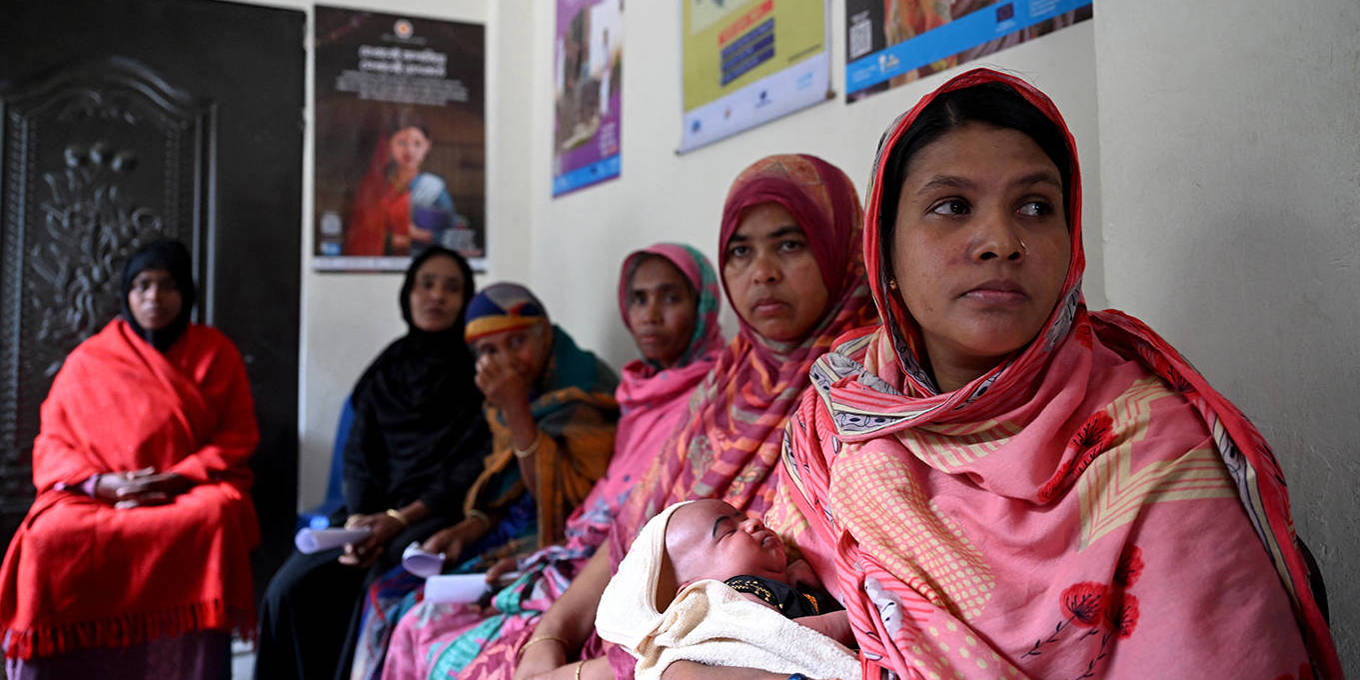
    Our paper proposes a way to begin correcting that omission. For example, we estimate that building climate-resilient care infrastructure in Bangladesh would require an investment equivalent to roughly 3–5% of GDP, similar to what is needed for health and education. This is a substantial investment, but only a fraction of the estimated value of unpaid care work.

    Building that care infrastructure would require millions of workers. We estimate that early-childhood care and education and long-term care could directly employ 3.6–7 million people in Bangladesh. More jobs would come from providing food and other supplies, as well as from building or retrofitting childcare facilities and homes for people receiving long-term care.

    Care services also give financiers a concrete way to put adaptation money to work. For starters, such investments come with an established evidence base—data on unit costs, staffing models, utilization, and outcomes—facilitating risk assessment. Some of these investments partially pay for themselves through tax revenue from higher employment and lower future spending on health and social protection. And demand is demographically guaranteed, since the need for care can only grow as populations age.

    As adaptation financing tightens, every dollar has to work harder. That makes it all the more important to invest in care systems that help communities withstand climate shocks while easing pressure on public budgets.

    care Caren climate Grown Kendall resilience starts Trelegan
    NCIJ NETWNCIJ NETWORK
    • Website

    Keep Reading

    How Sea Cucumbers Drive Crime From China to Mexico

    G-7 Agrees to Release Emergency Diesel Stockpiles to Rein in High Fuel Costs

    Europe’s Extreme Summer Triggered Cascading Climate Shocks

    Book Review: ‘Russia’s New Imperialism’ Examines the Sources of Moscow’s Wars and Violence

    Englishness is not defined by ethnicity | British identity and society

    Permafrost, wetland, wildfire and freshwater emissions could amplify climate change by up to 30%, study finds

    Add A Comment
    Leave A Reply Cancel Reply

    Editors Picks

    ICE Has Been Dumping Protester Photos Into a Palantir Database

    October 3, 2026

    Warlock Expands SharePoint Exploitation in Critical Infrastructure Attacks

    October 3, 2026

    Absa Becomes First African Bank To Custody Bitcoin

    October 3, 2026

    Long-Awaited Senate Deal to Speed Permitting Faces Familiar Hurdles

    October 3, 2026
    Latest Posts

    Lime bikes hurtling around the city: is this the revenge of a priced-out generation? | Andy Beckett

    August 8, 2026

    Clarity Act Delayed Until September, Trump Praises Bitcoin

    August 8, 2026

    North Carolina Ports confirms cyberattack disrupting operations

    August 8, 2026

    Subscribe to News

    Get the latest sports news from NewsSite about world, sports and politics.

    NCIJ Network is an independent digital news platform delivering trusted investigative journalism, European and global news, in-depth analysis, and fact-based reporting with accuracy, transparency, and integrity.

    Facebook X (Twitter) Instagram Pinterest YouTube

    ICE Has Been Dumping Protester Photos Into a Palantir Database

    October 3, 2026

    Warlock Expands SharePoint Exploitation in Critical Infrastructure Attacks

    October 3, 2026

    Absa Becomes First African Bank To Custody Bitcoin

    October 3, 2026

    Subscribe to Updates

    Get the latest creative news from FooBar about art, design and business.

    Type above and press Enter to search. Press Esc to cancel.