


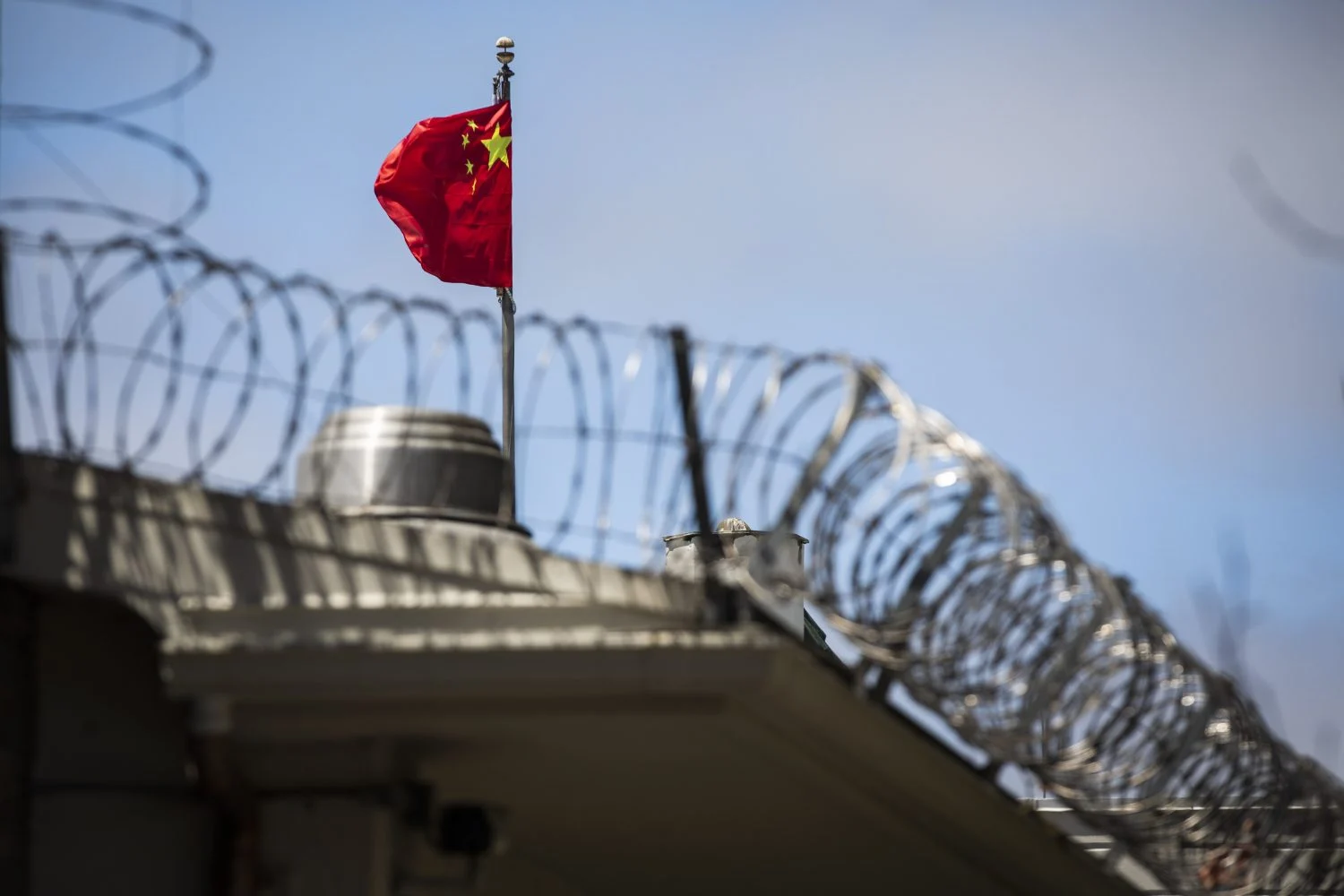
Since 2020, China has steadily expanded its economic security toolkit to counter Western trade and financial restrictions. What began as a largely defensive framework has evolved into a more assertive Chinese legal architecture designed to penalize companies and individuals for complying with foreign sanctions and export controls. Beijing has been especially eager to undercut Western policies of extraterritoriality, whereby various governments, most notably the United States, extend sanctions to foreign firms and individuals doing business with the primary sanctions target.
Beijing’s countermeasures now include the Export Control Law (2020), the Unreliable Entity List (2020), the Anti-Foreign Sanctions Law (2021), the Blocking Rules (2021), the Counter-Extraterritorial Regulation (2026), and the Supply Chain Security Provisions (2026). Taken together, these instruments mark a significant shift in the country’s approach. Beijing is systematically building mechanisms to resist Western extraterritoriality and replicate it with extraterritorial regulation of its own, thereby imposing its jurisdiction beyond China’s borders. The resulting legal environment puts foreign companies in a bind: They can face legal exposure in the West for violating Western sanctions—and in China for complying with them.
Since 2020, China has steadily expanded its economic security toolkit to counter Western trade and financial restrictions. What began as a largely defensive framework has evolved into a more assertive Chinese legal architecture designed to penalize companies and individuals for complying with foreign sanctions and export controls. Beijing has been especially eager to undercut Western policies of extraterritoriality, whereby various governments, most notably the United States, extend sanctions to foreign firms and individuals doing business with the primary sanctions target.
Beijing’s countermeasures now include the Export Control Law (2020), the Unreliable Entity List (2020), the Anti-Foreign Sanctions Law (2021), the Blocking Rules (2021), the Counter-Extraterritorial Regulation (2026), and the Supply Chain Security Provisions (2026). Taken together, these instruments mark a significant shift in the country’s approach. Beijing is systematically building mechanisms to resist Western extraterritoriality and replicate it with extraterritorial regulation of its own, thereby imposing its jurisdiction beyond China’s borders. The resulting legal environment puts foreign companies in a bind: They can face legal exposure in the West for violating Western sanctions—and in China for complying with them.
Designed as an instrument of self-defense, the Anti-Foreign Sanctions Law is central to this shift. Article 12 of the law gives Chinese individuals and entities a private right to sue another person or company that implements, or assists in implementing, foreign restrictive measures that harm Chinese interests. In practice, this allows Chinese counterparties to sue when foreign firms refuse to perform contractual obligations on the basis of sanctions or export-control risks.
The first reported case involving Article 12 arose before the Nanjing Maritime Court in 2024. After a Chinese offshore engineering contractor was listed by a foreign jurisdiction, its Swiss counterparty withheld almost $12 million in outstanding payments under a shipbuilding-related subcontract, citing sanctions concerns. The Chinese company obtained a preservation order from the court, arresting the vessel involved while allowing construction on that vessel to continue. Although the dispute was eventually resolved through court-brokered mediation after the Swiss company secured a U.S. sanctions exemption, the case demonstrated Article 12’s practical utility. It can be used to preserve Chinese assets and generate the leverage to bring foreign counterparties back to the negotiating table, even without a final judgment on the merits.
A second case before the Shanghai Maritime Court strengthened this trend. In 2025, the court ruled against a Singaporean shipping firm that had refused to deliver electronic goods to a Hong Kong manufacturer after learning that the company was on the U.S. entity list. The court held that the Singaporean company’s refusal to unload amounted to the implementation of “foreign discriminatory restrictive measures,” enabling the Hong Kong party to invoke Article 12. This June, China’s Supreme People’s Court included the case among six representative maritime cases that it published, signaling the importance of this jurisprudence and indicating how Chinese courts may approach similar disputes in the future.
Beijing has also begun to activate rules that block Chinese entities from complying with a range of foreign laws. Officially titled Rules on Counteracting Unjustified Extraterritorial Application of Foreign Legislation and Other Measures, this regime was inspired by the European Union’s blocking statute, with which Brussels made it illegal for EU companies to comply with certain U.S. sanctions laws. The EU statute only prohibits compliance with the specific U.S. laws listed in its annex, whereas China’s Blocking Rules are much broader in scope. They can be triggered by a wider assessment of whether a foreign law violates international law or its basic principles; affects the country’s sovereignty, security, or development interests; or harms the rights and interests of Chinese citizens and entities.
In May, Beijing triggered the Blocking Rules for the first time when it prohibited five Chinese petrochemical companies from complying with U.S. sanctions for their alleged purchases of Iranian oil. The move was carefully calibrated. The targeted teapot refineries, including Hengli Petrochemical Refinery, have limited exposure to the U.S. financial system and largely operate domestically, including through nondollar payment channels—all of which reduced the risk of immediate blowback for Beijing while allowing it to test the legal and political potency of the Blocking Rules. The more serious test will come when the new rules are applied to larger, more globally integrated firms.
The Counter-Extraterritorial Regulation marks another escalation. Unlike the Blocking Rules, which are primarily designed to shield Chinese companies and citizens from the extraterritorial application of foreign laws, the Counter-Extraterritorial Regulation allows Beijing to assert its own jurisdiction over foreign conduct with a “reasonable connection” to China. This marks a shift from defensive blocking to proactive assertion of jurisdiction beyond the country’s borders. In practice, it could allow Beijing to extend Chinese decisions abroad where foreign actions are deemed to affect Chinese companies or interests.
In May, China’s Ministry of Justice issued its first formal determination under the new regulation. It found that the European Commission’s anti-subsidy investigation into Chinese security company Nuctech under the EU Foreign Subsidies Regulation amounted to improper extraterritorial jurisdiction. The dispute illustrates a broader jurisdictional clash. From the EU’s perspective, the European Commission’s information request was directed at Nuctech’s EU entities, which are incorporated in EU member states and thereby subject to EU law. From Beijing’s perspective, the request improperly reached into China because the relevant data was stored on the parent company’s servers in China.
In all three cases, Chinese regulations exacerbated the risks of running into conflicts between Western and Chinese law for companies operating in China, with Chinese counterparties, or with Chinese-controlled data and supply chains.
Chinese companies now have legal avenues to challenge compliance with foreign measures. The Counter-Extraterritorial Regulation, for example, allows the Chinese government to take “necessary measures” against persons complying with foreign measures that are deemed improper, including restrictions on business with Chinese entities. Chinese citizens or organizations that suffer losses from such compliance can sue for damages in Chinese courts. This makes China’s own Communist Party-controlled courts a central part of the country’s economic lawfare.
With its insistence on jurisdiction by its own regime-controlled courts, China appears to be borrowing from Russia’s playbook. Since 2020, Moscow has channeled sanctions-related disputes into Russian courts, producing predictable outcomes that often disregard contractual clauses for resolving disputes. Beijing’s approach goes in a similar direction: Domestic courts are being mobilized to blunt foreign sanctions and project Chinese law into cross-border commercial disputes.
Two recent cases involving global banks illustrate the risks. In February, HY Energy Group, a Chinese energy company, sued Citigroup in a Shanghai court—and a month later, JPMorgan Chase in a Beijing court—over frozen payments linked to the banks’ concerns about breaching U.S. sanctions. HY Energy disputed the timing and legal basis for the freezes, arguing that the relevant sanctions risk arose only later. The litigation remains ongoing, but the cases illustrate the precarious position of international firms caught between U.S. sanctions obligations and Beijing’s countermeasures. Although the disputed amount is modest ($40.5 million) and the case has yet to be decided, the precedent of being sued for sanctions de-risking could be significant for multinationals operating in or with China.
Multinationals can thus no longer assume that overcompliance with U.S. or EU law is the safest option. For years, companies avoided sanctions risk by refusing transactions or terminating contracts, especially when potential U.S. sanctions exposure was involved. The dominance of the dollar and long arm of U.S. enforcement made this a rational calculation. China’s expanding framework of countermeasures changes that calculus. Overcompliance with Western measures may now trigger Chinese legal exposure if Beijing views the conduct as implementing “foreign discriminatory restrictive measures.”
China’s extraterritorial jurisdiction differs from the United States’ in important ways. Washington’s leverage rests on the centrality of the U.S. dollar and financial system as well as U.S. technological leadership. These give U.S. sanctions and export controls unusually broad reach. China does not yet possess equivalent financial leverage. Instead, Beijing is developing chokepoints in other domains, particularly critical minerals, supply chains, market access, and data. These chokepoints aren’t as ubiquitous as the dollar system, but they are powerful in sectors where China holds a dominant position.
At the same time, China is seeking to reduce its vulnerability to financial coercion by promoting alternative payment channels and the internationalization of the Chinese yuan, including through its CIPS payment system, a Chinese alternative to SWIFT; mBridge, the multilateral central bank digital currency platform; and pilot schemes for a digital yuan. These efforts do not yet rival the reach of the dollar system, but they form part of a broader strategy to constrain Western leverage while increasing Beijing’s ability to impose its own.
China’s countersanctions framework operates cumulatively. A single business decision—such as terminating a contract with a Chinese supplier to comply with U.S. export controls—could potentially trigger multiple forms of exposure: inclusion on China’s Unreliable Entity List, measures under the Anti-Foreign Sanctions Law, scrutiny under the Blocking Rules, investigation under the Counter-Extraterritorial Regulation, and civil lawsuits by the affected Chinese party. Beyond the usual administrative penalties, some instruments also raise the possibility of personal liability, which increases exposure for executives and legal representatives in China.
Until recently, adding broadly drafted sanctions clauses to business contracts was the go-to mechanism for companies to shield themselves against risks. With China’s expanding extraterritorial reach, sanctions clauses may not always work: Following the Shanghai Maritime Court decision, a company may not be able to rely on a contractual clause as a valid defense for nonperformance or termination where a Chinese court views that conduct as implementing foreign restrictive measures against a Chinese counterparty. The validity of contracts is now being tested by mandatory rules imposed by competing sovereigns.
European companies face a particularly difficult position. Many already navigate overlapping EU and U.S. sanctions regimes. China’s framework adds a third jurisdiction pulling in another direction. The EU blocking statute was designed to shield European companies from the extraterritorial application of third-country laws, but in practice, it has offered limited protection. It is even less likely to provide an easy answer to Chinese enforcement risk, especially where companies have assets, personnel, counterparties, or data in China.
The EU can draw lessons from its experience with Russia. Its more recent sanctions packages have strengthened tools to resist retaliatory proceedings, prevent enforcement of Russian court judgments rendered in breach of agreed dispute-settlement mechanisms, and allow EU residents and entities to recover losses arising from such proceedings. Similar defensive mechanisms may become increasingly relevant in the China context.
The result is a new compliance reality. Multinationals are increasingly trapped between competing sovereign demands: Western governments require compliance with sanctions, export controls, and investigative measures, while China threatens penalties or litigation for conduct that it views as submission to unjustified foreign restrictions. The key question for companies is no longer simply whether they are exposed to U.S. or EU sanctions risk. It is whether any response to that risk creates liability in China.
