


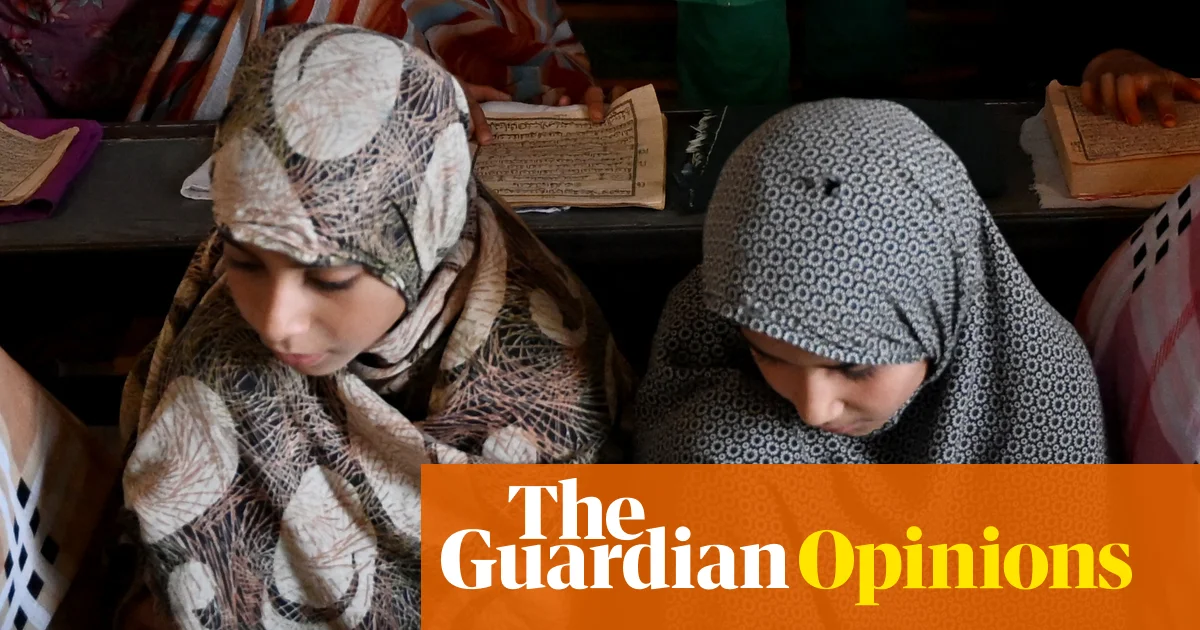
Next weekmarks the fifth anniversary of the takeover of Afghanistan by the Taliban as US coalition troops were evacuated from the country. That’s five years for the terrorists to have consolidated their grip, so now is a good time to reflect on what the “coalition of the willing” left behind.
Through vindictive edict after edict, these five years have brought an ever-escalating repression of Afghan girls and women – with far too little done by any outside authority to speak up or stand up against the most egregious denial of girls’ rights in the world today.
Barely reported was the shocking massacre in June by troops who fired on a group of women’s rights protesters as they demonstrated against girls’ exclusion from education and the enforcement of strict dress codes. They were marching under the banner “Azadi”, meaning “freedom”. Two people, including a young boy, were shot dead and several were injured.
In the most medieval of ways, the Taliban are also imposing even harsher laws to legitimise child marriage and provide legal exemption for domestic violence perpetrated by husbands, including against school-age girls.
According to UN observers, these girls, often sold into marriage or forced to become child brides, are victims of a new form of crime: gender apartheid. Historians will look back and ask why it is that, after landing more than 1 million coalition troops, suffering more than 3,500 deaths and 23,000 injuries and spending in excess of $1tn, we have been unable to prevent the Taliban destroying the most basic of rights. But perhaps more important, and with the Taliban entrenched in Kabul and religious leaders regularly sending out instructions from Kandahar, the question for now is: what can we do immediately to improve the lives of girls and women?
Can we help them fulfil their potential? Globally, the proportion of women aged 20-24 who were married before 18 has declined over the past decade, and Unicef suggests at least 25m child marriages that could have involved school-age brides have been prevented. Yet an estimated 12 million girls under 18 are still married off each year when they could be at school.
The issue is acute in the Afghanistan the coalition left behind, where girls are banned from secondary schooling and Afghan women are banned from university, public sector employment and even work with NGOs and charities. They are forbidden to travel or to enter many public places, from parks to restaurants, unless accompanied. And with the Taliban confident that they can act with impunity, a dozen recent anti-girl, anti-women injunctions are tightening their grip. In one recent case, a 15-year-old Afghan girl is reported to have been killed, along with her mother, by a Taliban official after he tried to abduct her for a forced marriage.
It is appalling, and it does speak to the particular brutality of the Taliban. Pakistan’s Sindh province, by contrast, has enacted one of the strongest legal frameworks in the developing world against child marriage, criminalising marriage under 18 and introducing penalties for those who facilitate it.
Bangladesh, too, has enacted new laws. A stronger birth registration system has made it harder to conceal a girl’s age, closing off a common pathway into early marriage. At the same time, programmes providing small-scale financial support to poor families have enabled girls to remain in education. Save the Children reports that in one programme in Bangladesh, the offer of financial support helped more than 1,000 girls stay in school and avoid early marriage. Child marriage is not simply a cultural practice, as often portrayed. It is also driven by poverty, as much as weak enforcement of the law.
There are “child marriage-free zones” in parts of Pakistan and Bangladesh, where young people come together to support any school friend who is being married off against her will. Young people become known as “wedding busters” because of their willingness to intervene. With assistance and will, so much is possible.
It is no accident that the Taliban have focused so much attention not just on denying women rights but specifically on denying them an education, because they know, as we do, that schooling is the most potent enabler. Across the world, it is the single most powerful protection against early marriage. Organisations such as Girls Not Brides have established that every additional year a girl spends in secondary education significantly reduces the likelihood that she will be married as a child.
If we could open the doors to quality schooling, ensure girls had access to safe spaces and provide financial support for their families, tens of thousands more could get that education. Even in Afghanistan, that is no pipe dream. Through Unicef and Education Cannot Wait, and with secret, on-the-ground support, girls are learning in unconventional ways: often online, sometimes in underground schools or in family homes, unseen by the authorities.
after newsletter promotion
But there is so much more to be done, not least because thousands of girls have had to leave the country to obtain schooling, and with tension rising between Afghanistan and Pakistan, one favoured route out of the country is fast closing.
Britain’s home secretary, Shabana Mahmood, has announced that under the new immigration and asylum bill, there will be two routes under a refugee resettlement scheme for students that could help girls get the education they have been denied. The first is through recognised charities sponsoring girls coming to the UK. The second is through colleges and universities offering scholarships.
That’s good, but we must go further. I believe a fund must now be set up in support of Afghan girls who are threatened with being married off against their will. It should offer them bursaries to continue their education, if necessary outside their home country. And as UN special envoy for education, I am happy to work with any charity or educational institution that wants to assist girls in defence of their human rights.
It may be a small gesture, but five years after they were condemned to Taliban rule, isn’t it time to truly support all the girls who risk their freedom and their lives for an education, and the hope of a meaningful existence? They yearn for things we take for granted. It is our moral duty to help them.
