


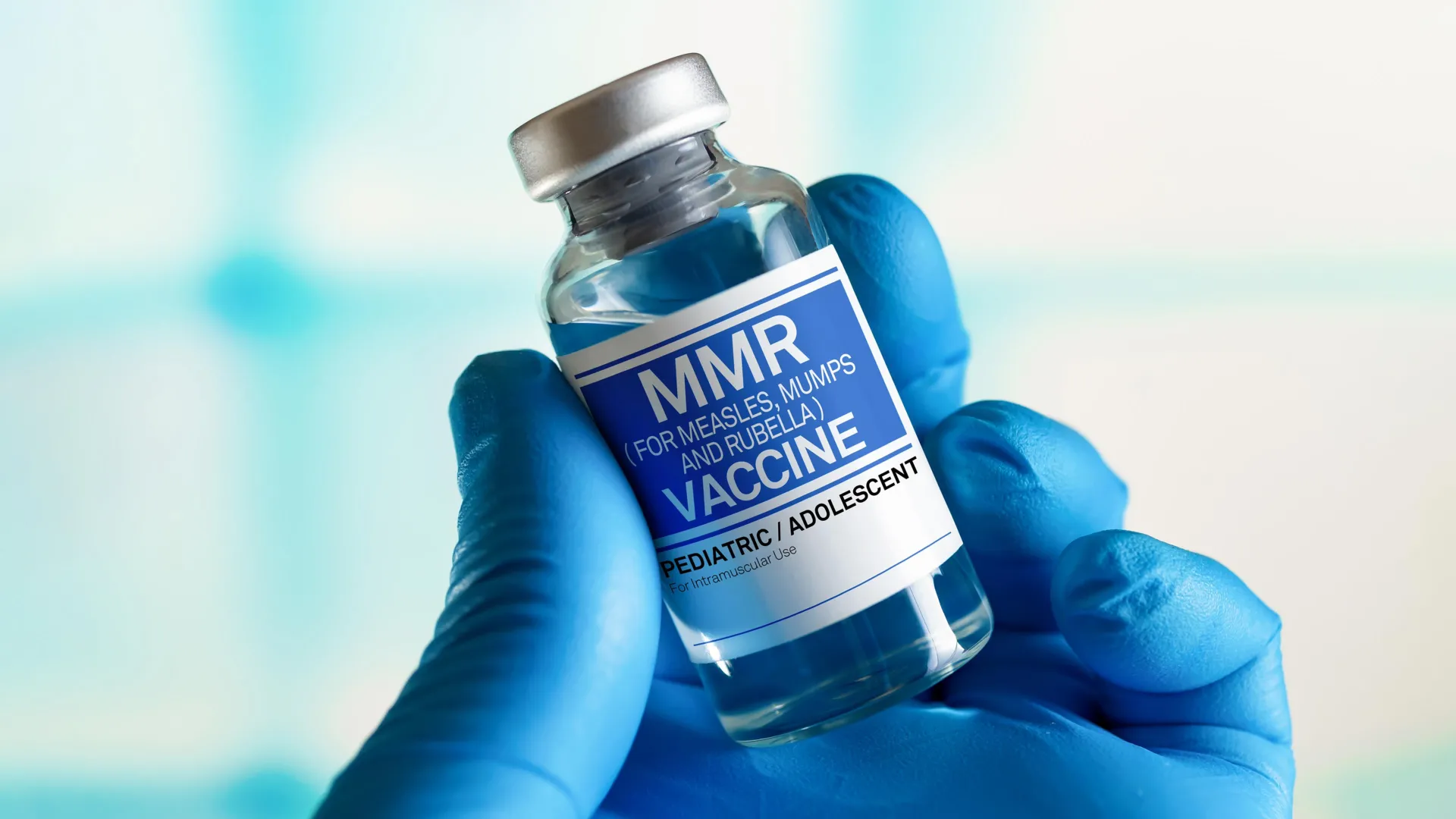
The United States has lost its measles elimination status after more than 25 years, marking a major setback in the fight against a highly contagious disease. At the same time, a new nationwide survey from the Annenberg Public Policy Center (APPC) reveals that many Americans remain confused about the dangers of measles and the vaccines that protect against it.
The United States first achieved measles elimination status in 2000. This designation meant that no strain of the virus had spread continuously within the country for 12 months or longer. However, on Nov. 17, 2026, the Pan American Health Organization confirmed that the United States no longer qualified for that status.
The announcement comes during the country’s worst measles resurgence in decades. According to the Centers for Disease Control and Prevention (CDC), the United States had recorded 5,412 confirmed cases in 2026 as of Nov. 12. That is more than twice the 2,290 cases reported throughout all of 2025.
Vaccine Myths Persist Despite Decades of Scientific Evidence
A November 2026 Annenberg Science and Public Health (ASAPH) survey, conducted using adults from the SSRS Omnibus survey, highlights widespread misunderstandings about childhood vaccination. Nearly two-thirds of Americans (64%) correctly rejected the claim that “vaccines given to children for diseases like measles, mumps, and rubella cause autism.” However, 17% believed the claim was true, while another 19% said they did not know whether it was true or false.
The results closely resemble findings from earlier APPC research. Across four surveys involving a separate sample of U.S. adults (September 2024 to August 2026), the ongoing ASAPH national probability survey found that 65% to 68% correctly rejected a connection between childhood vaccines and autism (65%-68%). Another 12% to 14% incorrectly believed there was a connection (12%-14%), while 19% to 22% remained uncertain.
The latest survey also asked respondents to compare autism rates among fully vaccinated and unvaccinated children. Nearly half (49%) believed both groups were “about as likely” to show signs of autism. Another 11% thought fully vaccinated children were “more likely” to show signs, 14% believed they were “less likely,” and 26% could not say.
Extensive scientific research has found no evidence that vaccines cause autism. In 2004, the National Academy of Medicine (then named the Institute of Medicine) concluded that “the body of epidemiological evidence favors rejection of a causal relationship between the MMR vaccine and autism evidence.”
The World Health Organization’s Global Advisory Committee on Vaccine Safety reached the same conclusion in 2025, reaffirming that high-quality scientific evidence does not establish a causal relationship between vaccination and autism. FactCheck.org, which is operated by the Annenberg Public Policy Center, has also challenged claims linking vaccines to autism, explaining that the evidence does not support them.
These misconceptions may have consequences for vaccination decisions. Previous Annenberg research found that people who accept false vaccine claims, including the belief that the measles, mumps, and rubella (MMR) vaccine causes autism, are less likely to recommend MMR vaccination to people who are eligible to receive it.
Only 9% of Americans Know How Deadly Measles Can Be
The survey uncovered another striking knowledge gap. Most Americans appear uncertain about the risk of death associated with measles in children.
When asked how many children infected with measles are likely to die from the disease, 59% of respondents said they did not know. Just 9% selected the correct response, “about 1 in 1,000,” which most closely matches the CDC’s estimate that 1 to 3 of every 1,000 infected children die from respiratory or neurological complications.
Nearly one-quarter of respondents (23%) underestimated the death rate, while another 9% selected a higher rate.
Knowledge about measles vaccination was also limited. Almost half of Americans (49%) said they were unsure how many doses children need for full protection. Only about one-third (34%) correctly identified the recommended two-dose schedule.
The CDC advises giving children their first MMR vaccine dose between 12 and 15 months of age, followed by a second dose between ages 4 and 6. According to CDC data, a single dose provides 93% protection against measles, while receiving both doses increases effectiveness to 97%.
Public Confidence in Robert F. Kennedy Jr. Remains Low
The survey also examined Americans’ trust in U.S. Health and Human Services Secretary Robert F. Kennedy Jr. The findings indicate that public confidence in his health-related communications has changed little since earlier surveys conducted in 2025 and 2026.
In November 2026, about six in 10 respondents (61%) said they were not confident that Kennedy was providing trustworthy information about public health. The remaining four in 10 (39%) expressed confidence in the information he provides.
These results are consistent with seven earlier national probability surveys conducted over two years (February 2025 to August 2026). During that period, 60% to 63% of respondents reported lacking confidence in Kennedy, while 37% to 39% expressed confidence.
Kathleen Hall Jamieson, director of the Annenberg Public Policy Center’s Science of Science Communication Institute and its ASAPH and ASK surveys, said the loss of measles elimination status demonstrates the consequences of declining vaccination coverage.
“The announcement that the U.S. has lost its measles elimination status confirms what we already knew,” said Kathleen Hall Jamieson. “Those who refused the MMR vaccine for themselves or their children and those who misled them into doing so have produced the tragic effects that science predicted would occur when community immunity dropped below the threshold needed to protect those who are not able to be vaccinated or refused to be.”
How the National Measles Survey Was Conducted
The findings draw on two types of Annenberg Science and Public Health (ASAPH) surveys.
The November 2026 results come from a nationally representative survey of 1,028 U.S. adults conducted for APPC by SSRS, an independent market research organization. Participants were selected from the company’s probability-based online opinion panel, and responses were collected Nov. 6-8, 2026. The survey has a margin of sampling error (MOE) of ± 3.5 percentage points at the 95% confidence level.
The other findings come from APPC’s ongoing ASAPH panel surveys, which are also administered by SSRS. Participants were originally recruited through probability sampling from the SSRS Opinion Panel, and their responses are weighted to reflect the U.S. adult population. This research panel operates separately from the SSRS Omnibus survey and has completed more than 30 survey waves since April 2021.
Percentages are rounded to the nearest whole number, so totals may not always equal 100%.
Additional results are available in the survey topline, which includes data from both the November 2026 omnibus survey and the ongoing ASAPH panel surveys. A separate methodology statement provides further details about the latest survey.
Since April 2021, the Annenberg Public Policy Center has used its Annenberg Science and Public Health (ASAPH) research program and separate national samples to monitor Americans’ knowledge, attitudes, and behaviors related to vaccines, Covid-19, influenza, RSV, and other important health issues.
The APPC health survey team includes Ken Winneg, managing director of survey research; Laura A. Gibson, research analyst; and Patrick E. Jamieson, director of the Annenberg Health and Risk Communication Institute.
