


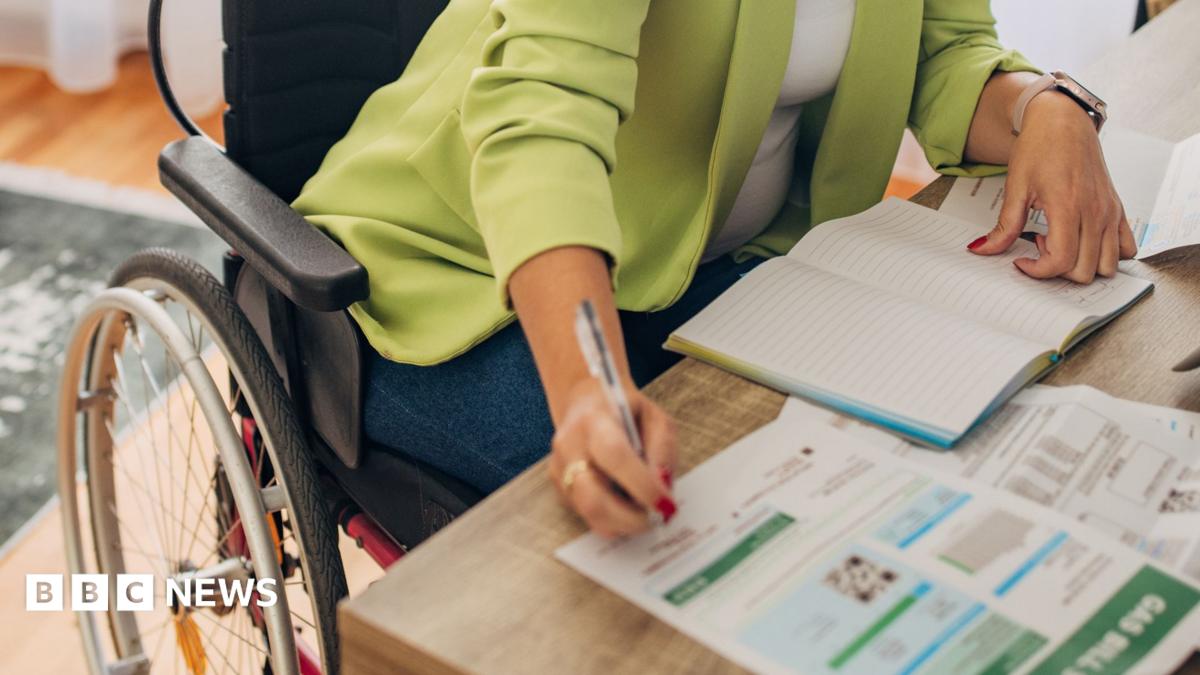
Alicia Cartwright in Preston receives the higher rate of Pip for both the daily living and mobility components, which she says equates to about £500 every four weeks.
The mum-of-two, a trained benefits adviser, told the BBC that even she found the current assessment process “intimidating and confusing”.
“Trust disabled people to know what their needs are. Of course, have some checks in there, absolutely, but we really need to start from a place of trust.
“Currently, in any dealings with the benefits system, you feel like you’re on trial, and for a lot of people, asking for help is difficult in the first place.”
Cartwright is a power wheelchair user and works several part-time jobs at a university. She says the costs of her disabilities run to a further £1,500 a month which she has to pay out of her wages.
“The mobility part of it, that goes on paying for my wheelchair. And then the rest of my Pip goes entirely on paying someone to help me around the house,” she said.
Matt Ryder from the Adam Smith Institute, a free-market think tank said disability claims had risen fastest amongst young people “who are the least likely to be become seriously ill as a result of the pandemic”.
“We need to target lower-level mental health claims. That seems to be the root cause of the rising claims, so we need to restrict eligibility for that,” he said.
“It’s where the cost is heading… According to the OBR, we can expect that spending on Pip will rise to £47bn in five years’ time. And there’s no reason why it would stop at that point. Why wouldn’t it continue on growing?”
Research last month from the Resolution Foundation, a think tank focused on lower and middle earners, suggested about one in six Pip recipients said they didn’t incur any extra costs due to their disability.
It suggested removing Pip from this group would save up to £4.4m a year.
Lindsay Judge from the Resolution Foundation said although the Timms Review did not set out to cut costs, this “should be possible nonetheless” and that “major change is needed”.
She said improvements should include assessments that “better understand disabled people’s needs” as well as awards in the form of cash or services that “better reflect the actual costs that disabled people face” as well as “more regular light touch check-ins so that changes of circumstances are fully understood”.
The review’s proposals will be put forward by a steering group, led by Sir Stephen, which the government will respond to.
The disability benefit system is devolved in Scotland and will not change in line with England and Wales, but the Timms Review could impact the funding the Scottish government receives.
Disability benefits are also devolved in Northern Ireland, but in practice it reflects any changes made to the system in England and Wales.
