


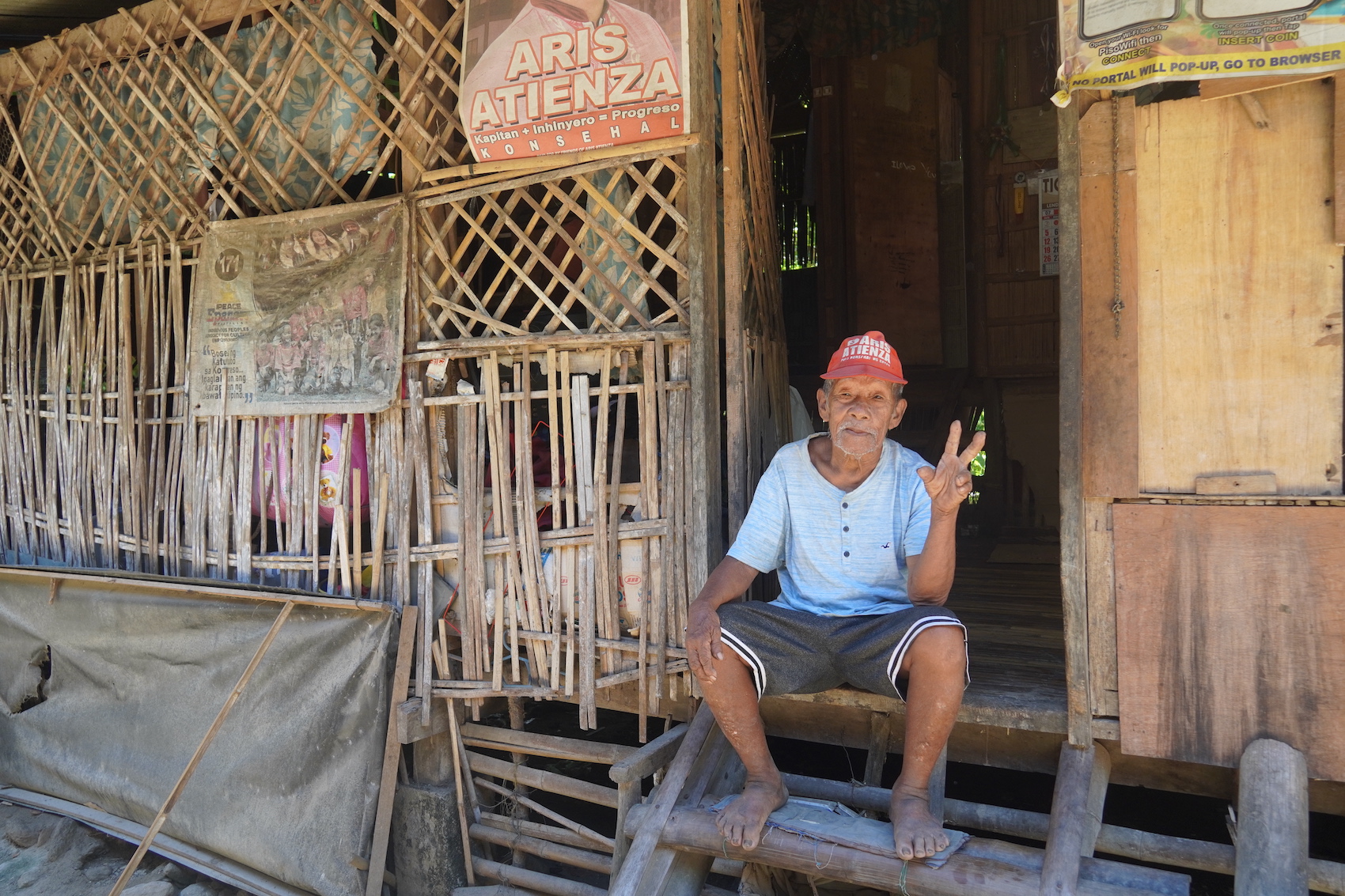
- The Mindoro Forest and Biodiversity Conservation Programme combines Indigenous forest patrols, ancestral-domain support, carbon monitoring and livelihood projects to protect more than 40,000 hectares (nearly 99,000 acres) of Iraya Mangyan forest.
- Indigenous patrollers and local officials say the program has already strengthened monitoring and helped reduce timber poaching and small-scale mining, while surveys have documented hundreds of plant and animal species across the project area.
- Community nurseries and paid conservation roles are creating early livelihood opportunities, but many benefits remain limited and uneven while the project awaits verification, a finalized benefit-sharing agreement and carbon revenue expected no earlier than around 2029.
- Whether the program can deliver lasting benefits will depend on finalizing a transparent revenue-sharing agreement, sustaining patrols and livelihoods during the long wait for carbon income, and ensuring the Iraya retain a meaningful role in decisions over their forests.
PUERTO GALERA, Philippines — Before sunrise, Bernito Pampilo shoulders a backpack carrying a mobile phone, flashlight and enough food — he hopes — for a day’s patrol through the forests of Puerto Galera in northern Mindoro, about 120 kilometers (75 miles) south of Manila.
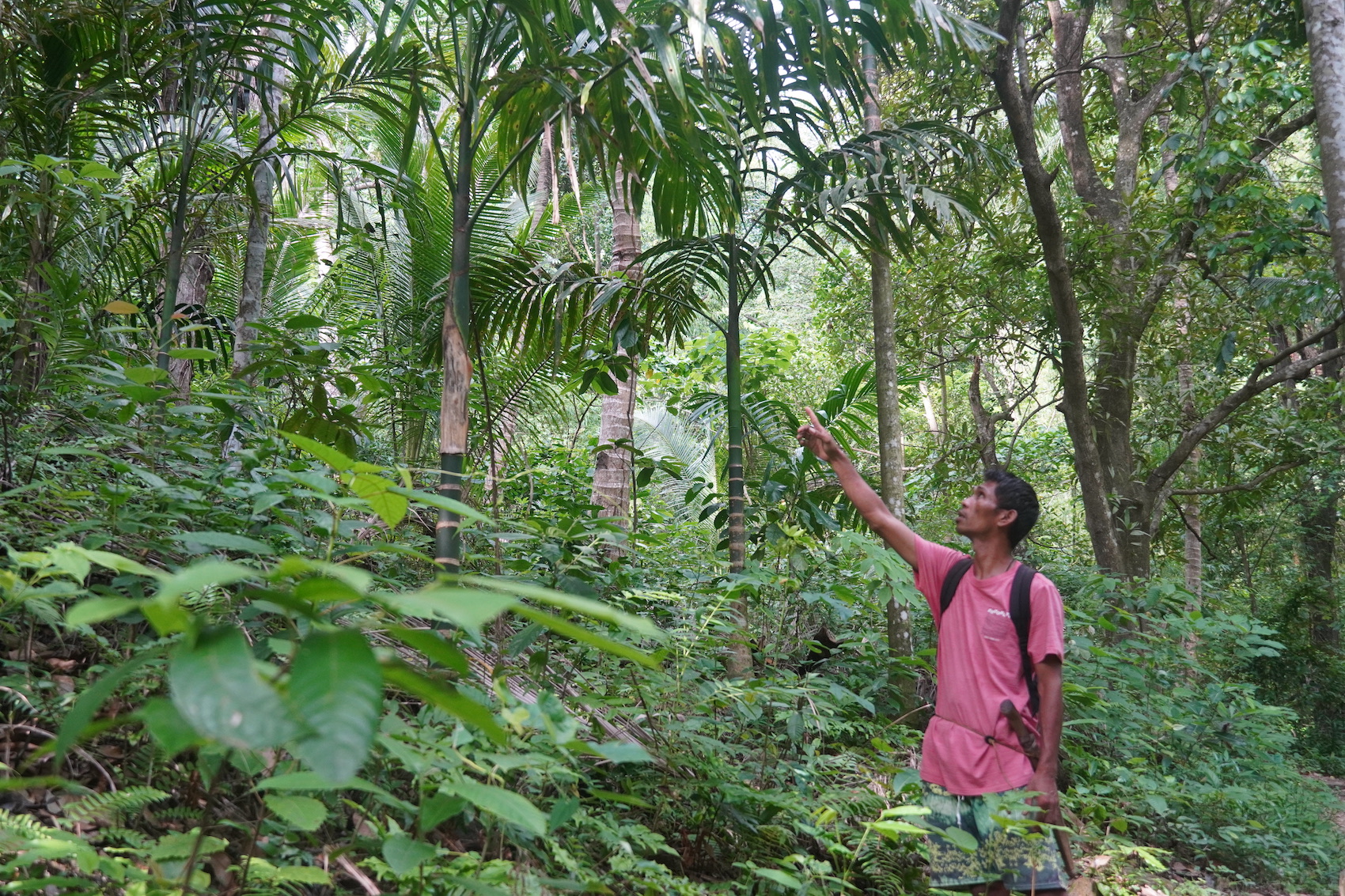
By around 6 a.m., the 56-year-old Iraya Mangyan patroller and two companions leave their mountain outpost in Aninuan village after praying to Apo Iraya, the creator, for protection. Their route crosses rivers, steep ridges, dense vegetation and deep natural holes known locally as balahaw.
“If you walk too quickly, sometimes you won’t see the hole,” Pampilo told Mongabay. “If you fall into it, you could die.”
Some patrols continue into the night, forcing the team to cross rivers and climb ridges by flashlight. Mobile apps point them toward assigned coordinates, but not toward the safest path.
The forest lies within the 14,661-hectare (36,228-acre) Puerto Galera Biosphere Reserve, designated by UNESCO in 1977.
For Pampilo, the work is more than a job. It is part of an effort to protect forests his community has depended on for generations while testing whether an international climate mechanism can deliver lasting Indigenous benefits.
Led by the Center for Conservation Innovations Philippines Inc. (CCIPH), the Mindoro Forest and Biodiversity Conservation Programme (MFBCP) aims to conserve more than 40,000 hectares (nearly 99,000 acres) of ancestral forest, while supporting about 2,500 Iraya Mangyan households. Running from 2020 to 2049, it combines ancestral-domain recognition, carbon monitoring, Indigenous patrols and livelihood projects under the United Nations-backed REDD+, which stands for Reducing Emissions from Deforestation and forest Degradation and rewards efforts doing just that.
Locals and officials say the program is beginning to reduce threats to the forest and its biodiversity. But the promised benefits from carbon credits remain unrealized, with key agreements, independent verification and revenue still pending.
From protecting forests to protecting rights
For decades, Philippine conservation has relied on establishing protected areas and deploying forest rangers to deter logging, mining and land conversion. But these measures often fail to address the underlying pressures driving forest loss.
CCIPH designed the Mindoro program around a different premise: Forests are more likely to endure when Indigenous communities have secure rights to govern their ancestral lands.
“A conventional ‘protected area plus rangers’ model polices the forest edge but doesn’t fix the underlying vulnerability,” CCIPH operations director Adryon Rozz Javier told Mongabay. “Without secured tenure, communities have no legal basis to exclude encroachers.”
Beyond carbon accounting, the project aims to support the delineation of two Iraya ancestral domains, strengthen Indigenous governance and train community patrollers to track illegal activity and ecological change.
Building trust took years. When CCIPH introduced the project in 2019, many Iraya Mangyan communities were wary, said Sonny Boy Vidal, a traditional leader involved in deciding which projects may occur in their ancestral lands. Some thought “carbon” referred to something outsiders planned to mine from beneath their ancestral land. Earlier conservation initiatives had also failed to deliver agreed-on benefits, reinforcing fears that the new project might bring more broken promises.
“That experience stayed in the minds of the Indigenous people,” Vidal told Mongabay. “They feared the same thing could happen again.”

Over three years, CCIPH and Indigenous leaders held consultations across the ancestral domain to explain the project and secure free, prior and informed consent.
“Without meetings, the project’s objectives cannot be explained in detail, and the people will not believe in it,” Vidal said.
Lisa Hartmann, a researcher with the United Nations University Institute for Environment and Human Security, who visited the site in May 2026 but is not involved in the CCIPH project, said purposeful engagement was possible because CCIPH had built trust through its long-term presence in the communities.
“Meaningful access to Indigenous knowledge isn’t something a short-term assessment can generate on its own,” Hartmann told Mongabay by email.
She said consultations in the local language, and the inclusion of women, youth and people with disabilities, helped capture perspectives beyond those of formal leaders alone.
The consultations led to a Certificate Precondition — proof of Indigenous consent issued by the National Commission on Indigenous Peoples — in August 2023, allowing the partnership to proceed.
For Vidal, however, consent meant more than approving a conservation project. “The project is for our descendants,” he said. “Trees would be protected, springs would be cared for, and our descendants would continue to benefit.”
CCIPH is also helping the Iraya secure their ancestral domain title and develop their Ancestral Domain Sustainable Development and Protection Plan, which will guide the management of their lands and resources.
Joan Yap, Puerto Galera’s municipal environment officer and biosphere reserve manager, said the plan is being aligned with municipal priorities while respecting Iraya governance.
“We really respect that there’s a different style of governance being implemented among them,” Yap said. “We have our terms, they have theirs. We meet halfway — not by saying, ‘Whether you like it or not, you have to do this.’”

Turning forests into carbon data
Pampilo is one of 53 Indigenous patrollers deputized by the government to monitor the ancestral forest, report threats and check the project’s carbon plots. For now, his modest salary is paid by MFBCP, through private donations.
Along his routes, Pampilo passes trees marked with numbered aluminum tags. Across more than 30 hectares (74 acres) of carbon plots, scientists have measured about 14,000 trees at least 5 centimeters (2 inches) in diameter. The network is expected to expand to 78 hectares (193 acres).
“If a typhoon comes, we can go back and check what happened to that tree,” Pampilo said.
Scientists measure the plots every five years to track growth, storm damage and tree loss. The data help estimate stored carbon and emissions avoided by preventing forest loss.
CCIPH estimates the project forests could prevent about 80,000 tons of carbon dioxide equivalent emissions (tCO2e) each year — roughly the annual emissions of 17,000 gasoline-powered cars — or about 3 million tCO2e over the project’s 40-year lifetime.
But collecting measurements is only the beginning.
CCIPH said the project has completed the carbon assessment required under Verra, the world’s largest carbon credit standard. Independent auditors must now confirm compliance, and credits can be issued only if future audits show the forest is being protected as planned.
Until credits are issued, the project remains dependent on donors.

The “mother” of needs
For Iraya leader Milan Sinduraan, however, the forest’s value is measured less in carbon than in water.
Hartmann said her team’s consultations found that climate change and human development were reducing access to water, food and medicinal plants, making Iraya families increasingly dependent on outside products. “Community members described families who used to gather at the river to catch shrimp together, passing down stories and knowledge in the process — an activity that has stopped entirely as the rivers dry up,” she said.
“The forest is the source of everything,” Sinduraan told Mongabay. “If the forest disappears, the water will disappear; the animals will disappear; and people will disappear, too.” He described the forest as the “mother” of the Iraya’s basic needs.
That connection became painfully personal in 2023, when Sinduraan’s two youngest children, ages 2 and 22 months, died from an amoebic infection that he believes was linked to contaminated water. With no potable supply, he said they collected water wherever they could, including near buffalo wallows.
The loss strengthened Sinduraan’s support for the program and its native-tree nursery. For him, forest protection is not only about carbon revenue, but also safeguarding water, wildlife and the next generation’s future.

Early conservation gains
The conservation program has strengthened Puerto Galera’s limited capacity to protect forests and wildlife within the UNESCO biosphere reserve. Yap said the municipality previously relied on just five forest guards and lacked the staff and expertise to monitor the wider area.
Trained Indigenous patrollers now document threats and send geolocated reports through CCIPH to municipal and enforcement authorities, enabling faster action.
“The response is very fast,” Yap said. “They send the real-time location to CCIPH, and CCIPH sends it to us.”
Yap said stronger monitoring has reduced small-scale mining and timber poaching from near-daily occurrences to minimal levels. Training has also encouraged residents to view standing forests as a potential source of carbon and ecotourism income rather than timber.
“Why would I burn a tree when I know I could still earn from it in another way? Why would I cut it down when I could earn from keeping it?” Yap said, describing the observed shift in residents’ mindset.
The stakes extend beyond carbon. CCIPH surveys have documented 517 species across the program area, including 134 animal and 154 plant species classified as rare, threatened or endemic.

Livelihoods and uncertain returns
While carbon revenue remains pending, the program employs 108 community members as patrollers and coordinators for livelihood, biodiversity and community engagement work.
It also supports two nurseries in Aninuan and Villaflor villages, where residents raise native seedlings for restoration and sale. By July 2026, workers had produced an estimated 14,000–15,000 seedlings.
The nurseries combine Iraya knowledge with technical training. Sinduraan said residents have long collected seedlings from long-lived mother trees and favored medicinal, broad-canopied or rare species. Training provided as part of the project refined those practices by teaching where to collect seedlings and how to improve their survival after transfer.
The seedlings are intended not only for sale but also for restoring degraded forests, particularly around water sources, so “the drying forest will return,” Sinduraan said. “The wildlife that has disappeared will also return,” he added. “They will once again have trees where they can live.”
Women do much of the daily work, including watering, collecting wildlings, filling bags and transplanting seedlings. Feli Sundalo starts around 4 a.m., preparing food for her family before walking to the nursery.
“For us, the hardest part is carrying the soil,” Sundalo said. “We are all women, and we collect it from across the river.”
Since the nurseries only began operating in March 2026, workers had received little or no regular income by the time of Mongabay’s visit.
The municipal government said it had provided agricultural livelihood support and planned to buy seedlings for public-private restoration initiatives. CCIPH also said an ecotourism trail is under development, together potentially creating an early seedling market and alternative income before carbon revenue arrives.
Carbon finance could provide larger, sustained support, but Indigenous leaders said the benefit-sharing agreement remains unsigned.
“We still need the final memorandum of agreement for the carbon component,” Vidal said.
CCIPH estimates revenue could begin around 2029, subject to registration and verification, and reach about $900,000 annually depending on carbon prices and verified credits. Half would cover registration, auditing and management, including the salaries of guards and nursery workers; the remainder would fund Indigenous community-identified priorities.
Hartmann said future carbon finance must account for the wider values communities derive from nature, rather than only what can be readily measured and sold.
“If future carbon finance is going to reflect what this community actually values, rather than only what’s easiest to monetize, that methodological work needs real investment,” she said. “Otherwise, the risk is that carbon accounting proceeds on its own track while the cultural and relational losses we documented stay invisible to the people designing the finance.”
Until then, the program remains largely donor-funded. Javier warned that delays could gradually erode momentum if benefits take too long to reach communities.
“The likeliest failure mode isn’t a dramatic collapse,” Javier said. “It’s patrol capacity thinning, encroachment resuming at the ancestral-domain edges, and land pressure pushing communities back toward vulnerability.”
For Pampilo, the work remains more immediate than any future carbon payment. “What is most important is protecting nature, especially the trees and wild animals,” he said. “We need to care for the trees so the vitality of nature can return.”
Elders, conservationists race to record fading sacred ties to Philippines’ endemic birds
FEEDBACK: Use this form to send a message to the editor responsible for this story. If you want to post a public comment, you can do that at the bottom of the page.

