


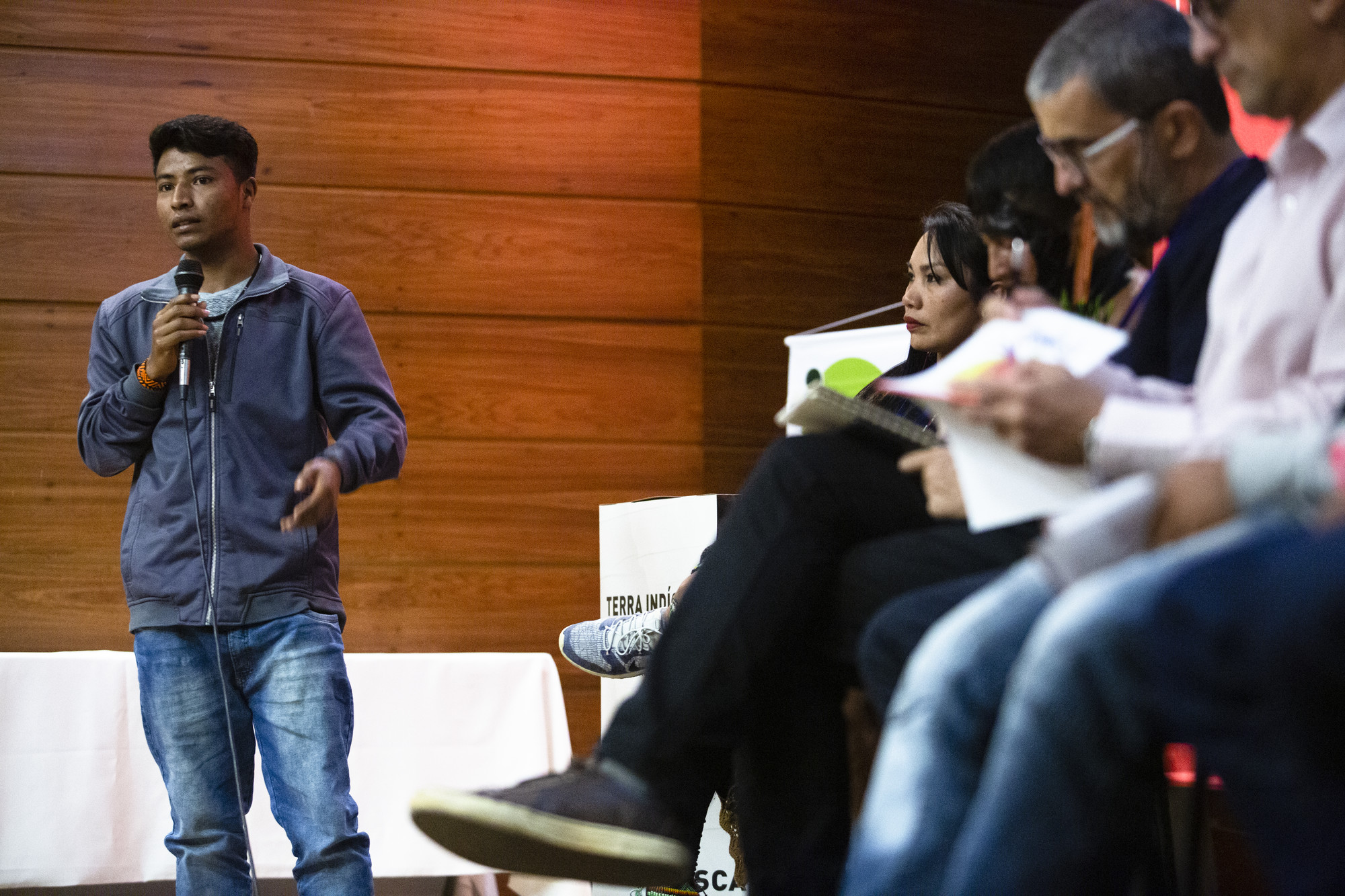
Seven Indigenous Guarani, including two children and a prominent community leader, were killed Aug. 14 in a crash with a grain cargo trailer that reportedly broke loose from the truck pulling it in central Brazil.
All seven were from Kalipety village in the Tenondé Porã Indigenous Territory in São Paulo state.
A fisher who witnessed the crash told police that the corn-filled cargo trailer detached from the truck and “violently” struck the passenger car, according to a police report seen by Mongabay. The force of the collision caused both vehicles to catch fire, killing everyone in the car and incinerating the bodies. The truck driver fled the scene of the accident, the witness said.
The bodies have not yet been officially identified but community members confirmed that the victims were Karaí Tiago Honório dos Santos, 34; his wife, Kerexu Laudiceia Benites, also a community leader, 31; their children, Jaxuka Luna Benites Santos, 7, and Tadeu Hiago Werá Mirim Benites dos Santos, 14; his sister, Kerexu Cleonice Honório dos Santos, 42; Ileo Benites, 32; and Genilson Euzébio Karay Mirim, 30.
Karaí Tiago Honório dos Santos was the executive coordinator of the Guarani Yvyrupa Commission and Guarani Inter-Village Committee, where he worked to further the rights of the Guarani and other Indigenous peoples in Brazil. He also spearheaded environmental recovery and agrobiodiversity efforts.
“[Tiago’s] journey was interrupted in such a brutal way, and what a sad coincidence that [it was] by a truck loaded with corn.” Tatiane Klein, an anthropologist and friend of Karaí Tiago who worked with him for more than a decade, told Mongabay by phone. “They were going to Mato Grosso do Sul to visit relatives and exchange traditional seeds that they cultivate in the Kalipety [Guarani village].”
According to Klein, he was a serious and generous leader with a collective approach to his leadership, often pushing others to speak and training younger leaders. She described him as both strategic and very hands-on.
In 2019, he led a campaign in which Guarani communities bought six shares valued at 17 reais each ($3 today) of Brazil’s largest railway operator, Rumo. The move granted them access to the annual shareholder meeting, where they challenged other shareholders on Rumo’s failure to deliver environmental and Indigenous protection commitments. The company’s railway expansion project affected 13 villages across five Indigenous territories.
Within a year, the Guarani committee signed an agreement with the company for environmental mitigation programs and compensation worth 68 million reais ($13 million today).
According to Klein, Tiago’s older sister Cleonice served on the Indigenous territory’s collective leadership council and was a key figure in the Guarani women’s movement. Laudiceia, Tiago’s wife, was a teacher in the community and worked to reinvigorate traditional knowledge on medicine and plants.
Mongabay reached out to Guarani leadership. They said they were grieving and not ready to speak publicly about the deaths.
Banner image: Karaí Tiago speaks at an event about community-based tourism based in 2019. Image courtesy of Rafael Hupsel via ISA
