

Close Menu
NCIJ Network NCIJ Network
    What's Hot

    What comes in the wake of Woke 1.0? | Inequality

    August 24, 2026

    Did Trump propose eliminating property taxes for some seniors?

    August 24, 2026

    How US sanctions on Iran ripple through global markets and consumers | Business and Economy News

    August 24, 2026
    Facebook X (Twitter) Instagram
    Trending
    • What comes in the wake of Woke 1.0? | Inequality
    • Did Trump propose eliminating property taxes for some seniors?
    • How US sanctions on Iran ripple through global markets and consumers | Business and Economy News
    • An ‘Economic D-Day’ That Must Overcome a Troubled History
    • Bitdefender VPN Review: Fast and Affordable Privacy
    • Fastino Releases GLiNER2.5: A Boundary-Prediction Architecture That Removes Span Enumeration From Information Extraction
    • The Outsized Shadow: Why 5% of AI Users Are Your Biggest Security Risk
    • Circle Gets $140 Target as Bernstein Eyes USDC Growth Cycle
    • About
      • Our Team
      • Editorial Policy
      • Editorial Independence
      • International Support
    • Trust & Standards
      • AI Usage Policy
      • Conflict of Interest Policy
      • Corrections Policy
      • Ethics Policy
      • Fact-Checking Policy
      • Source Protection
    • Get Involved
      • Guide for Sources
      • Support Independent Journalism
    • Legal
      • Cookie Policy
      • Privacy Policy
      • Terms of Use
    Facebook X (Twitter) Instagram
    NCIJ Network NCIJ Network
    Monday, August 24
    • Home
    • World
    • Ai
    • Business
    • Politics
    • Health
    • Crypto
    • Science
    • Technology
    • Cybersecurity
    • Defense & Security
    • Economy
    • Energy
    • Europe
    • More
      • Fact Check
      • Investigations
      • Opinion & Analysis
      • Environment
    NCIJ Network NCIJ Network
    Home»Environment

    Xokleng Indigenous people plant thousands of critically endangered pine in Brazil

    NCIJ NETWNCIJ NETWORKBy NCIJ NETWNCIJ NETWORKAugust 24, 2026 Environment No Comments3 Mins Read
    Share
    Facebook Twitter LinkedIn Pinterest Email

    The Xokleng Indigenous people of Santa Catarina state of southern Brazil have planted nearly a  100,000 seedlings of a critically endangered native tree, Mongabay contributor Letícia Klein reported.

    The Brazilian pine (Araucaria angustifolia), or araucária, can grow more than 50 meters (164 feet) tall and has a straight trunk with a broad crown of branches near its top. Araucária pine forests historically covered large swathes of southern Brazil, but their range declined by roughly 97% in the last century.

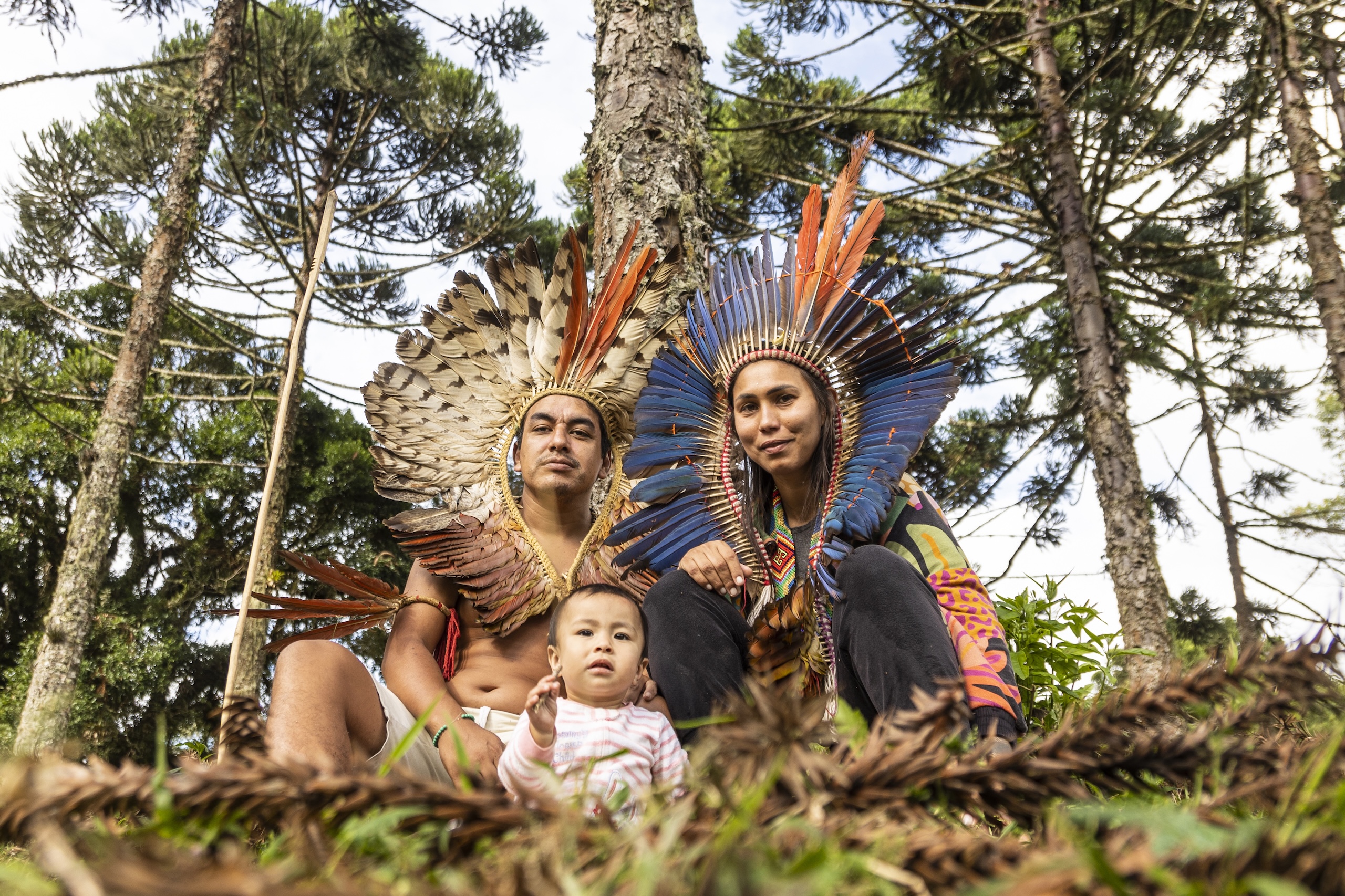
    “Just as our pine is endangered, my people are also endangered, and consequently our language and culture are endangered,” Carl Gakran, executive director of the Zág (pronounced zā) Institute, told Klein. The institute was founded in conjunction with Isabel Gakran, his wife, to organize and expand the replanting effort.

    Carl Gakran began the restoration effort in 2016 after he learned that the Brazilian pine was listed as critically endangered by the IUCN Red List, the global conservation authority. He initially planned to grow just 10 trees on his own property. But the idea gained traction with the community, and they began the project the following year.

    Araucária pine trees produce edible nuts called pinhão, a staple food in the culinary tradition of southern Brazil. They are also eaten by at least another 22 animal species. Project organizers and volunteers harvest the seeds but leave at least 40% behind for wildlife.

    “Following our elders’ knowledge, we speak to the seeds, explain what’s happening, and perform harvest rituals. We harvest 60%, no more than that, respecting the tree and the animals that feed on it,” Gakran said.

    To date, the team has planted Brazilian pines across more than 1,000 hectares (nearly 2,500 acres) of their 37,000-hectare (91,400-acre) Ibirama-La Klãnõ Indigenous Territory, home to about 2,000 Xokleng, Guarani and Kaingang people.

    The territory is only a third of the way through the demarcation process to legally secure the land for the Indigenous groups; the process often takes years. The replanting effort, Gakran said, also helps to strengthen their claim to their ancestral land.

    Zág now routinely works with about 30 to 40 volunteers to collect seeds, grow seedlings and restore degraded areas. Participation rises to about 60 people during harvest and distribution periods.

    In the 10 years since the project began, the institute has produced more than 140,000 seedlings of the endangered tree.

    The institute also removes nonnative trees such as slash pines (Pinus elliottii) and species of eucalyptus that they replace with native trees.

    “Brazilian pines are sacred to us,” Gakran said. “You can’t tell the story of our people without speaking of them. Our creation myth says the protective animal was made from that tree, so it appears in the very first story.”

    Read Mongabay’s full story here.

    Banner image: Carl and Isabel Gakran, leaders of the Zág Institute, with their daughter Zágtxo, on the Ibirama-La Klãnõ Indigenous Territory. Image courtesy of Anderson Coelho.


    Brazil critically endangered Indigenous People pine plant Thousands Xokleng
    NCIJ NETWNCIJ NETWORK
    • Website

    Keep Reading

    Rescue networks built by fire: Saving animals from Australia’s bushfires

    Bangladesh’s green building drive grows beyond factories amid climate pressures

    In Spain & South Africa, communities use restoration to ‘grow’ fire insurance (commentary)

    Antarctic krill fishery closes months early amid increasing fishing pressure

    Local knowledge guides rediscovery of spinach pipefish, not seen in four decades

    Remembering the ‘Visionary’ Author of Pennsylvania’s Environmental Rights Amendment

    Add A Comment
    Leave A Reply Cancel Reply

    Editors Picks

    What comes in the wake of Woke 1.0? | Inequality

    August 24, 2026

    Did Trump propose eliminating property taxes for some seniors?

    August 24, 2026

    How US sanctions on Iran ripple through global markets and consumers | Business and Economy News

    August 24, 2026

    An ‘Economic D-Day’ That Must Overcome a Troubled History

    August 24, 2026
    Latest Posts

    The Doctor and His Diary: What Fauci’s Innermost Musings Reveal

    July 29, 2026

    Iran Considered Retaliatory Strike on Ukrainian Seaport

    July 29, 2026

    The French presidential candidate who wants to blow up the Franco-German engine – POLITICO

    July 29, 2026

    Subscribe to News

    Get the latest sports news from NewsSite about world, sports and politics.

    NCIJ Network is an independent digital news platform delivering trusted investigative journalism, European and global news, in-depth analysis, and fact-based reporting with accuracy, transparency, and integrity.

    Facebook X (Twitter) Instagram Pinterest YouTube

    What comes in the wake of Woke 1.0? | Inequality

    August 24, 2026

    Did Trump propose eliminating property taxes for some seniors?

    August 24, 2026

    How US sanctions on Iran ripple through global markets and consumers | Business and Economy News

    August 24, 2026

    Subscribe to Updates

    Get the latest creative news from FooBar about art, design and business.

    Type above and press Enter to search. Press Esc to cancel.