


Flowering plants in pollinator gardens, agricultural fields, and residential landscapes often grow alongside weeds that are controlled with herbicides. Honeybees regularly visit these same areas while collecting nectar and pollen, raising questions about what happens when they are exposed to weedkillers during their daily foraging.
A Virginia Tech study found that glyphosate, a widely used herbicide, can interfere with honeybee foraging and may undermine the long-term stability of colonies. The research was supported by a grant from the National Institute of Food and Agriculture and a graduate student grant from the university’s Department of Entomology.
Published in the Journal of Experimental Biology, the study was led by Associate Professor Margaret Couvillon and Ph.D. student Laura McHenry in the College of Agriculture and Life Sciences’ Department of Entomology.
A Hidden Risk From Glyphosate
Glyphosate is the active ingredient in many weedkillers used in farming and landscaping, making it a chemical that bees may frequently encounter while searching for food. It kills weeds by blocking an enzyme involved in photosynthesis. Honeybees do not have this enzyme, which is why glyphosate was long considered unlikely to harm them.
“We were interested in investigating the impact of glyphosate, the most widely used pesticide in the world, on the behavior and brains of honeybees, important pollinators that might encounter the weedkiller as they forage in the landscape,” said Couvillon.
Glyphosate exposure is not usually fatal to honeybees, but the researchers suspected it might still cause less obvious problems. These sublethal effects can be compared to the way an over-the-counter antihistamine may relieve allergy symptoms while also causing drowsiness. The treatment works, but it can still produce an unintended effect.
Foraging Declines After Exposure
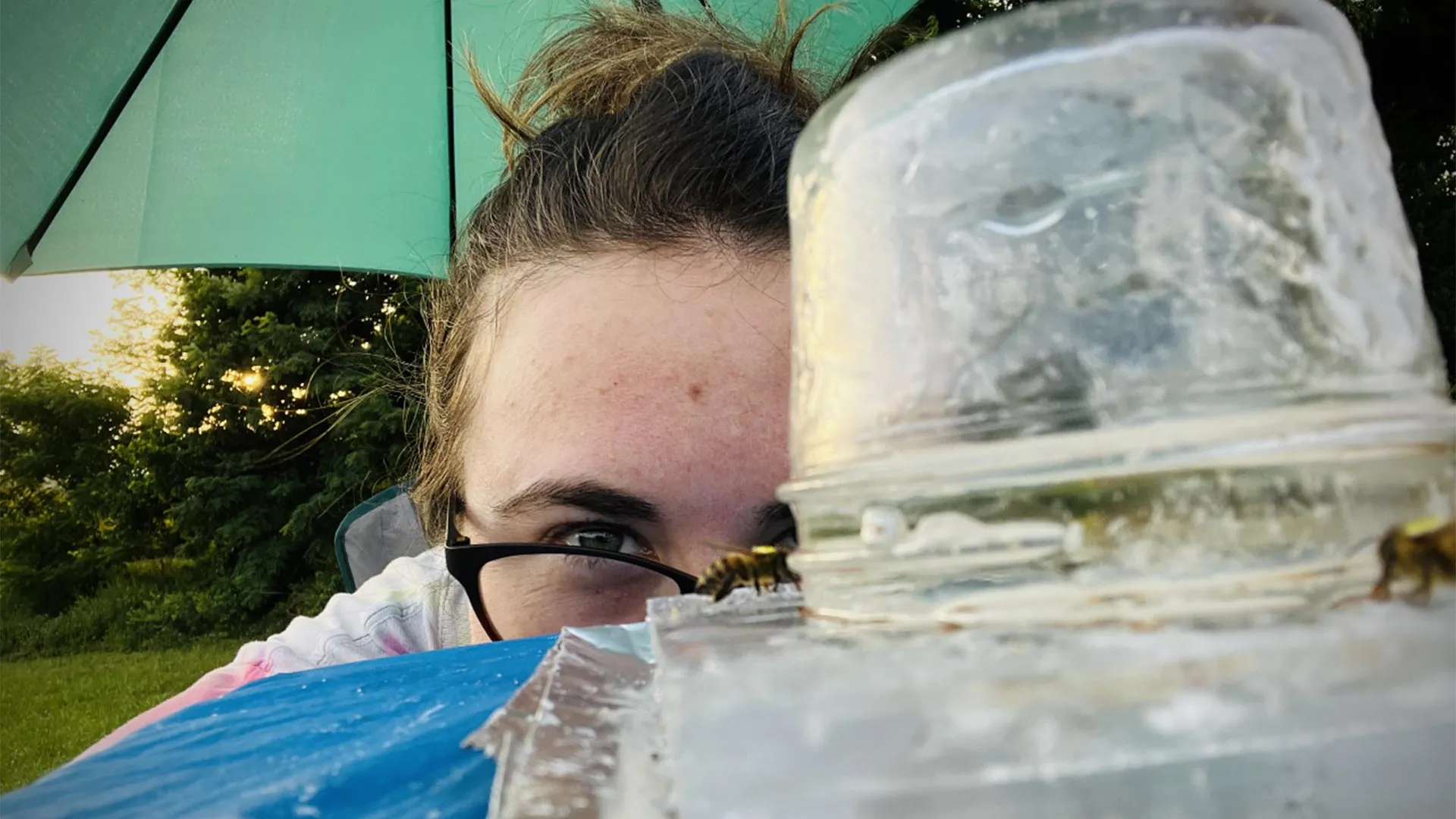
To investigate, the researchers created two artificial feeding stations. One contained glyphosate, while the other did not. Honeybees were trained to visit the feeders, and the team monitored their behavior over several days.
After only three days, the bees exposed to glyphosate showed a 13 percent decline in foraging activity. They also displayed changes in brain chemistry that were not seen in the unexposed bees.
“For a colony, a 13 percent reduction in foraging can be consequential,” Couvillon said. “If the entire colony was exposed, this could lead to decreased pollination effectiveness and reduced honey production, risking colony survival and long-term stability.”
A reduction of that size may appear modest when measured in a single bee, but the effect could become much more serious across an entire colony. Fewer foraging trips could mean less food entering the hive, lower honey production, and reduced pollination of nearby plants.
Changes Inside the Honeybee Brain
Couvillon’s lab also examined brain chemicals involved in honeybee behavior, including amino acids and neurotransmitters. The researchers detected chemical changes associated with glyphosate exposure.
Those shifts may help explain why exposed bees became less effective foragers. The findings suggest that glyphosate could disturb the neurochemical balance that supports normal behavior, even when the exposure is not lethal.
Protecting Pollinators From Herbicides
The results raise broader questions about how herbicides should be used in places where bees are likely to feed. Couvillon and her colleagues say improved regulation, more careful application strategies, and additional research will be important for reducing unintended harm to pollinators.
“Understanding how weedkillers affect beneficial insects like pollinators will help us make more strategic regulatory choices about when and where to use them for maximum benefit and minimum harm,” said McHenry, now a postdoctoral researcher at Penn State, who conducted the study while a Ph.D. student at Virginia Tech.
The researchers say more work is needed to determine how glyphosate-based weedkillers interact with honeybee biology and how those effects might play out under real-world conditions. Honeybees are among the planet’s most important pollinators, while glyphosate is one of the world’s most-applied herbicides. Because the two are likely to come into contact so frequently, the consequences for bees may be more significant than previously understood.
