


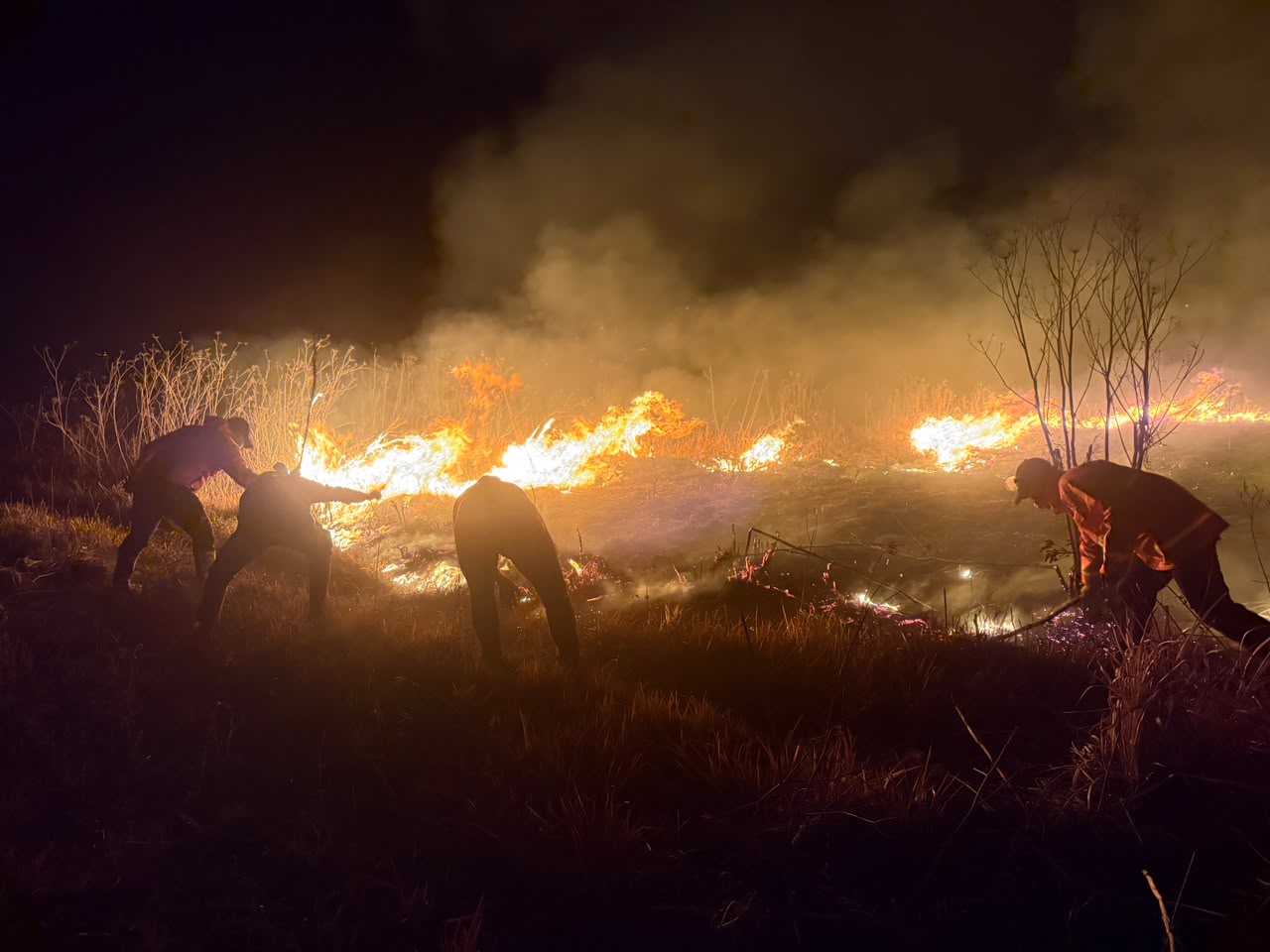
A massive wildfire within a national park in Indonesia has forced a total closure of one of the country’s best-known tourist destinations.
Some 899 hectares (2,222 acres) of savanna and forest within Bromo Tengger Semeru National Park (TNBTS) in East Java province have been destroyed by fire as of the morning of Aug. 11, the provincial disaster management agency told Mongabay.
The fire, which broke out on Aug. 3 in the park’s eastern entrance, is suspected to be human-caused, TNBTS chief Rudijanta Tjahja Nugraha told local media.
TNBTS spokesperson Endrip Wahyutama confirmed the blaze originated along a path used as a shortcut by local residents that bypasses the park’s official tourist roads. “The source is … not a tourist location, and not a public road either,” Endrip said as quoted by Detik.com.
The Bromo Tengger Semeru National Park Agency, which manages the protected area, has ordered it closed until further notice.
Daryono Perwira Sakti, a disaster mitigation educator who previously oversaw the earthquake and tsunami directorate at the BMKG, Indonesia’s weather agency, posted on social media that it’s crucial the park be closed because vegetation on loose volcanic soil there is highly vulnerable to severe fires, which could trigger more disaster.
“The extreme heat from this fire not only destroys vegetation cover and natural seed reserves (seed bank), but also triggers the formation of a water-repellent soil layer,” Daryono wrote.
He said this water-repellent soil layer eliminates water absorption into the soil, elevating risks of massive gully erosion and landslides during the upcoming rainy season, while heavy smoke from the fire impairs visual monitoring of the active volcanoes — Bromo, Tengger and Semeru — that sit at the heart of the park.
“Steep terrain, whipping winds, and the fire’s location in forested areas have made it difficult for firefighters to reach the blaze by foot,” Abdul Muhari, spokesperson for the National Disaster Mitigation Agency (BNPB), said as quoted by Al Jazeera. Local media reported that firefighters are using tree branches and water hoses to tackle the flames from the ground, and a fleet of three water-bombing helicopters and water-spraying drones from the air.
The BMKG has said the 2026 dry season will be more intense and prolonged than usual, with a higher risk of wildfires and drought, in part due to El Niño.
Banner image: Firefighters battle a fire at Mount Bromo, in Indonesia’s East Java province, on Aug. 8, 2026. Image courtesy of the East Java Disaster Management Agency.
