


The United States has a habit of making enemies for life. Analysts often discuss “forever wars” but talk far less about forever enemies, the countries trapped in amber in Washington’s imagination at the moment they first became adversaries. A revolution, hostage crisis, war, or attack becomes a permanent lens, flattening complex and changing societies and turning old grievances into enduring U.S. policy rooted in emotion rather than strategy.
Numerous countries have held a place on America’s list of grudges. Cuba has been a near-permanent member, rooted in events now more than six decades old. Libya remained on the list for decades under Muammar al-Qaddafi, as did Iraq under Saddam Hussein. Even after Saddam’s fall, Iraq never fully escaped the stigma, because of its relationship with Iran.
No country better illustrates the United States’ tendency to freeze its understanding of an adversary in a single moment, and in the process create a forever enemy, than Iran.
For many U.S. policymakers, the 1979 hostage crisis might as well have happened yesterday. For Americans at the time, the images of Iranian students parading blindfolded U.S. diplomats through the embassy compound, sovereign American diplomatic territory, were viewed not just as an act of war but as a profound national humiliation that still lingers today.
That image was hardened by Hezbollah’s 1983 bombing of the Marine barracks in Beirut, which killed 241 U.S. service members; the kidnapping of U.S. citizens in Lebanon; the 1985 murder of Beirut’s CIA station chief, William Buckley; and, decades later, years of fighting Iranian-backed militias in Iraq.
Iran became a byword for hostile regimes in the minds of ordinary Americans and U.S. leaders alike. President Bill Clinton grouped Iran among the world’s “rogue states,” helping set the stage for President George W. Bush to place it, alongside Iraq and North Korea, in an “axis of evil” during his 2002 State of the Union address.
But many of these core grievances have now reached middle age, and Iran has grievances of its own that predate the current conflict, such as the 1988 downing of Iran Air Flight 655, which killed all 290 people on board; Washington’s support for Saddam during the brutal Iran-Iraq War of the 1980s; and a crippling sanctions regime that often does little to distinguish between the country’s leaders and its civilians. The result has been a self-fulfilling cycle of conflict and has produced within Washington a remarkably static understanding of Iran as a “mullah regime,” rather than the hybrid clerical-security state it has become, one in which the Islamic Islamic Revolutionary Guard Corps (IRGC) and technocratic institutions wield as much or more power than many of the clerics who nominally rule it.
In 1979, Iran was viewed as a crazed, militant regime headed by what a New Yorker editorial described in November 1979 as a “violent holy man and atavistic political leader.” Since then, the Iranian regime has moderated on some social issues, while remaining hard-line on others, especially free speech. It has focused on regional influence, meddling in states with large Shiite populations, which in turn has empowered the IRGC in its decision-making. None of that makes it less repressive or draconian—but U.S. policy failed to understand these changes, or to engage with the Iranian state in ways that could have been productive.
That misreading may have fed the belief that killing Supreme Leader Ayatollah Ali Khamenei would decapitate not merely the leadership, but the system itself. The United States continues to make policy through the prism of historical grievance and present-day misunderstanding, and it is in the early stages of repeating that mistake with Afghanistan.
Afghanistan was once a staple of the U.S. president’s daily briefing, fueled countless jobs at the U.S. Agency for International Development (USAID) and nongovernmental organizations, and was a gold rush for contractors that partnered with USAID or the Pentagon. It occupied slots at think tanks and democracy-building outfits and built journalistic and policy careers alike. Want to work on Afghanistan in Washington today? There are three real options: a disempowered State Department, the important but backward-looking work of the Afghanistan War Commission, and whatever quieter work the intelligence agencies are doing. The journalists who still cover the country do their best, but most are covering an entire region as one-person bureaus, parachuting in when time and visas permit.
If Washington’s view of Iran is reinforced by parts of a resentful diaspora that treats the regime and its support base as anathema to Iranian society rather than as a segment of a complex society that had shrewdly capitalized on the mistakes of its predecessors, in Afghanistan, the United States practiced a kind of redemptive Orientalism. It imagined the Taliban as a foreign contamination and Afghan society as something waiting to be restored into a form closer to our own values and, yes, closer to the values of many more progressive Afghans.
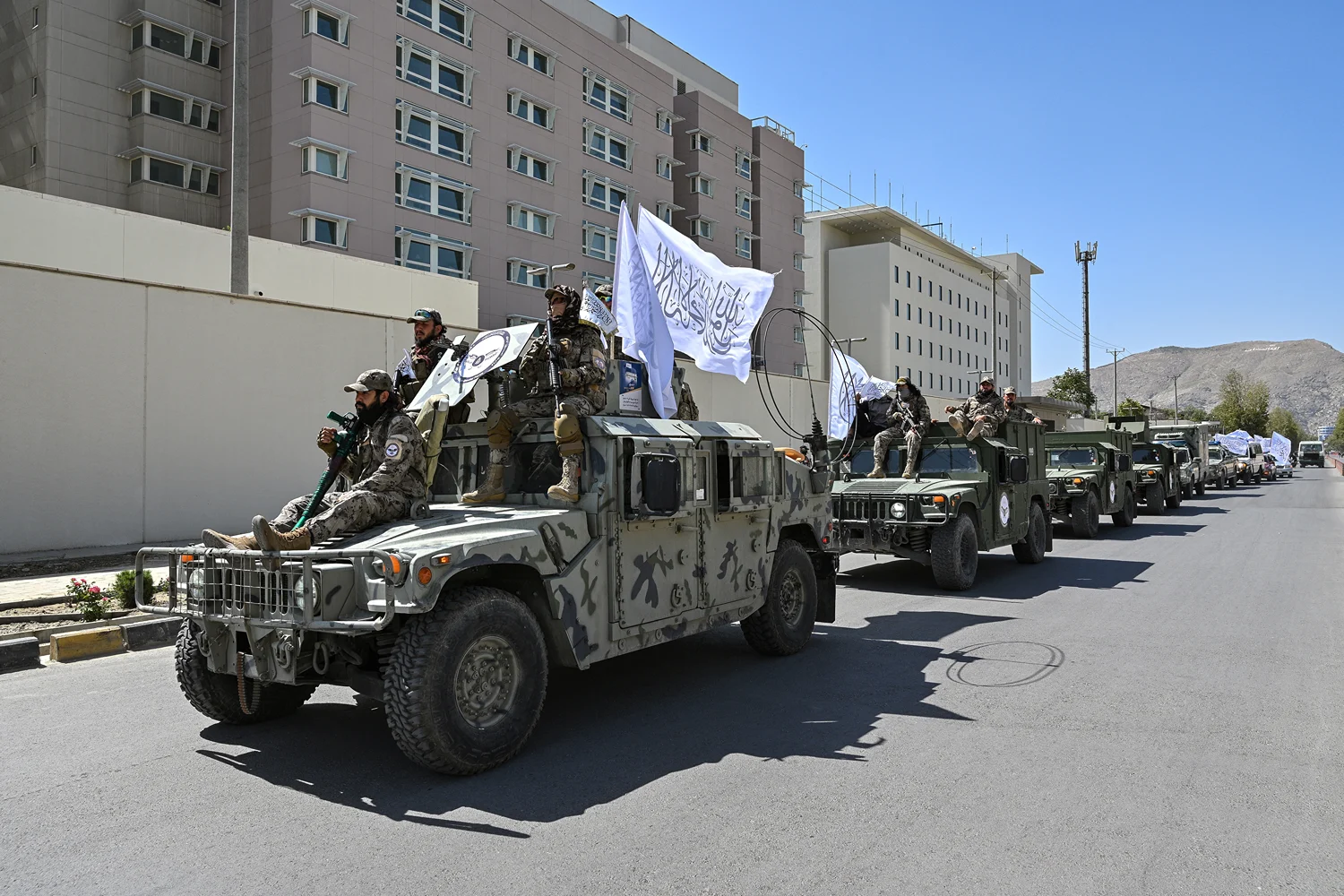
That understanding required Washington to act not only as political kingmaker, but as caretaker. When this understanding of Afghanistan proved incomplete and the United States grew tired, it negotiated an exit with those same Taliban, and left, its panicked European partners rushing out behind it.
Washington has decided that engaging the government it negotiated its own withdrawal with is beyond the pale. Instead, it keeps Afghanistan on life support, deciding year to year how much oxygen to give its economy: just enough aid and sanctions relief to keep the most desperate from starving, not enough to risk real development that could enrich its rulers.
Still, there is something extraordinary about the United States and its closest allies spending billions to sustain the basic needs of a country now ruled by the very people they spent 20 years fighting, almost as extraordinary as the Reagan administration selling arms to Iran during its war with Iraq and using the proceeds to fund Contra rebels in Nicaragua.
For comparison, Washington provided Vietnam’s new communist government with almost no direct bilateral aid for nearly two decades after the fall of Saigon, while Hanoi remained under a broad U.S. economic embargo. The end of the Cold War made Vietnam less threatening, while Hanoi’s loss of its Soviet patron, even as its own economic reforms were beginning to bear fruit, opened strategic space for reconciliation. Vietnam’s cooperation in accounting for missing U.S. service members also helped ease one of the most politically sensitive obstacles. But a direct human element was still needed.
Sens. John Kerry and John McCain, both Vietnam veterans, with McCain having endured years of torture as a prisoner of war, teamed up to make the case for normalization. On May 23, 1995, they met Clinton in the Oval Office and urged him to move forward despite fierce opposition, including from Senate Majority Leader Bob Dole. McCain told Clinton, “I’m tired of looking back in anger. What’s important is that we move forward now.” Relations were normalized that summer.
Two years later, Douglas Peterson, who had also spent more than six years as a prisoner of war in North Vietnam, became the first U.S. ambassador to postwar Vietnam and later reflected, “When I left Vietnam [as a freed POW], I left hate at the gate.” None of this was without controversy. In his book, Nothing Is Impossible, former U.S. Ambassador to Vietnam Ted Osius recalled that McCain “was the object of many veterans’ wrath” and was derided as “Songbird” and a “Manchurian candidate” for his commitment to normalization. Today, Vietnam is one of the most pro-American countries in Asia.
Afghanistan is still an open wound and remembered as a humiliation that must either be redeemed or, failing that, relegated to the realm of historical curiosity. On Aug. 15, 2021, as the Taliban entered Kabul, the New Yorker’s Robin Wright asked whether the moment marked the “end of the American era.” That same day, CNN anchor Jim Sciutto tweeted, “The Saigon moment has come,” while political scientist Ian Bremmer posted side-by-side images of U.S. helicopter evacuations from Kabul and Vietnam. The Washington Post’s Pulitzer Prize-winning culture critic Philip Kennicott similarly observed, “For us, it ends just like Vietnam,” and concluded, “For us, now, it’s a matter of sorting out the history.”
Two days later, Donald Trump, whose first administration negotiated the agreement that set the withdrawal in motion, told Sean Hannity, “I don’t think in all of the years our country has ever been so humiliated,” comparing it to the Iran hostage crisis under President Jimmy Carter. Republican lawmakers echoed that language, while some Democrats used softer terms but often conveyed the same sense of national disgrace.
Even questioning the orthodoxy of treating adversaries as forever enemies is often dismissed as appeasement, or naivete, which constrains outreach. Like Vietnam during the 20 years of its estrangement with the U.S., Afghanistan can be a metaphor, a warning, a wound, or in some quarters a fantasy in which we return and do it right this time. It can be anything other than a country of 40 million people with no choice but to exist under the rulers they have.
If 9/11 wasn’t lesson enough in the risks of leaving Afghanistan out of sight and out of mind, the current war in Iran should expose the dangers of letting a country become an isolated pariah state, and the limits of sanctions and harsh rhetoric in changing a regime’s fundamental calculations, even if engagement also has limitations.
Had the United States engaged more with Iran over the past five decades, even one day reopening an embassy, it might have better understood the sources of the regime’s resilience. It might have grasped that even though most Iranians prefer an alternative to the Islamic Republic, this does not easily translate into a successful uprising, absent a host of other conditions, nor does it grant legitimacy to exiled leaders, or lead ordinary people to welcome the bombing of their own country. Washington might have found ways to capitalize on the moments when Iran’s own pragmatists were ascendant, rather than making engagement itself a difficult concession from both sides.
There is a hope that Afghanistan no longer matters, that left alone, it will either change for the better or fade into irrelevance, sparing us the trouble of understanding it or dealing with it at all. But Afghanistan has a way of roaring back into relevance in unexpected, unwanted ways. Engagement is no guarantee of quick results, and just like Iran, outsiders mostly get Afghanistan wrong.
I am not immune to that. In the months after the Taliban’s takeover, I miscalculated how ascendant their pragmatists might become, and how much risk they would take for the carrot of global recognition. But the approach of the last five years plainly is not working, and leaving the country to subsist as an isolated pariah state won’t work any better.
Afghanistan, Cuba, Iran, and Vietnam are very different countries, but each has at different moments been shaped by America’s difficulty moving beyond humiliation, grievance, and perceived defeat. The lesson is not that reconciliation is easy or that adversaries always become friends, but that pragmatic engagement, however slow and imperfect, is more likely to produce better outcomes than turning temporary enemies into permanent ones.
