


For instance, the small Swiss company Freesuns is considering expanding to the US.
Deborah Learoyd, Freesuns’ CEO and managing director, estimates that the company’s sales have grown 20–30% since it was established in 2019.
In general, solar roof components continue to be manufactured in smaller batches. This limits the economies of scale and standardisation, though flexible manufacturing could help somewhat.
Learoyd says that while the unit costs for Freesuns’ products are slowly decreasing, “a lot of the cost is actually the fact that every roof is a little bit different. And so it has to be engineered a little bit differently, installed a little bit differently”.
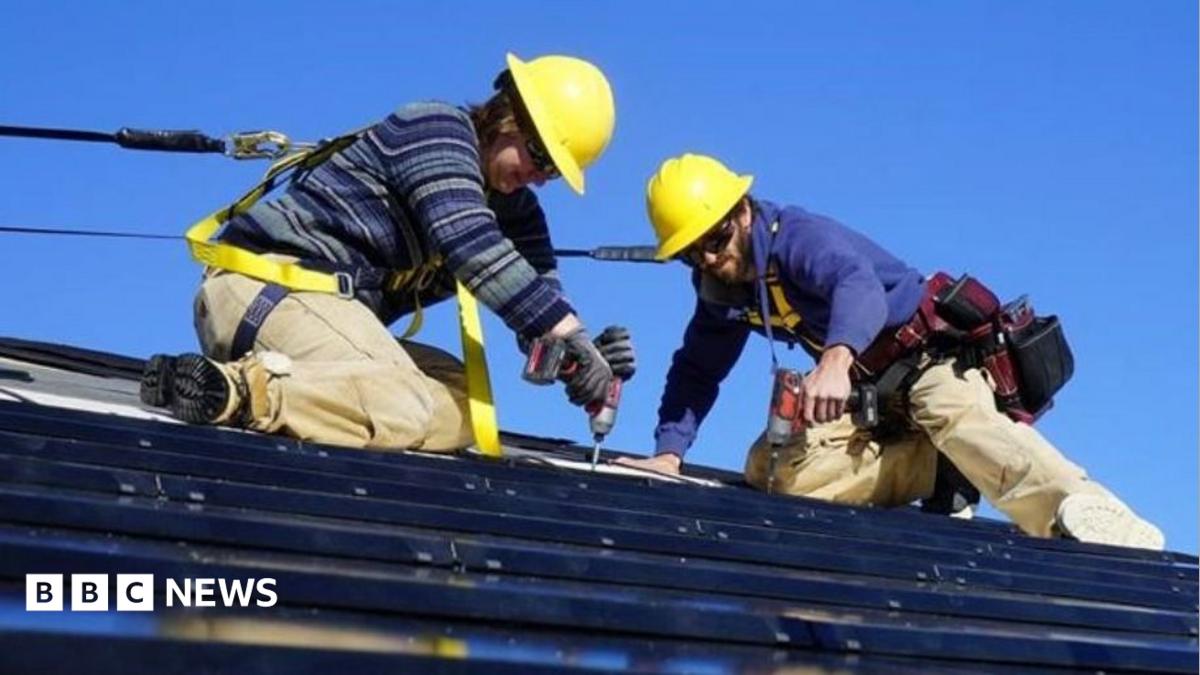
Solar roofs typically require collaboration among roofers, solar installers and electricians. And building regulations tend to be more complex than for solar panels.
The additional time and paperwork can take a toll on a roofing business, Collardson explains. “You try to put a roofer into the equation and they’re going, ‘This is taking forever. I’m losing money. I could have sold 10 roofing jobs in the time that it takes me to sell this one’.”
Collardson has to charge more for repair of solar shingles, compared to a standard photovoltaic (PV) setup.
She explains, “With traditional solar, we generally have electronics on the panel and a map that shows us exactly how much each panel is producing.” So when something goes wrong, it’s easy to spot where.
“With solar shingles, we don’t really have the benefit of that mapping; there’s no room underneath the shingle for the electronics.” Thermal cameras can identify the trouble spots, however.
But then there’s the matter of accessing them. “You can remove the one in the middle of the array, but you have to walk on the others, and you really shouldn’t walk on them because you’re going to create micro-fractures and that’s going to cause issues down the road.”
Before repair costs are factored in, a solar roof might cost twice as much as a system of solar panels mounted on a roof.
