


Bird flu is sweeping across Australia, devastating its unique birds and mammals, many of which are found nowhere else in the world.
Already, mass mortality events have killed more than 1,000 birds, and the disease has crossed into seals. Experts fear more deaths are likely.
What is happening to bird populations in Australia?
Australia confirmed its first case of H5N1 in June in a migratory brown skua, a sub-Antarctic species on the country’s southern coast. Since then, the disease has rapidly spread.
To date, there have been 309 confirmed bird flu events, official data shows (the country is not counting individual bird cases, instead referring to events that could include one or more birds). Among the bird species to have died are greater crested terns, silver gulls (commonly known as seagulls) and little penguins.
The state of South Australia has been the worst-hit, recording 194 events. More than 1,000 crested terns — a large coastal bird with a yellow bill — are believed to have died from the disease on three remote islands, the state’s leader said last week.
On Monday, the environment minister, Murray Watt, told the national broadcaster: “We are likely to see mass mortalities of birds and mammals. And I know that is a very distressing thing for Australians to hear, but we also need to be realistic.”
So far, the disease has not been detected in poultry or on farms, according to the government, and the risk to humans remains low. People who come across affected animals have been told not to touch them, but to photograph and report the sighting via official hotlines.
Euan Ritchie, a professor of wildlife ecology at Deakin University, said that while the disease had not been in Australia long, the speed of its spread was concerning.
“We have a feeling of dread that we’re only about to see the beginning of it now and it’s about to get far worse,” he said.
He added that Australia’s wildlife had evolved in isolation for millions of years, creating animals found nowhere else, such as the Australian sea lion, which is considered vulnerable, with fewer than 10,000 adults in the wild.
But this isolation also meant that the animals were more at risk of contracting new pathogens because they had not developed any immunity. This particular strain of bird flu has decimated animal populations worldwide since 2020. While Australia has had other strains of bird flu before, it successfully eradicated them. The arrival of H5N1 this year marks the first time Australia has experienced the disease, which is putting the country’s response to the test.
How is the government responding?
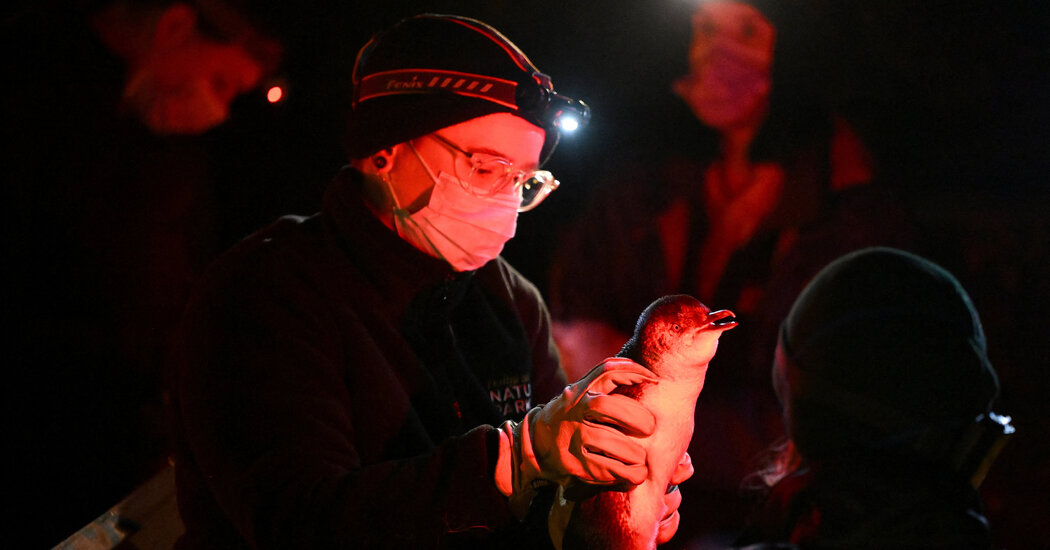
The Australian government began vaccinating at-risk bird species this month. Among those receiving the vaccination will be 5,000 little penguins in the state of Victoria. They are easy to vaccinate because they waddle from the ocean to their burrows each evening.
Millions in funding have also been allocated to combat the disease, including increased surveillance to ensure early detection and response.
Ariful Islam, a bird flu and epidemiology expert from Charles Sturt University, said vaccinations were not a “silver bullet,” particularly when it came to wild birds, which needed monitoring to ensure that the vaccine produced the necessary antibodies for protection from the disease.
The public is also joining the fight.
Volunteers are helping document bird deaths, particularly in South Australia. Among them is Maureen Christie, secretary of Friends of Shorebirds SE, who spends each morning searching for sick or dead birds along a patch of coastline in the town of Carpenter Rocks, and reporting them.
But the work has taken its toll.
“You can’t do anything to really help the birds,” she said.
On Monday morning, she was “elated” to find only 11 sick or dead birds. A few weeks ago, at one location, there were carcasses every few footsteps.
Can the virus spread to other animals?
Yes. H5N1 has infected a range of mammals, including cows, cats, foxes and raccoons around the world. But marine mammals have been particularly hard hit. The disease killed at least 24,000 South American sea lions along the continent’s coasts in less than a year in 2023.
In Australia, authorities confirmed the first case of H5N1 in a long-nosed fur seal in South Australia last week. A second seal was suspected to have died from the disease on Monday.
Seal expert Jane Younger, from the University of Tasmania, said the disease could become an “extinction event” if it were to spread among marine mammals such as the Australian sea lion. Most of the sea lions share the same habitat in South Australia as the infected birds.
A vaccine has not yet been approved for use in Australian mammals.
“Unfortunately, there’s not really anything that can be done to stop the virus from spreading,” Ms. Younger said, adding, “it’s spread by wild animals, and we just don’t have any control over that.”
