


So far, there has been one other case of highly pathogenic avian influenza (HPAI) in the UK, external, on the Isle of Lewis, Scotland.
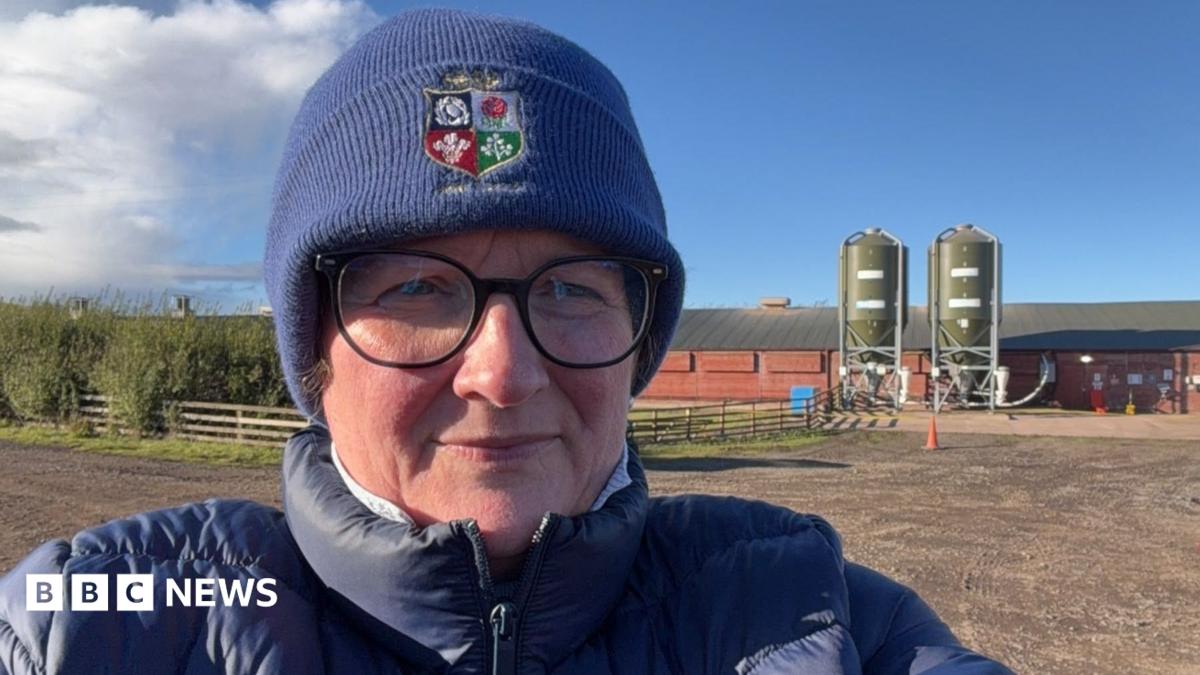
Armstrong said her birds, which normally produce 28,500 eggs a day, which are then supplied to a range of UK supermarkets, began to die a week ago.
“At this age of the flock, you would tend to see the odd death but on the Friday my lady who works in the shed messaged me at night to say that 39 had died,” she explained.
During the weekend, the virus spread rapidly, with more than 1,000 birds dead by Sunday night.
The APHA was contacted and a vet came out to carry out tests but Armstrong said she knew it would be bird flu: “In my heart of hearts, when you are shovelling dead birds out of a shed, you feel… well, I didn’t need the results. I knew what the results would be.”
By Tuesday, the virus had been confirmed, with thousands of birds dead. Within two days, all the remaining birds had been culled to control the virus’ spread.
“All your worst fears, I suppose, are realised then. It is an emotional roller coaster. I mean, for instance, on the Sunday, I just felt numb. On the Monday, just a bit like ‘Why me?’. Angry, cross, upset.
“On the Tuesday, it’s a bit matter of fact. It’s like, ‘Right, we’ve got to do this. I’ve got to do that’. And on Wednesday, I was just desperately sad.
“Normally, you’d open up a hen shed door and there’d be 16,000 birds looking at you but to see them all lying dead, just a carpet of dead birds, is quite shocking.
“As a poultry keeper, it’s a horrible shock.”
